Puppy-Proofing Your Home Before the Tiny Inspector Arrives
Your puppy will inspect everything, including several things you forgot existed.
Start by choosing one small area where your puppy can settle safely. Then check the rest of your home from puppy height.
This puppy proofing house plan helps you handle one space at a time. You don’t need a perfect home. You need good barriers, safe choices, and a plan for supervision.
Think Like a Puppy for Ten Minutes
Puppies explore with their noses, paws, and mouths. A loose sock isn’t laundry to them. It’s a thrilling mystery noodle.
Get down low and scan each room. Look beneath furniture, behind doors, and along baseboards.
Ask four simple questions:
- Can the puppy chew it?
- Can the puppy swallow it?
- Can the puppy pull it down?
- Can the puppy climb, squeeze, or fall through it?
Pay special attention to anything dangling or rolling. Puppies often chase first and consider consequences never.
Repeat this check after your puppy arrives. Their size, confidence, and jumping skills can change quickly.
Create a Safe Home Base
Your puppy needs a calm place for resting and supervised play. This might be a puppy pen, a gated kitchen, or a puppy-safe room.
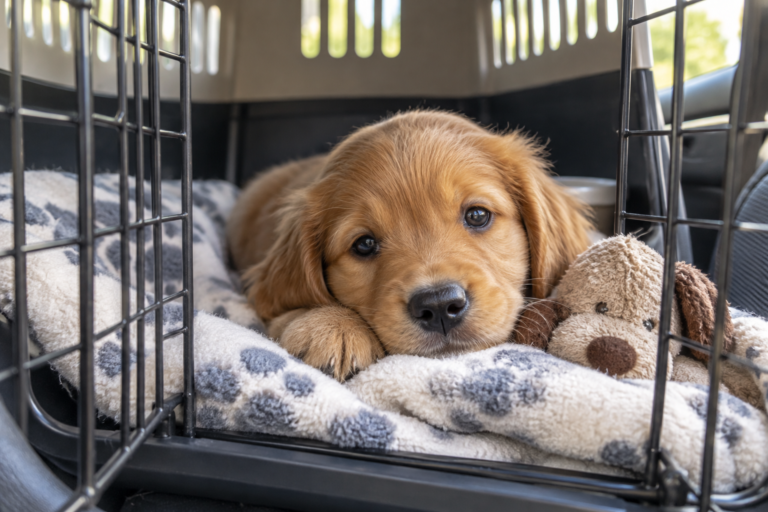
A crate can also be part of the setup. It should feel like a resting place, not a punishment. Your puppy should have enough room to stand, turn around, and lie comfortably.
Introduce any crate or pen gradually. Add positive experiences, such as calm praise or suitable food toys. Don’t expect a new puppy to feel relaxed there immediately.
Check the area for:
- Electrical cords and chargers
- Small objects that could be swallowed
- Unstable furniture
- Houseplants
- Cleaning products
- Shoes, bags, and clothing
- Gaps behind appliances or cabinets
- Toys with loose or damaged parts
Provide fresh water when appropriate for the space and situation. Choose sturdy bowls that won’t tip easily.
Test bedding under supervision at first. Some puppies sleep on blankets. Others immediately begin a fabric renovation project. Remove damaged bedding before loose pieces can be swallowed.
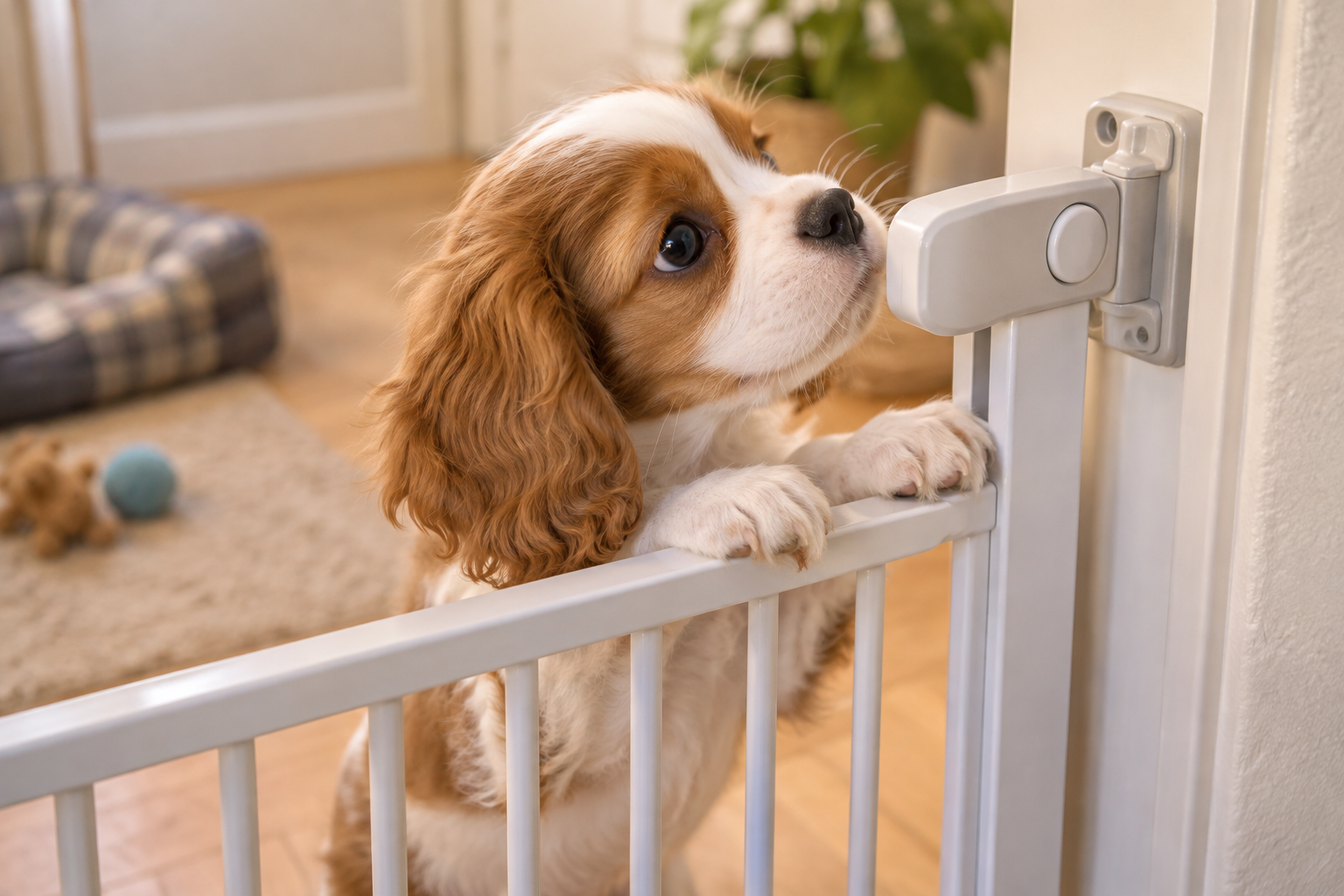
A baby gate can limit access without isolating your puppy completely. Check that the puppy can’t squeeze through, climb over, or get caught in it.
Secure Cords and Electronics
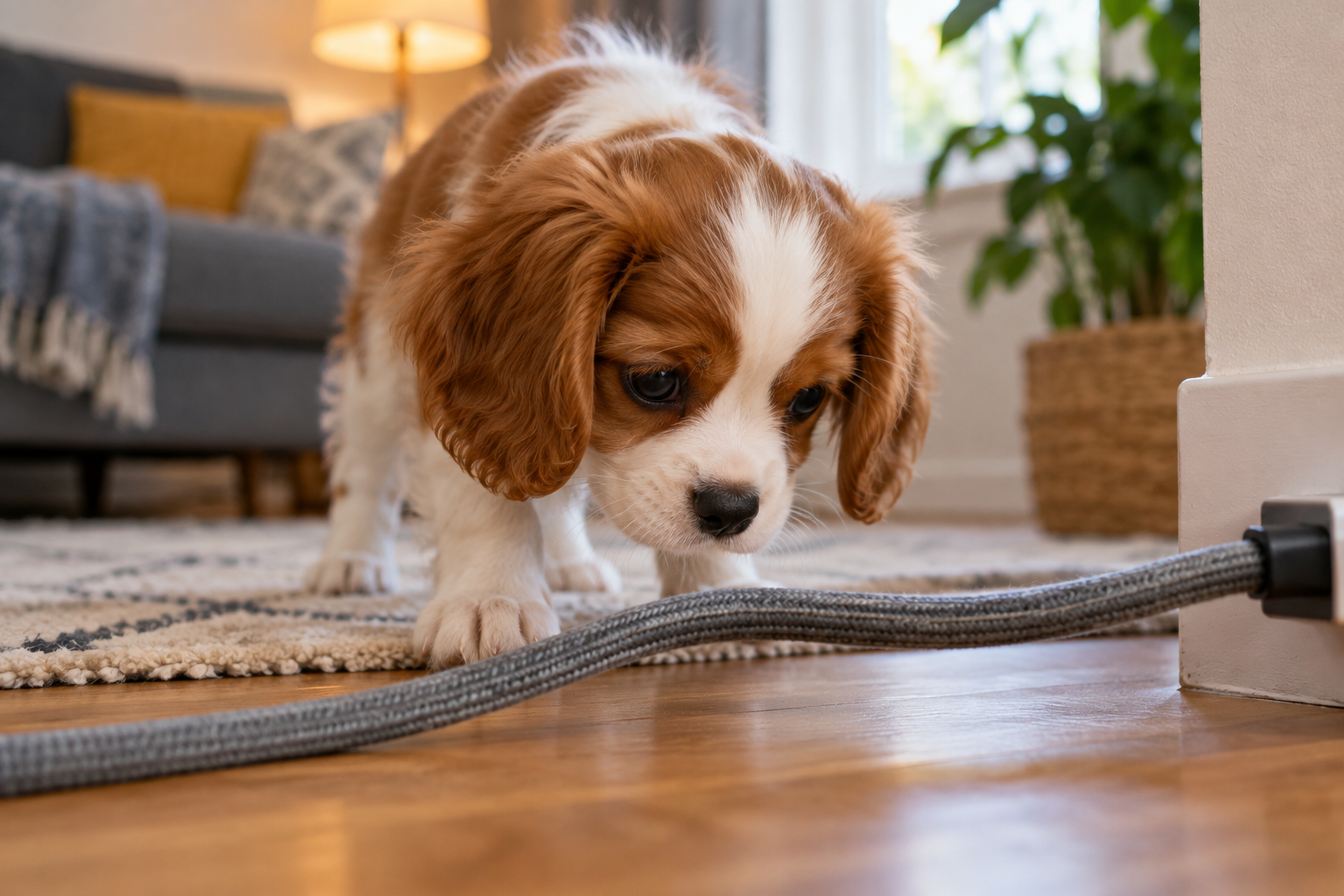
Electrical cords are especially tempting because they’re long, chewy, and often move.
Move chargers and loose cables completely out of reach. Cord covers may add protection, but they don’t replace supervision. Block access behind televisions, desks, and entertainment units.
Unplug appliances when they aren’t being used. Don’t leave the unplugged cord hanging within reach.
Keep remote controls, earbuds, batteries, and small electronics stored away. Batteries can cause serious internal injuries if chewed or swallowed.
If your puppy bites an electrical cord, don’t grab them while power is flowing. Switch off or unplug the power source safely first. Seek urgent veterinary help after an electrical injury, even when the mouth looks normal.
Make the Kitchen Boring
Kitchens smell like treasure and contain plenty of trouble.
Use lidded trash cans or keep rubbish behind a secured door. A determined puppy may knock over a light bin or open a loose cabinet.
Store food above puppy level. Don’t rely on the edge of a counter. Puppies grow, stretch, and learn to jump.
Several common foods can harm dogs. These include chocolate, grapes, raisins, onions, and products containing xylitol. Xylitol is a sweetener found in some sugar-free foods and household products.
Keep these items secured along with alcohol, coffee grounds, and unbaked yeast dough. Check ingredient labels when you aren’t sure.
Sharp tools should stay in drawers or secured holders. Move plastic wrap, foil, skewers, and food packaging out of reach.
Close the dishwasher after loading it. Dirty utensils may attract licking, while knives and detergent can cause injuries.
Watch hot ovens, pans, and stovetops. A curious nose can reach higher than expected, especially when something smells good.
Check the Bathroom and Laundry Area
Bathrooms are packed with small objects. Hair ties, cotton swabs, razors, and dental floss can all become swallowing hazards.
Store medicines inside a closed cabinet. A child-resistant container isn’t necessarily puppy-resistant.
Keep cosmetics, toothpaste, nicotine products, cannabis products, and cleaning supplies secured. Never assume an unpleasant taste will stop an interested puppy.
Close the toilet lid, especially when cleaners are present. Tiny puppies may also struggle if they fall into an open bowl.
In the laundry area, store detergent and stain removers behind a secured door. Keep laundry pods completely inaccessible.
Check the washer and dryer before using them. Close appliance doors when they’re empty.
Pick up socks and underwear promptly. These items are common chewing targets and can cause dangerous internal blockages if swallowed.
If something goes missing, don’t wait for symptoms before seeking advice. Contact a veterinarian if you think your puppy swallowed a non-food object.
Clear Bedrooms and Living Spaces
Living rooms often contain the greatest number of puppy-level temptations.
Put away children’s toys, craft supplies, coins, pins, game pieces, and loose decorations. Move candles and breakable objects away from low tables.
Secure tall or unstable furniture to prevent tipping. Keep heavy objects away from shelf edges.
Tie up blind and curtain cords. Looped cords can catch around a puppy’s neck or limbs.
Place handbags and backpacks behind closed doors. Bags may contain medicine, gum, snacks, or other hazards.
In bedrooms, check beneath the bed and nightstand. Store jewelry, glasses, tissues, and personal care items in drawers.
Shoes should also go away unless you’re happy to donate them to science. Giving a puppy one old shoe can make every shoe seem available.
Offer suitable chew toys instead. Rotate a few safe options so they remain interesting. Replace toys that crack, splinter, or lose pieces.
Choose toys suited to your puppy’s size and chewing style. A toy that works for one puppy may be too small or fragile for another.
Review Plants, Decorations, and Seasonal Items
Some common plants can harm dogs if chewed. Others may irritate the mouth or stomach.
Identify every plant in your home and garden. If you can’t confirm that a plant is safe, move it out of reach until you can check with a veterinarian or reliable animal poison resource.
Remember that fallen leaves and spilled potting material still count. A high shelf won’t help if pieces drop onto the floor.
Holiday decorations need extra attention. Tinsel, hooks, ribbons, string lights, and ornaments can be chewed or swallowed. Open flames should never be accessible.
Water-filled decoration stands may also attract drinking. Block access, especially if the water contains additives.
After parties or craft projects, inspect the floor carefully. One dropped ribbon or skewer can create a serious problem.
Block Falls, Escapes, and Tight Gaps
Use secure gates near stairs when your puppy can’t navigate them safely. Check the sides for gaps, not just the opening.
Balconies and raised decks need close inspection. Puppies may fit through railings that appear narrow from adult height.
Keep windows securely screened and opened only in a safe way. A screen alone may not hold a pushing or scratching puppy.
Close recliners and sofa beds carefully. Check where your puppy is before moving furniture with folding parts.
Block narrow spaces behind appliances and heavy furniture. Puppies may crawl into a gap and become trapped.
Exterior doors deserve a routine. Before opening one, know where the puppy is. Use a gate, closed internal door, or leash when visitors arrive.
Ask guests not to hold an outside door open. A cheerful puppy can turn a greeting into an escape attempt very quickly.
Walk the Yard Before Every Free Run
A fenced garden isn’t automatically puppy-safe.
Check for loose boards, holes, sharp wire, and gaps beneath gates. Test gate latches and remove objects that could help a puppy climb.
Walk the boundary at puppy height. Look behind sheds, under steps, and around utility equipment.
Remove tools, chemicals, fertilizers, pest products, and fuel containers. Keep them in secured storage rather than on a high but reachable shelf.
Pick up mushrooms, animal waste, dropped fruit, and unknown plants. Don’t let your puppy drink from buckets, ponds, or standing water.
Pools and hot tubs need secure barriers. Supervise your puppy around any water, even if the puppy seems confident.
Check the ground after storms or garden work. New branches, debris, and damaged fencing can appear overnight.
Supervise outdoor time at first. This helps you learn what your puppy wants to dig, chew, chase, or squeeze through.
Prepare Children and Other Pets
Puppy-proofing includes the people and animals already living there.
Show children where the puppy’s safe area begins. They shouldn’t climb into it, wake a sleeping puppy, or take food and toys away.
Teach gentle handling with an adult nearby. Puppies can become frightened or overexcited by hugging, chasing, and loud play.
Give resident pets places the puppy can’t reach. Cats may need high resting spots, while older dogs may need a quiet room.
Make introductions calm and gradual. Don’t force animals to share beds, bowls, or close spaces.
Supervise interactions until everyone is comfortable. Separate them when you can’t watch closely.
Use Management Before Training Catches Up
“Management” means arranging the home so unwanted behavior is harder to practice. Gates, closed doors, and storage bins are management tools.
Training matters, but young puppies don’t arrive knowing household rules. Prevention keeps everyone safer while they learn.
If your puppy grabs something harmless, avoid turning it into a chase. Offer an appropriate toy or treat, then calmly pick up the dropped item.
Practice simple cues such as “leave it” and “drop it” with safe objects. Reward success rather than prying items from the puppy’s mouth.
Never reach into a puppy’s mouth when there’s a risk of biting. For sharp, toxic, or dangerous objects, contact a veterinarian for immediate guidance.
Supervision should be active. Being in the same room doesn’t help much if you’re absorbed in a screen.
When you can’t supervise, use the prepared safe area. This isn’t a training failure. It’s sensible puppy care.
Keep an Emergency Plan Handy
Even careful homes have surprises. Prepare contact details before you need them.
Save your regular veterinarian’s number and an after-hours veterinary contact. Also identify a reputable animal poison advice service available in your area.
If your puppy eats something questionable, keep the packaging or take a photo. Note what was swallowed, the possible amount, and when it happened.
Don’t make your puppy vomit unless a veterinary professional specifically instructs you. The wrong response can make some situations more dangerous.
Trouble breathing, collapse, seizures, severe weakness, repeated vomiting, or sudden swelling need urgent veterinary help. A sudden major change in behavior also deserves prompt attention.
Do One Floor-Level Check Today
Choose the room where your puppy will spend their first evening. Sit on the floor and slowly turn in a full circle.
Remove five reachable hazards. Then set up one safe resting spot and one secure barrier.
That small check is a strong start. Your tiny inspector will still find surprises, but you’ll be ready to stay one wag ahead.