Puppy Essentials on a Budget: Where to Spend and Where to Save
A puppy can turn one sock into entertainment, so don’t buy the whole pet aisle yet.
Start by making three lists: need now, need soon, and maybe later. This simple step keeps adorable extras from swallowing your budget.
Buying puppy essentials on a budget isn’t about choosing the cheapest item every time. It means spending on safety, health, and daily usefulness first.
Spend first on health and safety
Some puppy costs aren’t exciting, but they protect your dog from bigger problems. Put these at the top of your budget before buying fancy beds or matching accessories.
Plan for:
- An initial veterinary visit
- Recommended vaccinations and parasite prevention
- An identification tag
- Microchip registration or updating existing details
- A safe leash, collar, or harness
- Secure travel equipment
- A suitable puppy food
Your puppy may already have a microchip from a breeder or rescue. Ask for the number and check that the registered contact details are yours.
Veterinary needs vary with age, location, health, and previous care. Bring any records to your first appointment and ask what comes next.
If money will be tight, explore your options before an emergency happens. You might compare pet insurance, a dedicated savings fund, or local payment resources.
Insurance policies differ greatly, including what they exclude. Read the details rather than choosing by the monthly price alone.
Save by shopping for the puppy you have now
Puppies grow at wildly different rates. That tiny harness may become a decorative bracelet surprisingly fast.
Buy enough for a safe fit today, but avoid building a full adult wardrobe. You can upgrade once growth becomes more predictable.
Measure your puppy instead of relying only on labels like “small” or “large.” Brand sizing can vary, and breed estimates aren’t always accurate.
Check the fit often as your puppy grows. Collars and harnesses shouldn’t rub, restrict movement, or become tight.
You should be able to follow the product’s fitting guidance and secure every buckle properly. Replace damaged gear rather than attempting a clever knot-and-tape rescue.
Spend on a secure leash and walking setup
A basic fixed-length leash is usually a practical first choice. It gives you steady control while your puppy learns how walks work.
Look for strong stitching, secure clips, and a comfortable handle. The leash should suit your puppy’s size without being needlessly heavy.
A collar works well for identification tags. A well-fitted harness may offer better control for some puppies, especially those still learning leash skills.
Ask your veterinarian or a qualified reward-based trainer for help if your puppy coughs, struggles, freezes, or pulls hard. Equipment can support training, but it can’t replace it.
Retractable leashes are rarely essential for beginners. Their long cords and variable distance can make close control harder in busy places.
Save on food and water bowls
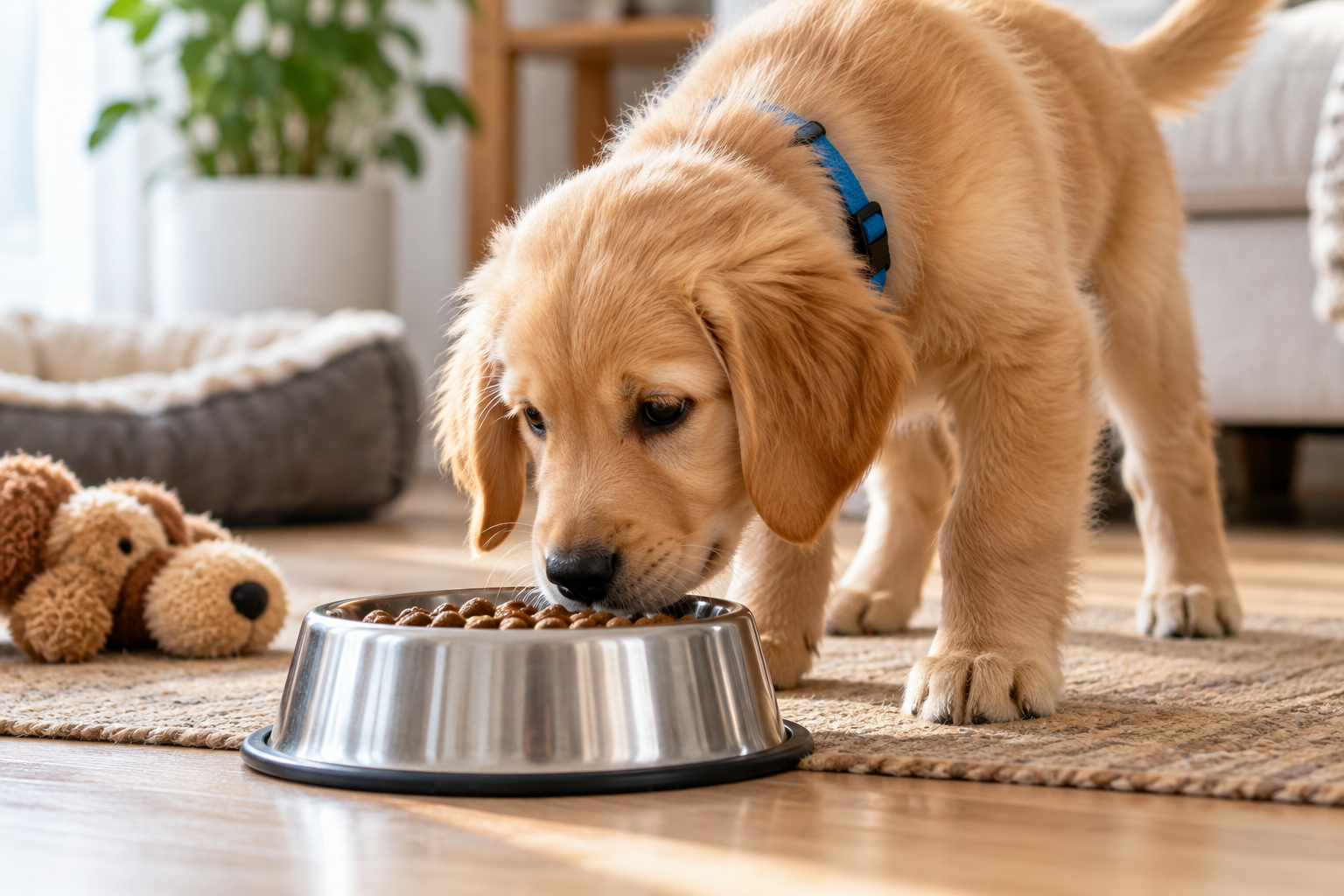
Your puppy doesn’t care whether dinner arrives in designer ceramics. A stable, washable bowl is the real goal.
Stainless steel bowls are often simple and durable. Other materials can work when they’re intact, food-safe, and easy to clean.
Avoid cracked or heavily scratched bowls because damaged surfaces are harder to keep clean. Choose a broad or weighted base if your puppy enjoys flipping dinner.
Secondhand bowls can be a reasonable budget option. Wash them thoroughly and skip anything chipped, cracked, rusty, or difficult to sanitize.
You may already own a suitable household bowl. Just make it your puppy’s bowl and clean it regularly.
Spend carefully on puppy food
Food is one area where random bargain hunting can cause trouble. Choose a complete puppy food that suits your dog’s age and expected adult size.
“Complete” means the food is intended to provide the nutrients needed as a main food. Check the package wording and ask your veterinarian if you’re unsure.
At first, continue the food your puppy was already eating when possible. A sudden change may upset the stomach during an already stressful move.
If you want to switch foods, ask how to make the change gradually. Get veterinary help for repeated vomiting, ongoing diarrhea, refusal to eat, or unusual tiredness.
Large bags can look cheaper per serving, but they aren’t always a saving. Food can lose freshness, and your puppy may not tolerate that particular product.
Start with a manageable amount. Store it securely away from moisture, heat, pests, and curious puppy teeth.
Save on training treats
Training rewards don’t need sparkles, special shapes, or an impressive price tag. Many puppies will happily work for part of their regular food.
Set aside some of the daily food for short training sessions. Keep pieces small so you can reward often without quietly adding several extra meals.
Higher-value treats can help around distractions or with difficult tasks. Use tiny portions and check that treats are suitable for puppies.
Food isn’t the only reward. A toy, cheerful praise, permission to sniff, or a quick game may also motivate your dog.
If your puppy has digestive trouble or food restrictions, ask your veterinarian before expanding the snack menu.
Choose a practical sleeping space
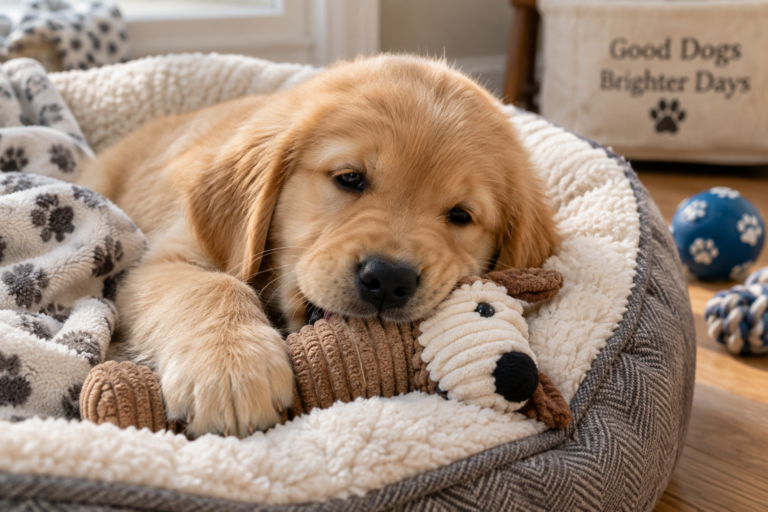
Puppies need a quiet, comfortable place to rest. They don’t need a bed fit for a tiny royal court.
A washable mat, folded blanket, or simple bed may be enough. Choose something that doesn’t have loose filling, buttons, or pieces your puppy could swallow.
Watch how your puppy treats bedding. Remove it if it’s being shredded or eaten rather than slept on.
Cheap washable bedding can be smarter than one expensive bed during toilet training. Keep a spare so there’s always a dry option.
Secondhand bedding may carry dirt, pests, or strong smells. Only use items you can inspect and wash thoroughly.
Buy the right crate, not the fanciest one
A crate can support safe rest, travel, and toilet training. It should never be used as punishment or as all-day storage for a puppy.
The crate should allow your puppy to stand, turn around, and lie comfortably. A model with a divider can adjust as your puppy grows.
This is a good place to compare quality rather than decoration. Check doors, latches, edges, ventilation, and the strength of the materials.
Used crates can save money when they’re structurally sound. Inspect for rust, sharp edges, bent wires, cracked plastic, and unreliable locks.
Clean a secondhand crate thoroughly before use. Replace it if damage could trap a paw, catch a collar, or allow an escape.
Your puppy may need time to feel comfortable inside. Build a positive association with food, calm praise, and brief practice rather than forcing long stays.
Save on toys, but inspect them often
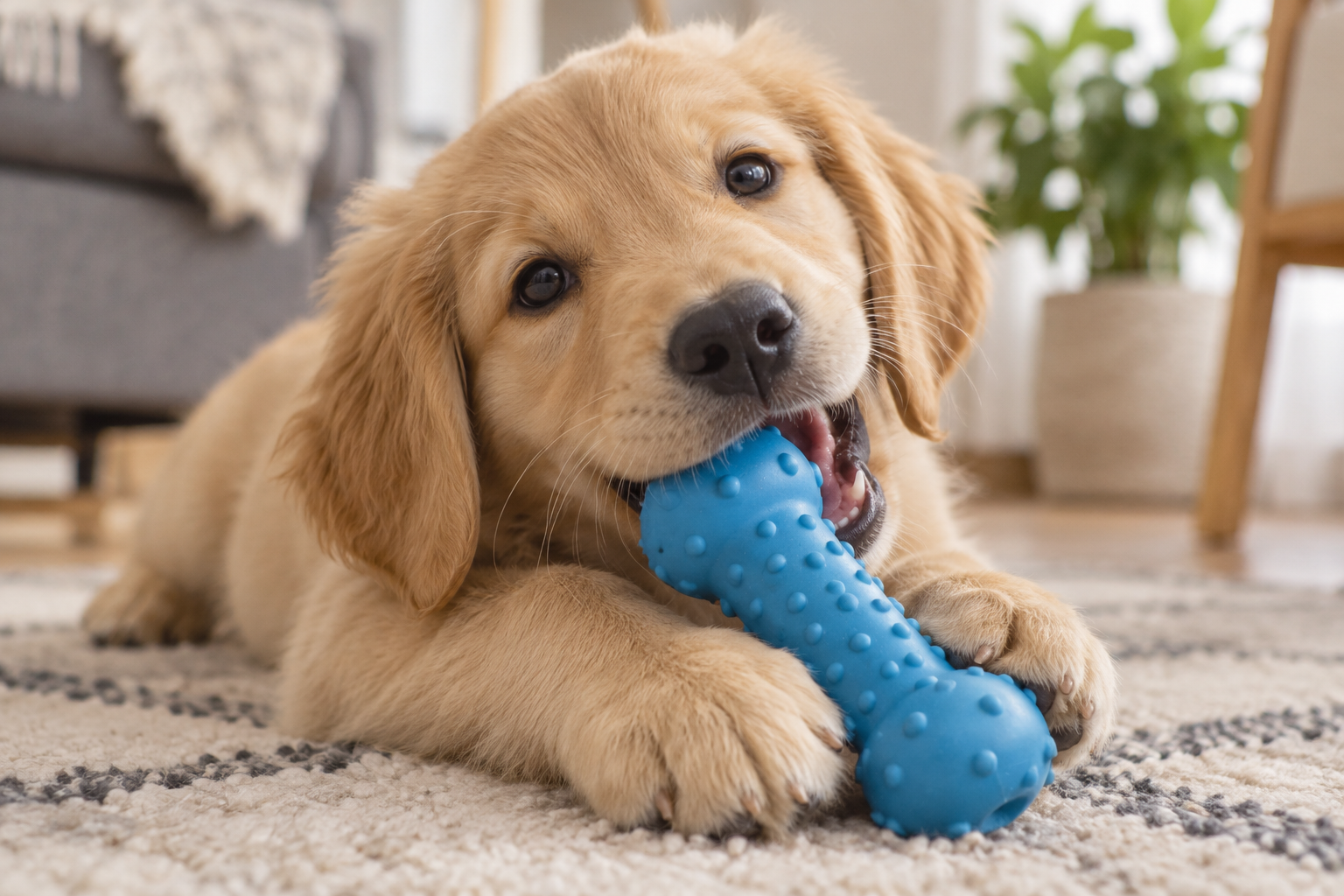
Puppies need suitable outlets for chewing, chasing, and playing. They don’t need a mountain of toys available at once.
Start with a few different types:
- A durable chew toy
- A food-stuffable toy
- A soft toy for supervised play
- A tug toy
- A ball large enough not to swallow
Toy safety depends on your puppy’s size and chewing style. A toy that survives one dog may become confetti for another.
Inspect toys before each play session. Remove anything with loose threads, exposed stuffing, sharp pieces, or chunks coming away.
Rotate toys every few days instead of buying new ones. An old toy often becomes exciting again after a short holiday in the cupboard.
Household objects aren’t automatically safe substitutes. Socks, old shoes, plastic bottles, and children’s toys can break apart or teach confusing habits.
Food-stuffable toys may also slow meals and provide enrichment. Count the food inside as part of your puppy’s daily amount.
Spend on barriers where they prevent trouble
A baby gate or puppy pen can protect both your puppy and your belongings. It’s often cheaper than replacing cables, rugs, or half a wall.
Use barriers to create a safe area near normal household activity. Puppies generally cope better when they can rest without feeling completely isolated.
Check that gates are sturdy and correctly installed. Openings shouldn’t be large enough to trap a head, leg, or small body.
Avoid unstable furniture barricades. A falling chair is not an effective training method, despite its dramatic presentation.
Secondhand gates and pens can work well. Test every lock, connector, and panel before trusting them.
Puppy-proof before buying more gear
Puppy-proofing is one of the best free ways to reduce risk. Get on the floor and inspect the room from puppy height.
Move or secure:
- Electrical cables
- Medicines and cleaning products
- Rubbish bins
- Shoes and small clothing
- Children’s toys
- Batteries and remote controls
- Food within reach
- Toxic plants
- Small objects that could be swallowed
Use closed cupboards and existing storage where possible. A free shelf may solve the same problem as an expensive “pet organization system.”
Supervision still matters after puppy-proofing. Puppies can discover weaknesses in a room with the focus of tiny building inspectors.
Call a veterinarian promptly if your puppy may have swallowed something dangerous. Don’t induce vomiting or try a home remedy unless a qualified professional directs you.
Keep grooming supplies simple
Your puppy’s grooming needs depend on coat type, skin, ears, nails, and lifestyle. Start with the tools you’ll genuinely use.
A basic kit might include:
- A suitable brush or comb
- Dog shampoo
- A towel
- A toothbrush and dog toothpaste
- Nail-care tools, if you know how to use them safely
Human shampoo and toothpaste aren’t suitable substitutes. Products made for dogs are designed for different skin and safety needs.
Ask a groomer, veterinarian, or reputable rescue which brush suits your puppy’s coat. The wrong tool may be ineffective or uncomfortable.
You can save money by introducing gentle handling at home. Briefly touch paws, ears, and the mouth while rewarding calm behavior.
Don’t rush nail trimming if you aren’t confident. Cutting too far can cause pain and bleeding, so ask for a demonstration first.
Spend on early training support when needed
Training can prevent expensive damage and stressful behavior later. It also helps your puppy understand how to live safely with people.
Look for reward-based training that teaches with food, play, and access to things the puppy enjoys. Avoid methods based on fear, pain, or intimidation.
A group class may provide structure and controlled practice. Private support can be worthwhile for fear, guarding, severe distress, or other challenging behavior.
Check a trainer’s methods before paying. Ask what happens when a puppy gets something wrong and what equipment they recommend.
You can also practice many basics at home for free. Short sessions on name response, settling, recall, and gentle handling are useful starting points.
Delay the nonessential extras
Some products are pleasant but don’t need to arrive before your puppy. Waiting also reveals what your dog actually likes.
You can usually delay:
- Multiple beds
- Decorative clothing
- Large toy collections
- Elaborate feeding stations
- Premium treat jars
- Matching accessory sets
- Specialized travel gear you don’t yet need
- Large amounts of one chew type
Weather-protective clothing can be useful for some dogs. Need depends on coat, body size, health, climate, and time outdoors.
Buy for a clear purpose, not because a product is labeled “essential.” Pet marketing has a very generous definition of that word.
Build a realistic starter list
For most puppies, a sensible first shopping list is fairly short:
- Suitable puppy food
- Food and water bowls
- Identification tag
- Well-fitted collar or harness
- Fixed-length leash
- Safe sleeping area
- Crate, pen, or gate if needed
- A few appropriate toys
- Waste bags
- Basic cleaning supplies
- Coat-appropriate grooming tools
- Secure travel equipment
You’ll also need an enzymatic cleaner for toilet accidents. This type of cleaner breaks down odor-causing material instead of only covering the smell.
Check that every cleaning product is suitable for your surfaces and household. Keep all products out of your puppy’s reach.
For car travel, use equipment designed to secure dogs safely. A loose puppy can distract the driver and may be injured during sudden movement.
Use a cost-per-use mindset
The cheapest product isn’t a bargain if it breaks tomorrow. The most expensive product isn’t automatically better either.
Before buying, ask four questions:
- Does my puppy need this now?
- Is it safe for their current size and behavior?
- Can it be cleaned or adjusted?
- Will we use it often enough to justify the cost?
Spend more when better construction directly affects safety, fit, or durability. Save when the difference is mainly color, branding, or decoration.
Keep receipts until you confirm that equipment fits and works. Puppies are not famous for respecting carefully planned purchases.
Take one small step today
Open a note on your phone and write your three lists: need now, need soon, and maybe later.
Then check what you already own, measure your puppy, and buy only the first safe basics. Your budget will breathe easier, and your puppy will still feel completely at home.