What to Pack When You Go to Pick Up Your Puppy
Your puppy may arrive with tiny paws and astonishing amounts of luggage.
Start by putting one travel bag near the door. Use this puppy pickup checklist to fill it without packing the entire pet shop.
Pack a safe place for the ride
Your puppy needs a secure spot in the vehicle. Riding loose, sitting on the driver, or wandering between seats isn’t safe.
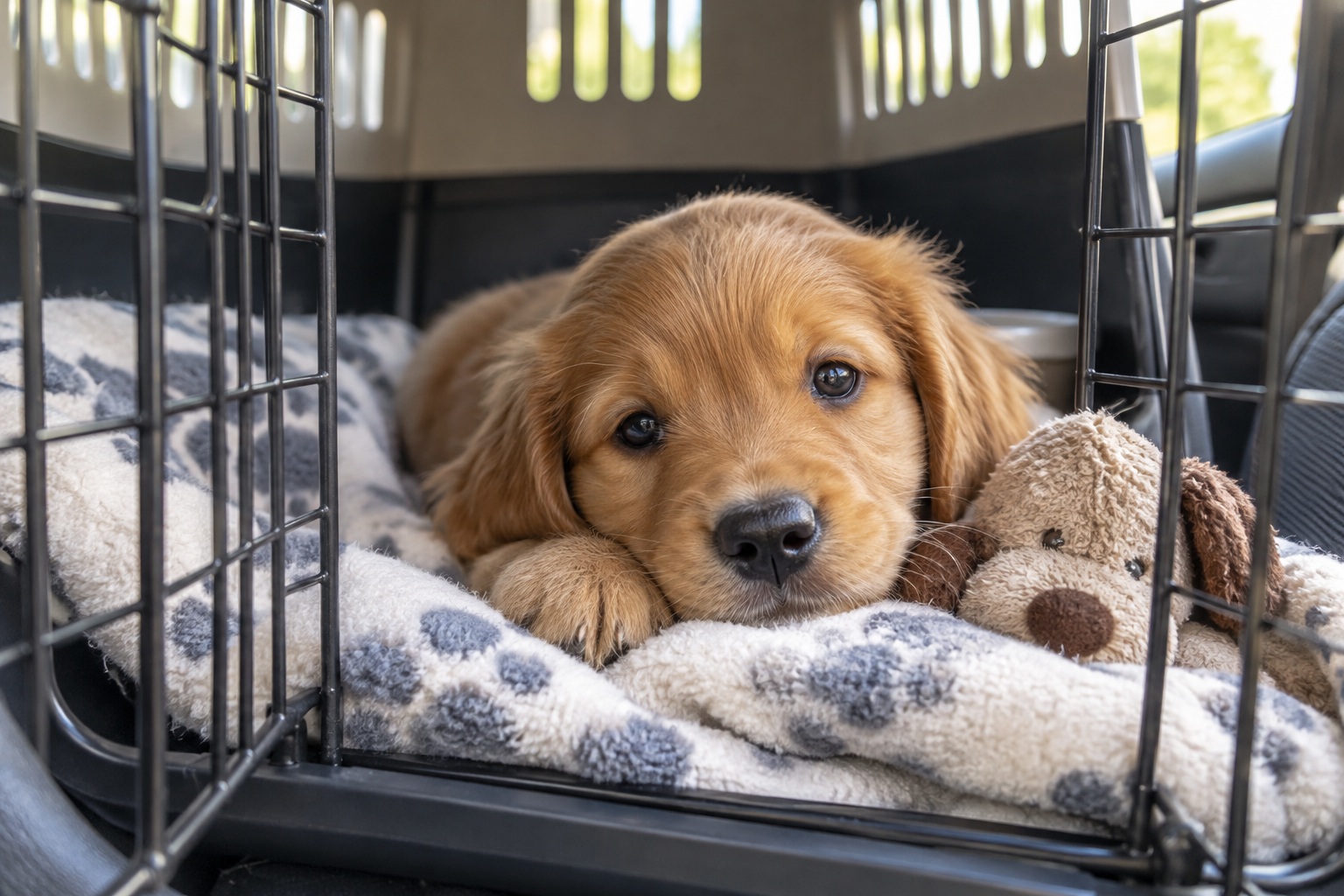
For most puppies, pack a sturdy travel crate or carrier. Choose one with enough room for the puppy to stand, turn, and lie down comfortably.
Secure the crate so it can’t slide or tip. Follow its instructions and your vehicle’s guidance when positioning it.
A dog car harness may suit some larger puppies. However, fit can be difficult when you don’t yet know the puppy’s exact size. Ask the breeder, shelter, or rescue what they recommend for pickup.
If possible, bring another adult. One person can drive while the other quietly watches the puppy. The passenger should still keep the puppy secured rather than holding them throughout the journey.
For air or public transport, check the operator’s current rules directly. Carrier sizes and animal travel requirements can vary.
Add simple comfort items
Leaving familiar people, dogs, and smells is a huge change. A few soft items can make the trip less overwhelming.
Pack:
- A washable blanket or towel
- A spare towel in case the first gets messy
- A familiar-smelling item, if arranged beforehand
- A simple puppy-safe chew for a longer journey
Ask whether you can collect a small blanket carrying the scent of the puppy’s previous home. Don’t assume one will be available.
Avoid filling the crate with bulky bedding or loose toys. Your puppy needs a flat, uncluttered place to rest. Remove anything they begin tearing apart or trying to swallow.
Keep the car calm and comfortably ventilated. Loud music and a parade of excited visitors can wait.
Bring walking and identification gear
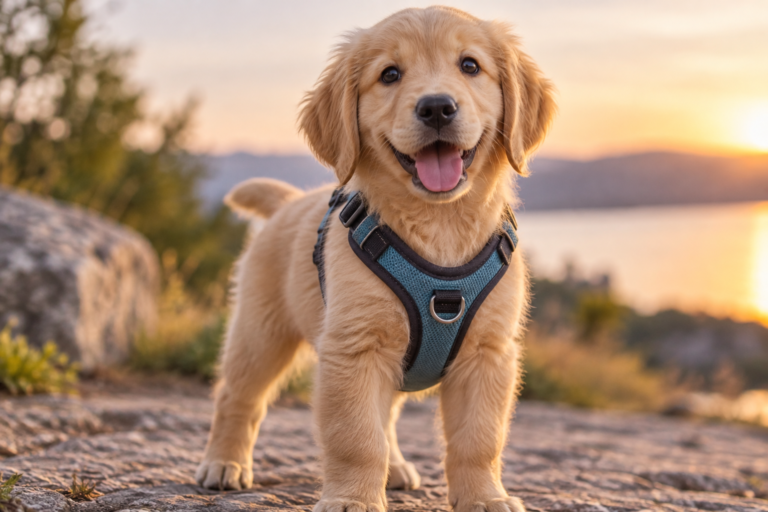
Pack a lightweight collar or harness and a regular leash. Confirm the puppy’s measurements before buying if you can.
Check the fit before leaving the pickup location. A collar or harness should be snug enough to prevent escape without pressing or rubbing.
Puppies can wriggle free with remarkable talent. Keep doors and windows closed while attaching the leash, and use an enclosed area whenever possible.
Add an identification tag with your phone number. If permanent details aren’t ready, a temporary tag is still useful.
Don’t use a retractable leash for pickup day. A standard leash offers closer control in unfamiliar places.
The breeder or rescue may prefer to hand the puppy over using their own secure lead. Follow their process, then fit your gear before approaching the car.
Pack for toilet breaks and accidents
Even a partly house-trained puppy may have an accident. Stress, motion, and a new schedule can upset normal habits.
Bring:
- Poop bags
- Paper towels
- Spare washable towels
- A sealable bag for wet or dirty items
- Puppy-safe cleaning wipes
- An absorbent pad for protecting the crate base
Place any absorbent pad flat beneath the bedding. Replace it if the puppy starts chewing it.
For longer drives, ask the pickup contact about safe toilet breaks. Very young puppies may not have full vaccine protection, so busy dog areas can carry extra risk.
Choose a quiet, low-traffic spot if a break is necessary. Keep the puppy away from unknown dogs, animal waste, and shared water bowls. Ask a veterinary professional for guidance if you’re unsure about local disease risks.
Never open the crate beside an open vehicle door or busy road. Secure the puppy’s leash first.
Take water and familiar food
Pack fresh water and a small, stable bowl. Offer modest amounts during stops rather than allowing a loose bowl to spill inside the moving car.
For a long journey, ask when the puppy last ate. Large meals immediately before travel may worsen nausea.
Bring some of the puppy’s current food, especially if the trip crosses a normal mealtime. Sudden food changes can cause stomach trouble, so pickup day isn’t ideal for sampling several new treats.
Ask the breeder or rescue to write down:
- The food’s name and type
- The usual portion
- Normal feeding times
- Any known food sensitivities
Don’t give calming products, travel medicine, or supplements without veterinary direction. Some products aren’t suitable for young puppies.
Make a paperwork folder
A simple folder keeps important documents from disappearing beneath damp towels.
Bring your identification, payment method if needed, and any forms requested by the breeder or rescue. Confirm requirements before leaving home.
Collect all available puppy records, including:
- Adoption or purchase documents
- Known health and vaccination records
- Microchip information
- Insurance details, if included
- Feeding and routine notes
- Contact details for follow-up questions
A microchip is a small identification device placed under the skin. If your puppy has one, ask how to register or transfer its details promptly.
Review the paperwork before leaving. Check the puppy’s name, identification details, and any agreed care information. Pickup excitement can make even obvious questions vanish from your brain.
Keep useful phone details handy
Charge your phone before setting out. Pack a charging cable or power bank for a longer trip.
Save the pickup address, contact number, and your planned route. Also note the details of a veterinary clinic near home and an emergency clinic along a long route.
Take a photo of important paperwork as a backup. You can also photograph the puppy’s current food packaging if you haven’t bought it yet.
Avoid spending the whole pickup taking photos, though. Listen carefully to the person explaining the puppy’s routine and needs.
Watch your puppy during the journey
Some puppies sleep all the way home. Others whine, drool, pant, vomit, or need frequent quiet reassurance.
Mild nervousness can happen during a first journey. Keep your voice calm, drive smoothly, and avoid constantly opening the carrier.
Stop safely if you need to check the puppy. Don’t try to manage a loose or distressed puppy while driving.
Seek qualified veterinary help promptly if the puppy has trouble breathing, collapses, seems extremely weak, vomits repeatedly, or shows another sudden serious change. Contact the breeder or rescue too, but don’t delay urgent care while waiting for a reply.
Never leave the puppy alone in a parked vehicle. Temperatures can become dangerous surprisingly quickly, even when the day feels mild.
Your final puppy pickup checklist
Before leaving, check that you have:
- A secured crate, carrier, or suitable car restraint
- A properly fitted collar or harness
- A standard leash
- An identification tag
- Washable bedding and spare towels
- Poop bags and cleaning supplies
- A sealable bag for dirty items
- Fresh water and a bowl
- Familiar food for a long journey
- A folder for puppy records
- Your phone, charger, route, and contact details
- Another adult helper, if available
Today’s small job is easy: place the travel crate in your vehicle and practice securing it. That’s one less puzzle to solve when your puppy is waiting—and your brain has turned into happy mush.