How to Choose the Right Crate Size for Your Puppy
Puppies have a special talent for looking tiny and taking up everything. Luckily, choosing a crate starts with two simple measurements.
Measure your puppy while they’re standing naturally. Then compare those numbers with the crate’s internal dimensions, meaning the usable space inside.
Start With the Right Kind of Fit
A well-fitted crate should feel like a cozy bedroom, not a shoebox. Your puppy needs enough room to:
- Stand without lowering their head
- Sit without pressing against the top
- Turn around without getting wedged
- Lie down with their legs in a comfortable position
- Change sleeping positions during a nap
The crate shouldn’t be so large that it feels like a puppy apartment. Extra space can give your puppy one corner for sleeping and another for toileting.
That doesn’t mean smaller is always better. A cramped crate can cause discomfort and make crate training unpleasant.
Measure Your Puppy in Two Directions
Grab a tape measure and a few pieces of food. Measuring is easier when your puppy is focused on something besides eating the tape.
For length, measure from the tip of the nose to the base of the tail. The base is where the tail meets the body, not the tail’s tip.
For height, measure from the floor to the top of the head. If your puppy has upright ears, include them in the measurement.
Your puppy should be standing normally for both measurements. Don’t stretch their neck upward or press them into a perfect pose.
Choose a crate with internal dimensions that give them a little extra room beyond those measurements. The movement test matters more than chasing one exact number.
Crate listings often show external dimensions. Those include the walls, frame, handles, or raised edges, so check the details carefully.
Use the Movement Test
Measurements provide a starting point. Your puppy’s movement gives you the final answer.
Let your puppy enter the crate with the door secured open. Use food or a favorite toy to encourage exploration, but don’t push them inside.
Watch your puppy stand, turn, sit, and lie down. Their back and head shouldn’t rub the roof during normal movement.
When lying down, your puppy should look relaxed rather than folded. Some puppies curl into a tiny ball by choice, but they still need room to stretch and reposition.
If your puppy can barely turn, the crate is too small. If they can pace around a large empty section, it may be too big for early training.
Plan for Growth With a Divider
Most puppies outgrow several sizes before reaching adulthood. Buying a new crate every few weeks isn’t your only option.
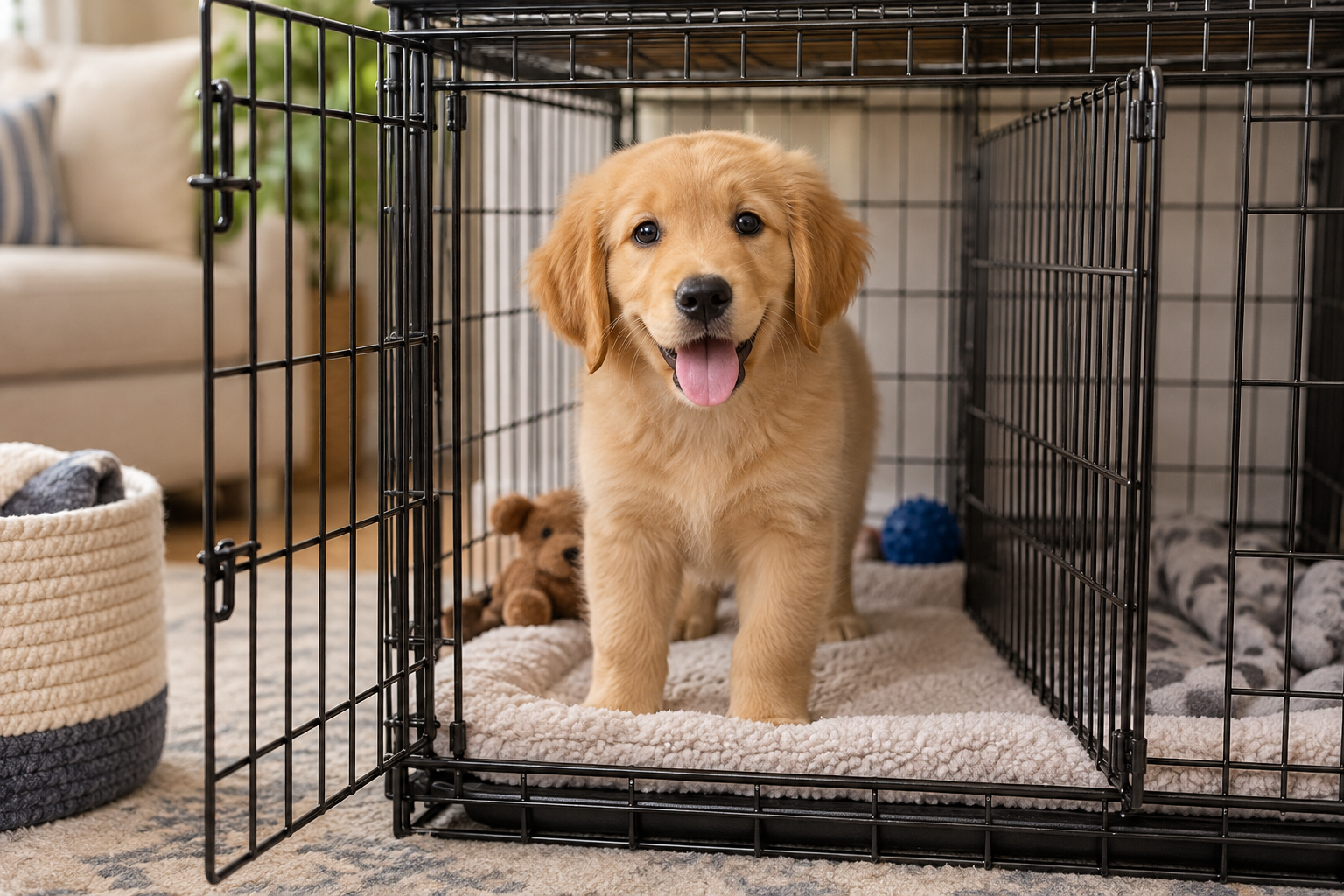
A larger crate with a secure divider can create a smaller sleeping area. The divider is a panel that reduces the usable space inside the crate.
Move the divider as your puppy grows. Check the fit often, especially during obvious growth spurts.
The divider should attach firmly and have no gaps that could trap a paw, leg, collar, or head. Use the divider designed for that crate whenever possible.
Don’t place boxes or loose objects inside to reduce the space. A curious puppy may chew, climb, crush, or become stuck behind them.
Estimate Adult Size Carefully
If you’re buying a crate for future growth, you’ll need a rough adult-size estimate. Breed information and the size of the puppy’s parents may help.
Mixed-breed puppies can be harder to predict. Paw size alone isn’t a reliable measuring tool, despite its impressive reputation at the dog park.
A veterinarian may help you understand your puppy’s likely growth range. Even then, treat the estimate as a guide rather than a promise.
Choose a crate that should fit the expected adult dog. Use a divider to create a suitable puppy crate size for now.
Check the crate manufacturer’s weight guidance too. Weight limits matter for the strength of the floor, doors, and carrying handles, but weight alone doesn’t confirm a comfortable fit.
Choose a Crate Style That Suits the Job
Wire crates are airy and often include movable dividers. Many also fold for storage, though they can feel visually busy in a quiet room.
A breathable cover may help some puppies settle. Make sure air can circulate, and prevent your puppy from pulling the fabric through the bars.
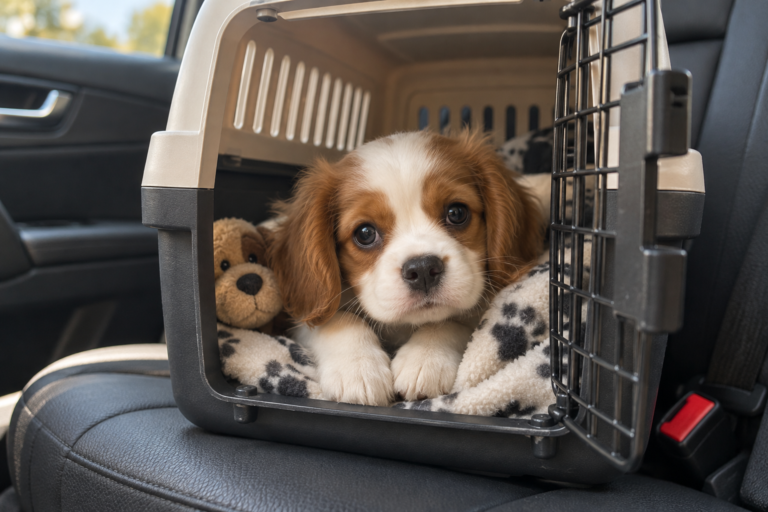
Plastic crates can feel more sheltered. Their curved sides and fixed shape may also mean less usable room than the outside measurements suggest.
Soft-sided crates are lightweight, but they aren’t suitable for every puppy. A determined chewer or scratcher may damage the fabric or escape.
Furniture-style crates vary widely in ventilation and strength. Check that the design allows comfortable movement and doesn’t have tempting chewable edges.
For car or airline travel, home-training fit isn’t the only concern. Follow the current carrier rules from the transport provider and the product maker.
Add Bedding Without Ruining the Fit
Bedding takes up space, especially thick cushions with raised sides. Recheck your puppy’s headroom and turning space after adding a bed.
Some puppies do best with a simple, washable mat. Others chew or shred bedding and may need a safer, simpler setup while you seek guidance.
Remove damaged fabric or loose stuffing promptly. Swallowed pieces can cause a serious blockage and need veterinary attention.
Avoid placing water bowls, bulky toys, and several blankets into an already snug crate. Your puppy should still have clear space to rest and move.
Watch for Signs the Crate Is Too Small
Your puppy can’t explain a poor fit, but their body language offers clues. Look for:
- Ducking or crouching while standing
- Difficulty turning around
- A hunched or twisted sleeping position
- Repeated rubbing against the sides
- Reluctance to enter after previously resting comfortably
- Being unable to sit upright
Sudden reluctance doesn’t always mean the crate is too small. Pain, illness, fear, heat, or a frightening event can also change behavior.
If your puppy suddenly seems uncomfortable or distressed, contact a veterinarian. A qualified reward-based trainer can help with ongoing crate fear or training problems.
Know When Extra Space Isn’t the Real Problem
Toileting in the crate is often blamed on excess room. Sometimes space contributes, but it isn’t the only possible reason.
Young puppies need frequent toilet opportunities. Accidents may also happen when routines change, signals are missed, or stomach and bladder problems appear.
Clean accidents with a pet-safe product that removes lingering odor. Don’t punish your puppy or make the crate uncomfortably small.
If accidents begin suddenly, happen repeatedly, or come with other changes, speak with a veterinarian. Adjusting the divider won’t fix a health problem.
Make the Crate a Pleasant Resting Place
Even the perfect puppy crate size won’t create comfort by itself. Introduce the crate gradually with food, calm praise, and short positive visits.
Place it in a comfortable area where your puppy can rest without feeling isolated. Avoid direct sun, heating vents, cold drafts, and noisy walkways.
Never use the crate as punishment. It should be a safe place for rest, not somewhere your puppy is sent for being inconvenient.
Crates also aren’t substitutes for play, exercise, toilet breaks, training, and company. Puppies need all of those throughout the day.
Remove collars or harnesses if they could catch on crate parts while your puppy is unattended. Check the door, divider, latches, and edges regularly for damage.
Recheck the Fit as Your Puppy Grows
A crate that fits this month may be snug next month. Make a quick fit check part of your puppy’s regular routine.
Watch them stand, turn, sit, and stretch out. Then move the divider or change crates before the space becomes cramped.
Your small action for today is easy: measure your puppy’s length and height, then write the numbers down. That two-minute job makes crate shopping much less guessy.