Puppy Crate or Playpen? Choosing What Fits Your Home
Puppies can turn one safe corner into a full interior-design meeting.
Start by writing down when you’ll need that space. Think about nighttime, work calls, cooking, showers, and short trips outside. Your daily routine will quickly show whether a crate, playpen, or both makes sense.
The basic difference
A crate is a small, secure resting space. It’s usually designed for sleeping, quiet breaks, travel, and short periods of safe confinement.
A playpen creates a larger puppy-safe area. Your puppy can stand, walk, play, drink, and change resting spots inside it.
Neither option is meant to store a puppy while life happens elsewhere. Puppies still need company, toilet breaks, exercise, training, and chances to explore safely.
The simplest comparison is this:
- Choose a crate for sleep and short quiet periods.
- Choose a playpen for more movement during awake time.
- Consider both if you need flexible spaces for different moments.
Your puppy’s age, personality, size, and past experiences also matter. A setup that relaxes one puppy may frustrate another.
When a crate works well
A crate can become a calm place for naps and nighttime sleep. It can also prevent chewing or wandering when you can’t supervise briefly.
Crate training is useful beyond puppyhood. Dogs may encounter crates during travel, grooming, boarding, or medical care. A gentle introduction now can make those situations less stressful later.
A crate may suit your home if:
- You want a defined sleeping area.
- You’re working on toilet training.
- Your puppy settles better in a snug, quiet spot.
- Floor space is limited.
- You need safe confinement for short periods.
- You plan to travel safely with your dog.
Crates can support toilet training because many puppies avoid soiling their sleeping area. However, a crate can’t teach bladder control faster than a puppy develops it.
Young puppies need frequent toilet opportunities. If accidents happen, review the timing instead of blaming the puppy. Never limit normal access to water simply to prevent accidents unless a veterinarian has advised it.
When a playpen works well
A playpen offers more room than a crate. It’s useful when your puppy is awake but can’t safely explore the whole room.
For example, you might use one while preparing dinner. Your puppy can play nearby without investigating the oven, bin, and every dropped onion peel.
A playpen may suit your home if:
- You spend time in one main room.
- Your puppy needs room for toys and movement.
- You work from home and need brief hands-off periods.
- You want to protect cables, plants, or furniture.
- Your puppy dislikes being closely confined.
- You need a safe recovery area after professional guidance.
A playpen can also help your puppy practice being near you without receiving constant attention. That’s a useful everyday skill, especially for enthusiastic little shadows.
However, more space doesn’t automatically mean more comfort. Some puppies pace, climb, or become frustrated in a pen. Watch what your puppy actually does rather than assuming the larger option is kinder.
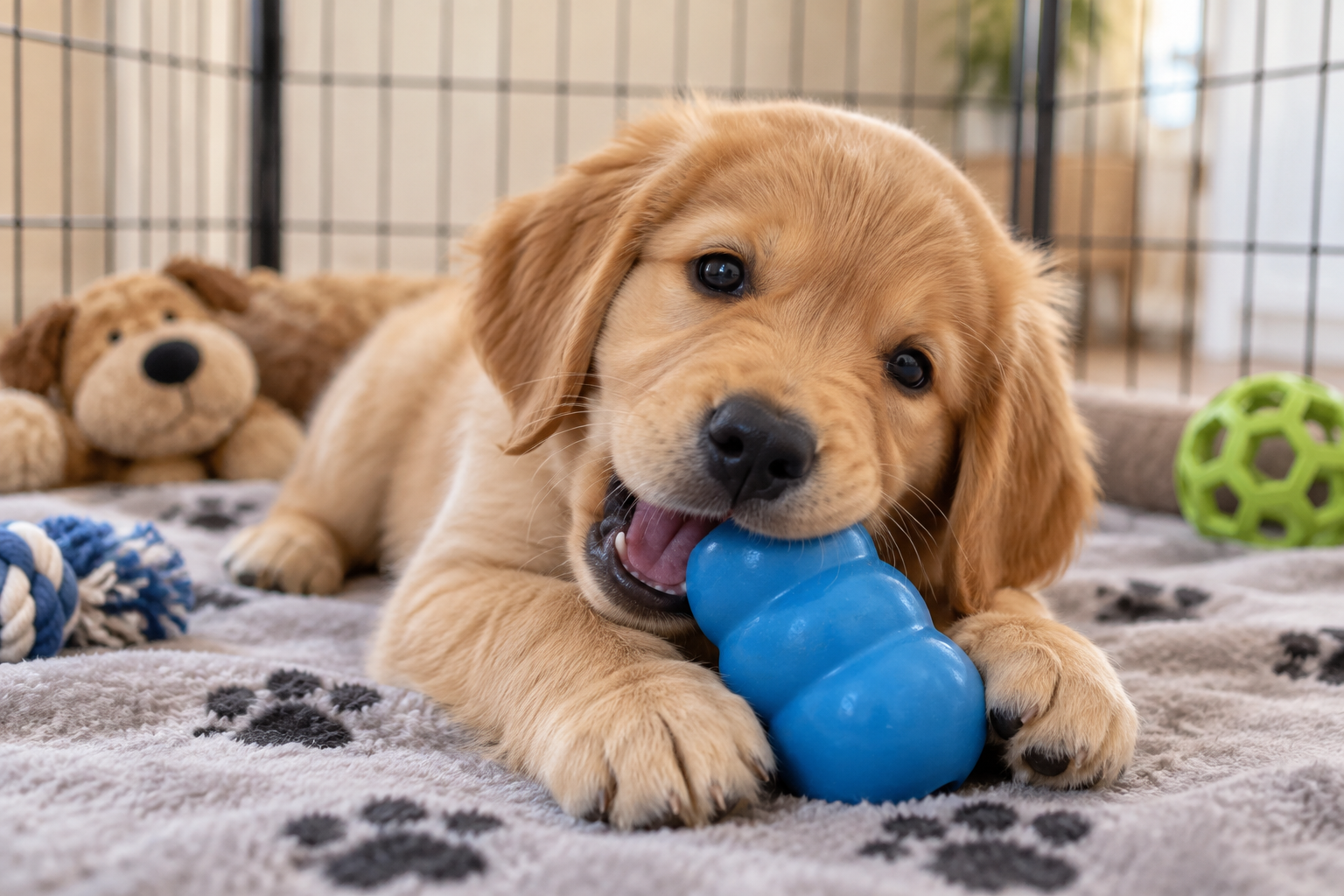
Comparing a puppy crate vs playpen
The puppy crate vs playpen decision becomes easier when you match each option to a specific job.
For nighttime sleep
A crate often works better because it creates a clear sleeping space. Placing it near your bed can help a new puppy feel less isolated. It also lets you notice stirring that may signal a toilet break.
A playpen may work if your puppy settles calmly there. It can also hold an open crate, creating both a sleeping spot and extra space.
Avoid expecting either setup to keep a young puppy quiet all night immediately. Restlessness may mean fear, discomfort, or a need to go outside.
For daytime naps
Either option can work.
A crate may help puppies who become overtired and keep playing. A playpen may suit puppies who prefer choosing between a bed and a cooler floor.
Keep the area away from busy walkways when possible. Puppies need uninterrupted sleep, even when they insist they’re available for every household event.
For short unsupervised periods
A properly introduced crate can be useful for brief absences. A safe playpen may offer more room if you’ll be gone longer than a quick errand.
Time alone should be built gradually. Confinement doesn’t automatically teach a puppy to feel safe when you leave.
If your puppy panics, drools heavily, tries frantically to escape, or injures themselves, seek qualified help. These may be signs of serious separation-related distress, not ordinary protest.
For toilet training
A crate gives you more control over sleeping and toilet routines. It works best when paired with regular outdoor opportunities and close supervision.
A playpen offers enough space for a puppy to toilet away from their bed. That can be useful in some homes, but it may also slow outdoor toilet training.
If you must provide an indoor toilet area, keep it clearly separate from bedding and food. Be consistent about where you want your puppy to go.
For busy family time
A playpen usually offers more freedom during meals, visitors, or children’s playtime. Your puppy can stay involved without being under everyone’s feet.
A crate is better when the puppy needs true rest. Put it somewhere calm rather than in the middle of noisy excitement.
Teach children to leave a resting puppy alone. A crate or pen should never become a place where a puppy gets cornered by curious hands.
You may not need to choose only one
Many homes benefit from using a crate and playpen together.
You can place an open crate inside or beside a secured playpen. The crate becomes the bedroom, while the pen provides a small living area.
This arrangement gives your puppy choices during supervised daytime use. They can nap in the crate, stretch outside it, or play with a safe toy.
At night, you might close the crate if your puppy is comfortable there. During the day, you can open it into the pen.
Don’t assume the combined setup is automatically safe while you’re away. Check whether your puppy climbs, pushes panels, chews connectors, or becomes caught between sections.
Choosing the right crate
Your puppy should be able to stand naturally, turn around, stretch, and lie comfortably. A crate shouldn’t force a cramped position.
An oversized crate may allow a puppy to sleep at one end and toilet at the other. Some crates use dividers so the resting space can grow with the puppy.
Common crate styles include wire, hard-sided, and soft-sided models. Each has different strengths.
Wire crates offer airflow and visibility. Some puppies relax better when part of the crate is covered with a breathable cover, while others prefer a clear view.
Hard-sided crates can feel sheltered and may suit travel needs. Soft crates are light, but they generally aren’t suitable for puppies who chew, scratch, or attempt escapes.
Check every door, latch, edge, and gap. Your puppy shouldn’t be able to trap a paw, jaw, collar tag, or head.
Remove collars and harnesses when a confined puppy won’t be directly watched. Tags and straps can catch on crate or pen parts.
Choosing the right playpen
A playpen should be tall and stable enough for your puppy’s current abilities. Remember that puppies learn to jump and climb with suspicious speed.
Choose a shape that fits your room without blocking exits or walkways. Make sure people can enter safely for cleaning and interaction.
Check how the pen meets the floor. A determined puppy may slide lightweight panels, especially on smooth surfaces.
If the pen has a gate, inspect its gaps and closing points. Your puppy shouldn’t be able to squeeze through or catch a foot.
The surrounding area matters too. Move electrical cords, curtains, houseplants, heaters, and unstable furniture out of reach. Puppies can pull objects through bars even when those objects seem safely outside.
Set up a comfortable space
Keep the setup simple at first. Too many blankets and toys can make it harder to notice chewing or toilet accidents.
Add a comfortable resting surface suited to your puppy. If they shred or swallow bedding, remove it and ask a veterinarian or qualified trainer about safer options.
Provide only toys that are appropriate for your puppy’s size and chewing style. Inspect them often and remove damaged pieces.
A secure water bowl may be suitable in a playpen, especially during awake periods. Normal access to fresh water matters, so ask your veterinarian if health, weather, or toilet concerns complicate your setup.
Place the crate or pen in a comfortable indoor area. Avoid strong sun, cold drafts, heaters, and places where the puppy could overheat.
Introduce the space without a battle
Let your puppy explore while the door stays open. Toss in a piece of their usual food or place a familiar toy inside.
Feed meals near the entrance, then inside if your puppy remains comfortable. This creates a positive association, meaning the space predicts good things.
Close the door for only a brief moment at first. Open it while your puppy is still calm, then build the time gradually.
Stay nearby during early practice. Later, move around the room or step out briefly.
Don’t force your puppy inside or use the space as punishment. You want the crate or pen to feel safe, not like puppy jail after a questionable shoe decision.
Some whining is a request for attention or a toilet break. Persistent barking, frantic scratching, heavy panting, or escape attempts suggest the step was too difficult.
Pause and make the next practice easier. If intense distress continues, contact a veterinarian or a qualified reward-based trainer.
Avoid common setup mistakes
Don’t leave a puppy confined simply because they aren’t destroying anything. Quiet puppies can still be frightened, uncomfortable, or overdue for a toilet break.
Don’t use a playpen instead of puppy-proofing nearby rooms. Gates can move, and clever paws can reach farther than expected.
Don’t place the setup far from everyone all day. Puppies need gentle social contact and chances to learn household life.
Don’t interrupt every nap for cuddles. A puppy who chooses to rest should usually be allowed to sleep.
Most importantly, adjust the plan as your puppy grows. A tiny puppy who ignores the panels today may climb them next month.
Make your choice today
Choose the space based on the next job, not every future possibility.
For sleep and short quiet periods, start with a suitable crate. For safe daytime movement, start with a sturdy playpen. If both needs matter, plan a combined setup.
Today, pick one location in your home and puppy-proof the area around it. That small step will make either choice safer—and your future shoes may quietly thank you.