
How to Introduce Your Puppy to a Cat Who Was Here First
Your cat didn’t order a puppy, yet somehow one arrived.
Before they meet, give each pet a separate, comfortable part of the home. This first step protects your cat’s routine and helps your puppy settle quietly.
The aim isn’t instant friendship. Calm, safe coexistence is already an excellent result.
Start with the cat’s existing routine
Your cat was there first, so the puppy is entering established territory.
Keep the cat’s usual feeding places, sleeping spots, and daily routine as steady as possible. Sudden changes can make the puppy’s arrival feel even more disruptive.
Make sure your cat can still reach important resources without passing the puppy. These include:
- Food and water
- Litter trays
- Beds and hiding places
- Scratching posts
- Favorite windows or resting spots
- Safe routes between rooms
Place these resources where the puppy can’t block or disturb them. A cat shouldn’t have to sneak past an excited puppy to use the litter tray.
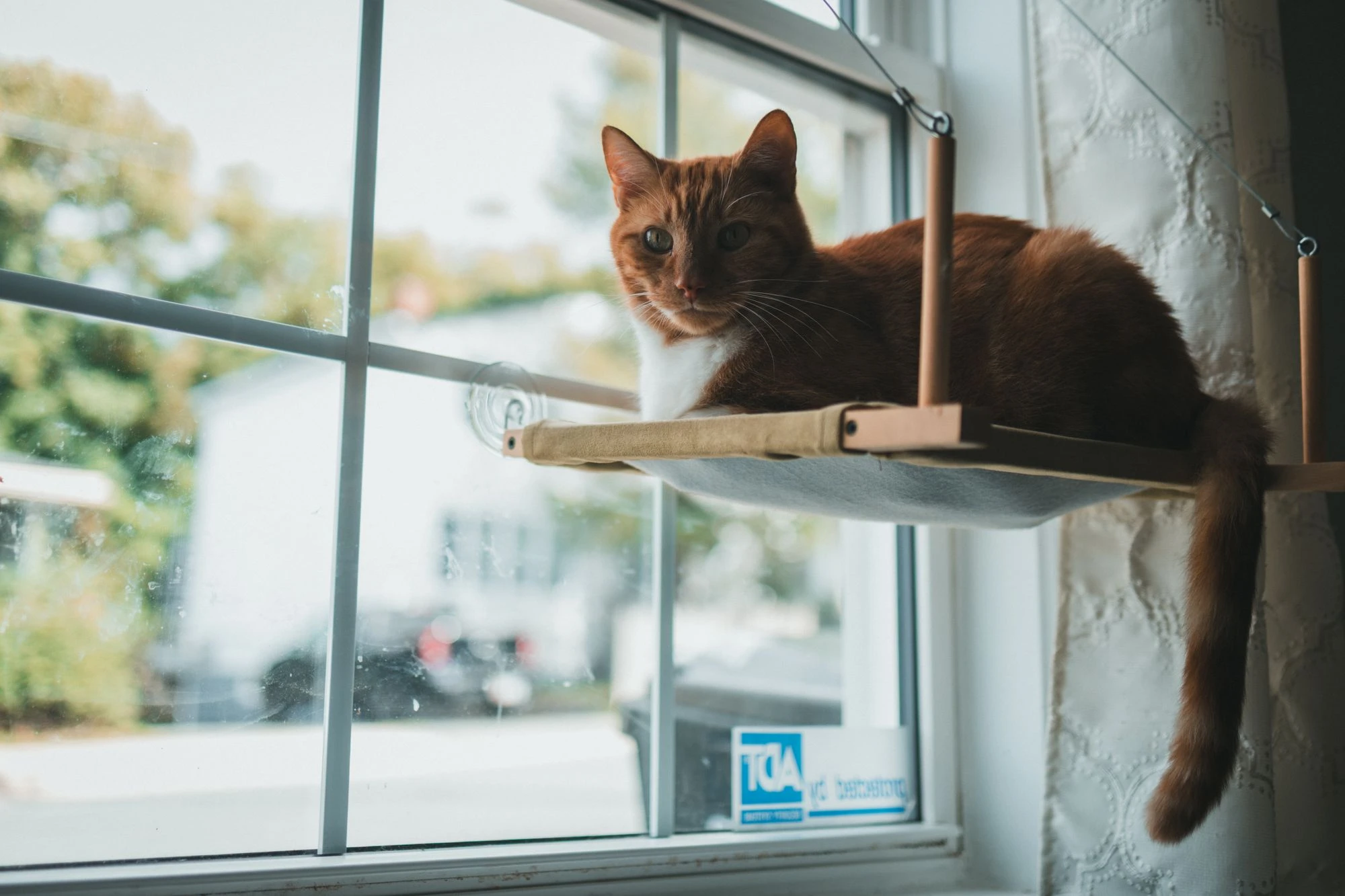
Your cat also needs high places. Shelves, sturdy cat trees, and accessible furniture can provide safe observation points.
Height alone isn’t enough if the cat can become cornered. Every resting place should have a practical escape route.
Keep outside doors and windows secure during the adjustment period. However, don’t secure the home in a way that traps your cat beside the puppy.
Give your puppy a separate home base
Your puppy needs a comfortable area away from the cat’s main territory.
This might be a puppy-safe room or a sectioned part of a room. It should contain suitable bedding, water, toys, and space to rest.
Closed-door separation is the safest place to begin. It prevents surprise chasing while both animals learn that someone new is nearby.
The cat should remain free to move around its safe territory. Don’t shut the cat in a small space so the puppy can explore everywhere else.
During this stage, help your puppy learn simple calm behaviors. Responding to their name, turning toward you, and settling on a mat may later help around the cat.
Use rewards your puppy values, such as food or gentle praise. Keep sessions easy and stop before excitement starts boiling over.
Let scent do the first introduction
Cats and dogs learn a great deal through smell. They don’t need face-to-face contact for the introduction to begin.
Swap bedding or soft cloths between their separate areas. Place the scented item where the other animal can investigate or ignore it.
Don’t push the item under your cat’s nose. Choice matters, especially for a resident cat whose home has suddenly changed.
You can also exchange access to rooms while keeping the animals apart. For example, secure the puppy elsewhere while the cat investigates the puppy’s area.
Then let the puppy sniff a room the cat recently used. Check that the cat is safely separated before opening any door.
Scent exchange may look uneventful. That’s fine. Boring is often useful during an introduction.
Cats Protection’s introduction guidance also recommends separate spaces, scent exchange, and gradual visual contact.
Wait until both animals can settle separately
Don’t arrange a first look while your puppy is bouncing off the furniture.
Choose a quiet moment when both animals are individually settled. That doesn’t mean exhausting your puppy with vigorous exercise first.
Instead, meet the puppy’s normal needs and allow time to calm down. A toilet break, gentle sniffing, or a short training activity may help.
Watch the cat too. A cat already hiding, pacing, or trying to escape isn’t ready for a visual meeting.
There’s no fixed number of days to wait. Progress depends on the behavior of the individual cat and puppy.
Some pairs need a slower process than others. Moving carefully isn’t failure; it’s good handling.
Set up the first barrier view
The first visual introduction should happen through a secure barrier.
A properly installed gate may work in some homes. However, gates aren’t automatically puppy-proof or cat-proof.
A small puppy might squeeze through gaps. A larger puppy may climb, jump, or knock the gate aside.
Your cat might also jump over and land too close to the puppy. Check the whole setup before bringing either animal near it.
A closed door opened only a small, securely controlled amount may suit another home. Whatever you use, it must prevent chasing and allow the cat to retreat.
Keep the puppy far enough from the barrier to remain responsive. An appropriately managed lead can provide extra control when needed.
Hold the lead without dragging the puppy toward the cat. It’s a safety tool, not a way to force the meeting.
Never carry or restrain the cat near the puppy. Don’t place the cat in a carrier for the puppy to inspect.
The cat should control how close they come. They should also be able to leave whenever they choose.
Keep the first look quiet and short
Let both animals notice each other from a comfortable distance.
Reward the puppy for looking away from the cat, responding to their name, or checking in with you. Calm disengagement is more useful than intense interest.
If the puppy becomes too excited to respond, increase the distance. End the meeting before the situation turns into lunging or chasing.
Your cat may watch from a high place or leave immediately. Both are valid choices.
A hiss doesn’t mean your cat is “bad” or that the introduction has failed. Hissing communicates discomfort and a need for more space.
Don’t punish either animal for growling, barking, or hissing. Create more distance and make the next session easier.
A useful first meeting might last only a brief moment. Success means both animals stayed safe, not that they touched noses.
The Dogs Trust guide to dogs and cats living together recommends quiet, supervised barrier introductions and secure separation when nobody can supervise.

Learn the difference between looking and fixating
A quick look at the other animal is normal. Sustained staring is more concerning.
Watch for behavior such as:
- A stiff or frozen body
- Repeated stalking
- Intense, unbroken staring
- Lunging at the barrier
- Frantic barking
- Attempts to climb or break through
- Chasing whenever the cat moves
- Inability to turn away or respond to you
If you see these behaviors, stop the meeting and increase separation. Don’t keep repeating the same setup while hoping the animals “work it out.”
The cat’s behavior matters too. Repeated hiding, defensive swatting, frantic escape attempts, or avoiding essential resources suggests the setup needs changing.
One sign alone doesn’t explain the cause. Look at the full situation and seek qualified help when behavior remains intense.
Move closer only when both animals are ready
Continue barrier meetings until both pets can remain calm at a useful distance.
Readiness might look pleasantly ordinary. The puppy can notice the cat and turn away, while the cat can observe without fleeing or becoming trapped.
Then you can consider controlled contact without the barrier. Keep the puppy on an appropriately managed lead at first.
The cat must remain free to leave. Provide high resting places and more than one clear route away from the puppy.
Don’t guide the puppy into the cat’s face. Don’t carry the cat over for a “proper hello.”
Allowing voluntary movement gives you better information. It also avoids turning the meeting into a scary event.
Keep enough distance to prevent chasing. If the cat runs and the puppy surges forward, calmly end the contact and return to barrier work.
One calm meeting doesn’t mean they’re ready to share the home freely. Continue supervising every closer interaction.
Prevent chasing from becoming a pattern
Chasing can frighten or injure a cat, even if the puppy appears playful.
Interrupt the possibility before it starts. Use secure separation, distance, barriers, and a managed lead as appropriate.
Don’t wait for the puppy to sprint across the room before acting. Position yourself and the puppy so the cat can move without crossing directly in front of them.
If the puppy notices the cat, reward a calm response. Turning back toward you is a particularly helpful choice.
Avoid telling yourself the cat will “teach the puppy a lesson.” That approach risks stress and injury for both animals.
If chasing happens, separate them without punishment. Review what allowed it, then make the next setup easier and safer.
Keep their resources separate
Even pets that appear comfortable together need separate resources.
Feed them apart. Puppies may rush toward cat food, while cats may avoid eating when watched by an excited dog.
Keep the cat’s litter trays somewhere the puppy can’t access. The cat still needs a safe route in and out.
Provide separate beds and resting spaces. Don’t expect them to share simply because they’ve started tolerating each other.
Choose toys carefully during joint time. High excitement around moving toys can make it harder for a puppy to stay calm near the cat.
Your puppy should also have regular rest away from the cat. Overtired puppies often have less self-control.
The cat needs puppy-free time too. Preserving quiet parts of the day can make the new routine easier to accept.

Separate them whenever you can’t supervise
A peaceful afternoon doesn’t prove the pair can be left alone together.
Use secure separation whenever you’re sleeping, leaving home, showering, or otherwise unable to watch closely. A closed door may be safer than relying only on a gate.
Check barriers regularly as the puppy grows. A setup that stopped a tiny puppy may not stop a taller, stronger adolescent dog.
Supervision means being ready to act. Being somewhere nearby while wearing headphones isn’t quite the same thing.
Freedom can increase gradually if both animals repeatedly stay calm. Some pets may always need separation when nobody is present.
That’s not an inferior outcome. Safety matters more than creating a picture-perfect friendship.
Expect progress to wobble
Introductions rarely move forward in a perfectly straight line.
A puppy may become more interested as confidence grows. A cat may seem comfortable one day and avoid the puppy the next.
Changes in routine can also affect behavior. Visitors, noisy repairs, or a puppy growth spurt may temporarily make things harder.
When that happens, return to the last comfortable stage. Add distance, shorten contact, or restore closed-door separation.
Don’t rush because the process feels slow. There’s no deadline for introducing a puppy to a cat.
Calm indifference can be a wonderful long-term relationship. They don’t need to sleep in one fluffy heap to live well together.
Know when to get qualified help
Seek suitable reward-based behavior help if you see sustained staring, stalking, lunging, chasing, freezing, or an inability to disengage.
Choose someone who can assess both animals and your home setup. They should use humane methods and avoid punishment or forced contact.
Keep the pets securely separated while arranging support. Don’t stage further meetings to demonstrate the problem.
An injury needs veterinary attention. Sudden behavior changes or suspected pain also need veterinary advice, since discomfort can affect how an animal responds.
Some cats and dogs can’t safely share unrestricted space. In those cases, long-term management or professional guidance may be necessary.
Your small step for today
Set up one genuinely puppy-free area for your resident cat today.
Check that it contains safe resting places and access to essential resources. Then choose the closed door or secure barrier you’ll use for the first stages.
That simple preparation gives your cat control and your puppy a fair start. For introducing a puppy to a cat, slow and uneventful is often exactly what you want.
Photo credits: Photo by Josh Hild on Pexels; Photo by Jonathan Cooper on Pexels; Photo by Sean Brannon on Pexels. Generated scenes are labeled in their image captions.