
Crate Training a Puppy Without Rushing It
A puppy can inspect an empty box like it contains ancient secrets.
Your first step is simple: leave the crate open and let your puppy investigate. There’s no need to close the door on day one.
Crate training works best when the crate becomes a safe resting place. It shouldn’t feel like a trap, punishment, or puppy storage unit.
Start with the right kind of crate
Choose a crate that lets your puppy stand, turn around, and lie comfortably. It shouldn’t force an awkward posture or restrict normal resting positions.
An oversized crate can also cause problems during house training. Some puppies may sleep at one end and toilet at the other.
A divider can make a larger crate fit a growing puppy. Move the divider as your puppy needs more room.
Common crate styles include wire, plastic, and soft-sided models. Each has different benefits:
- Wire crates offer airflow and visibility. Some puppies relax better with part of the crate covered.
- Plastic crates feel more sheltered and are often easier to use for travel.
- Soft-sided crates are lightweight but don’t suit puppies that chew fabric or zippers.
Whatever style you choose, check for sharp edges and unsafe gaps. Remove anything your puppy could chew loose or become caught in.
Put the crate somewhere your household spends time. A quiet corner of the living room often works better than an isolated spare room.
The location should feel calm, not lonely. Avoid direct sun, heating vents, cold drafts, and busy walkways.
Make the crate comfortable and safe
Add a washable mat or simple piece of bedding if your puppy won’t destroy it. Some puppies prefer a cool, bare crate floor.
Watch how your puppy behaves before adding plush blankets. Swallowed fabric or stuffing can cause a serious medical problem.
Take off collars, harnesses, and tags before leaving your puppy crated without supervision. They can catch on crate bars or other fittings.
You can place a safe chew or food-filled toy inside during practice. Choose items appropriate for your puppy’s size and chewing style.
If you’re unsure whether an item is safe unattended, don’t leave it there. A veterinary professional can help with chewing and food-safety questions.
Build a good first impression
Learning how to crate train a puppy begins outside the crate. Sit nearby, keep the door open, and act wonderfully casual.
Drop a few pieces of your puppy’s usual food near the entrance. Let your puppy collect them without pressure.
Next, place food just inside. Gradually move it farther toward the back as your puppy gains confidence.
Some puppies march straight in. Others stretch their necks like entering might activate a hidden alarm.
Both reactions are normal. Let your puppy choose whether to step inside.
Never push, pull, or place a worried puppy into the crate. Forcing the issue can make later practice harder.
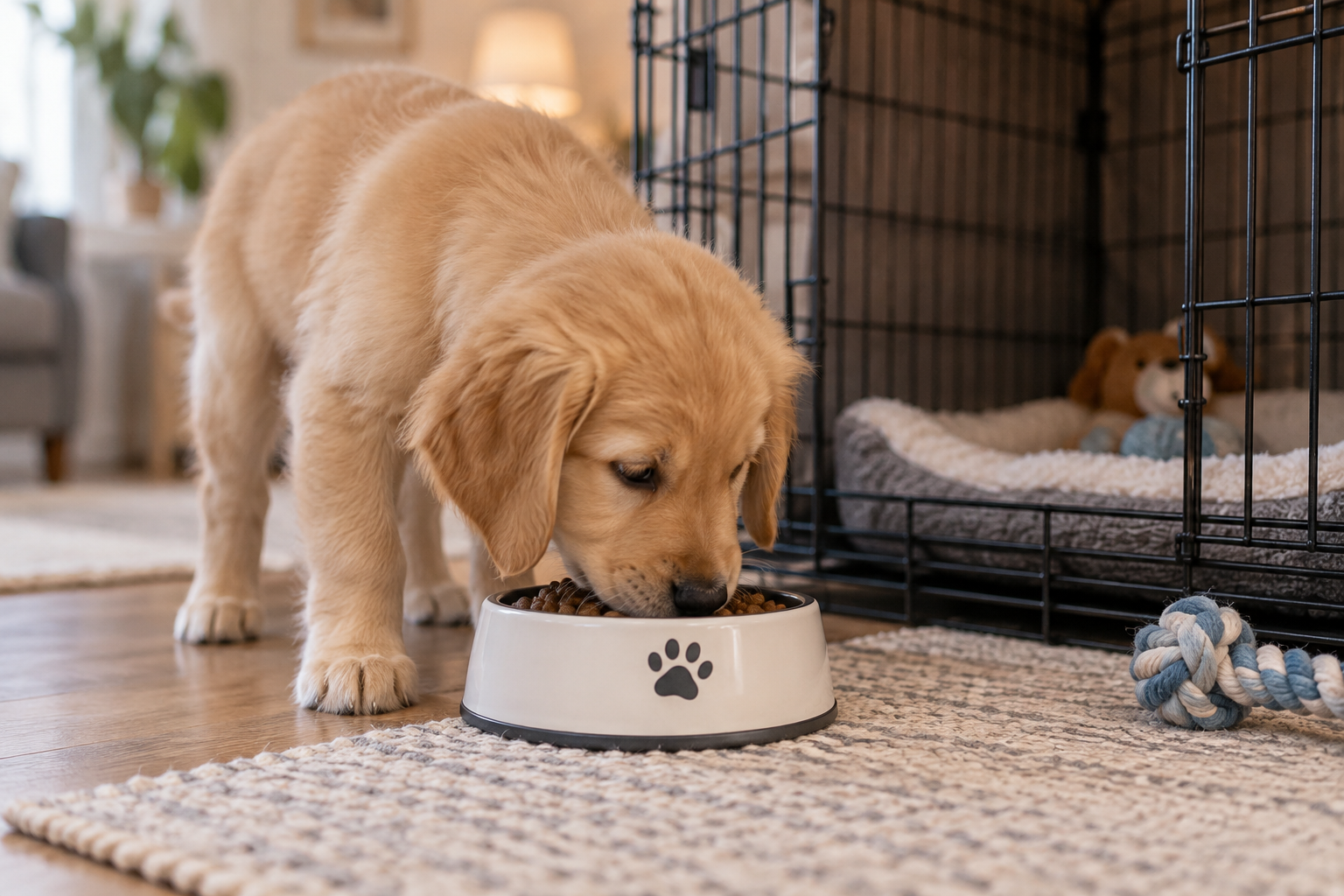
You can also feed regular meals near the crate. Move the bowl inside only when your puppy seems comfortable approaching.
Use one short cue, such as “crate” or “bed,” as your puppy enters. Say it once, then reward the action.
The cue shouldn’t become a command shouted across the room. You’re building a calm habit, not launching a tiny emergency drill.
Close the door in tiny steps
Once your puppy enters willingly, briefly touch the door. Reward calm behavior, then let your puppy come out.
Next, move the door slightly without closing it. Build up to closing it for a moment while you remain beside the crate.
Open the door before your puppy becomes upset. Repeat several easy attempts rather than one long session.
From there, increase the time gradually. You might sit beside the crate, then move to a nearby chair.
Later, take one step away and return. Eventually, leave your puppy’s view for a very short moment.
Change only one challenge at a time. Don’t suddenly increase both distance and duration.
Progress rarely follows a perfect schedule. A puppy may handle five minutes today but struggle tomorrow after an exciting morning.
When that happens, return to an easier step. Going backward briefly is part of training, not failure.
Practice when your puppy is ready to rest
Crate practice is easier after your puppy has toileted, moved around, and had gentle interaction. A puppy bursting with energy may object for practical reasons.
Use the crate for some naps while you’re home. Stay nearby at first so being crated doesn’t always predict your departure.
Keep early sessions short and successful. Finish while your puppy is still settled whenever possible.
A crate isn’t a replacement for exercise, play, toilet breaks, training, or company. Puppies need many chances to move and explore safely.
Young puppies also have limited bladder control. Their needs vary with age, health, routine, and individual development.
Don’t rely on a universal timetable from the internet. Watch your puppy and offer regular toilet opportunities, especially after waking, eating, drinking, and play.
Know what whining means
A little brief grumbling can happen as a puppy learns to settle. However, whining may also signal fear, discomfort, or a genuine toilet need.
First, check the likely cause. Consider when your puppy last toileted and whether the room is too hot or cold.
If a toilet break is likely, take your puppy outside calmly. Keep the trip boring and focused, then return indoors.
Avoid turning a nighttime toilet trip into playtime. Midnight is not the ideal hour for discovering the joy of shoelaces.
If you’re confident your puppy is safe and comfortable, wait for a brief quiet moment before opening the door. This helps avoid teaching that louder noise always opens it.
That doesn’t mean ignoring serious distress. Panting without heat, frantic scratching, repeated escape attempts, drooling, or refusing food can signal more than ordinary protest.
Release a distressed puppy safely rather than waiting for exhaustion. Future sessions should be much easier and shorter.
Persistent panic needs help from a veterinarian or a qualified reward-based trainer. Sudden behavior changes also deserve veterinary attention.
Handle nighttime gently
For the first nights, place the crate near your bed if practical. Your presence can help a newly separated puppy settle.
A nearby crate also makes it easier to notice restlessness. That can help you provide a calm toilet break before an accident happens.
Keep the bedtime routine predictable. Offer a toilet trip, lower the household activity, and guide your puppy toward the crate.
You can reward your puppy for entering, then settle nearby. Quiet reassurance is fine if it helps without making your puppy more excited.
Over time, move the crate gradually if you want it elsewhere. There’s no prize for relocating it across the house overnight.
Some puppies settle better with a partial crate cover. Keep airflow clear, and make sure the puppy can’t pull the cover through the bars.
Others become worried when their view is blocked. Let your puppy’s body language guide that choice.
Leave the house in small stages
Before using the crate for an errand, practice tiny departures while you’re home. Walk out of sight, return calmly, and continue your day.
Then try normal departure signals in easy doses. Pick up your keys, put them down, and sit again.
When your puppy stays relaxed, step outside briefly. Return without creating a huge greeting event.
Build alone time slowly. Your puppy should already be comfortable with the crate before you depend on it during longer absences.
Use a camera if you have one, but it isn’t required. The useful part is learning whether your puppy settles or becomes increasingly distressed.
If your puppy panics when alone, simply extending crate time may worsen the problem. Ask a veterinarian or qualified reward-based trainer for individual guidance.
Crate comfort and comfort with being alone are related but different skills. A puppy may love crate naps while struggling with departures.
Respond calmly to accidents
Accidents don’t mean your puppy is stubborn or trying to make a point. They usually mean the timing, setup, or expectations need adjusting.
Take your puppy out, then clean the crate thoroughly. Use a pet-safe cleaner made to remove lingering toilet odors.
Don’t punish, shout, or rub your puppy’s nose in the mess. That can create fear without teaching the right place to go.
Review what happened instead. The crate may be too large, the puppy may have waited too long, or an upset stomach may be involved.
Repeated accidents, straining, diarrhea, unusual thirst, or sudden changes need veterinary advice. Training can’t solve an underlying health issue.
Avoid common crate-training shortcuts
The biggest shortcut is closing the door too soon. A puppy who enters for food isn’t automatically ready to stay alone.
Avoid using the crate only when you leave. Include relaxed crate time while you read, cook, or sit nearby.
Don’t send your puppy there in anger. You may sometimes need safe separation during household chaos, but keep your voice and handling neutral.
Children should leave a crated puppy alone. The crate needs to remain a reliable place for uninterrupted rest.
Don’t reach inside to drag your puppy out. Open the door and invite them to come willingly.
You also don’t need to reward every exit. The valuable behavior is calmly entering and settling inside.
Notice signs that training is working
Good progress can look pleasantly uneventful. Your puppy walks inside, investigates a chew, shifts position, and rests.
Other positive signs include:
- Entering without being pushed
- Eating normally inside the crate
- Resting with a loose body
- Staying calm when the door moves
- Settling after ordinary household sounds
- Remaining comfortable during brief absences
Your puppy doesn’t have to adore every crate session. The goal is safe, relaxed acceptance.
As your puppy matures, the crate may remain useful for travel, recovery, visitors, or emergencies. Some dogs continue choosing it as a sleeping spot.
Others use it less once they can safely relax around the home. Crate training is a practical skill, not a requirement for lifelong confinement.
Take one small step today
Set up the crate in a comfortable shared area. Secure the door open and scatter a few pieces of regular food nearby.
Then let your puppy make the next move. One calm step inside is enough progress for today.


