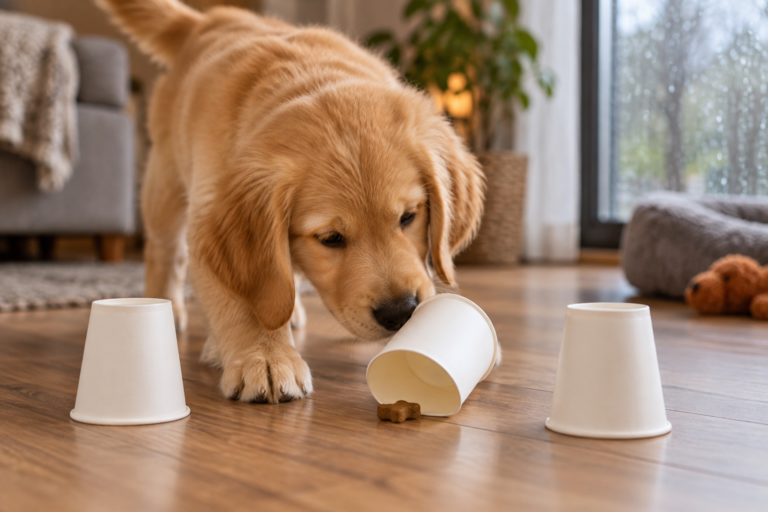
How to Use a Snuffle Mat With Your Puppy
A snuffle mat turns breakfast into a tiny treasure hunt. Happily, the treasure can be ordinary puppy food.
Your easiest first step is wonderfully simple. Put the mat on stable flooring, scatter a few familiar pieces on top, and let your puppy investigate.
What a snuffle mat does
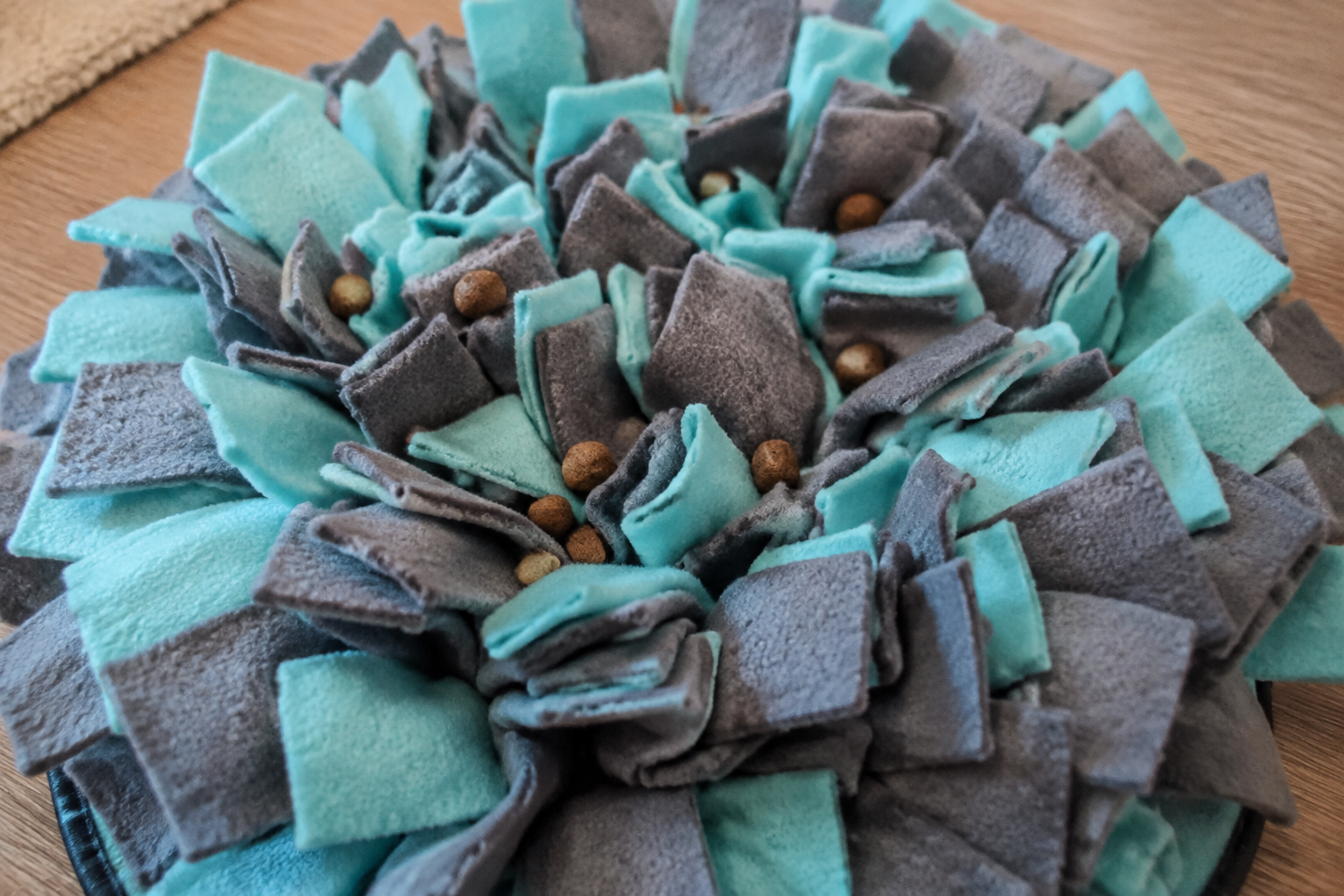
A snuffle mat has strips, folds, or pockets that hold food. Your puppy uses their nose to search through those hiding places.
This is a form of enrichment, meaning an activity that encourages natural behavior. The Blue Cross includes snuffle mats among food-searching activities for dogs.
Searching can add interest to part of your puppy’s usual food. It also gives them a small problem to solve at their own pace.
However, a mat doesn’t replace walks, play, training, rest, or time with you. Claims that a sniffing session equals a set amount of walking aren’t useful. Puppies need a balanced day rather than one magical activity.
Choose a suitable mat
Look for an intact mat intended for supervised food-searching activities. Follow its manufacturer’s instructions, including any age, size, or cleaning guidance.
Check the mat closely before using it. Avoid one with loose fabric, damaged stitching, exposed backing, or pieces your puppy could pull off.
Size matters in a practical way. Your puppy should be able to search without standing awkwardly or dragging the whole thing around.
The mat should also stay reasonably still. Use it on stable, non-slippery flooring, following any product guidance. A mat skidding across tiles may turn a calm search into puppy wrestling.
Keep your puppy’s usual habits in mind. A gentle sniffer may manage soft folds without trouble. A puppy who enthusiastically dismantles every toy needs especially close supervision and may not be ready.
A snuffle mat for puppies is a searching activity, not a chew toy. That distinction will shape every session.
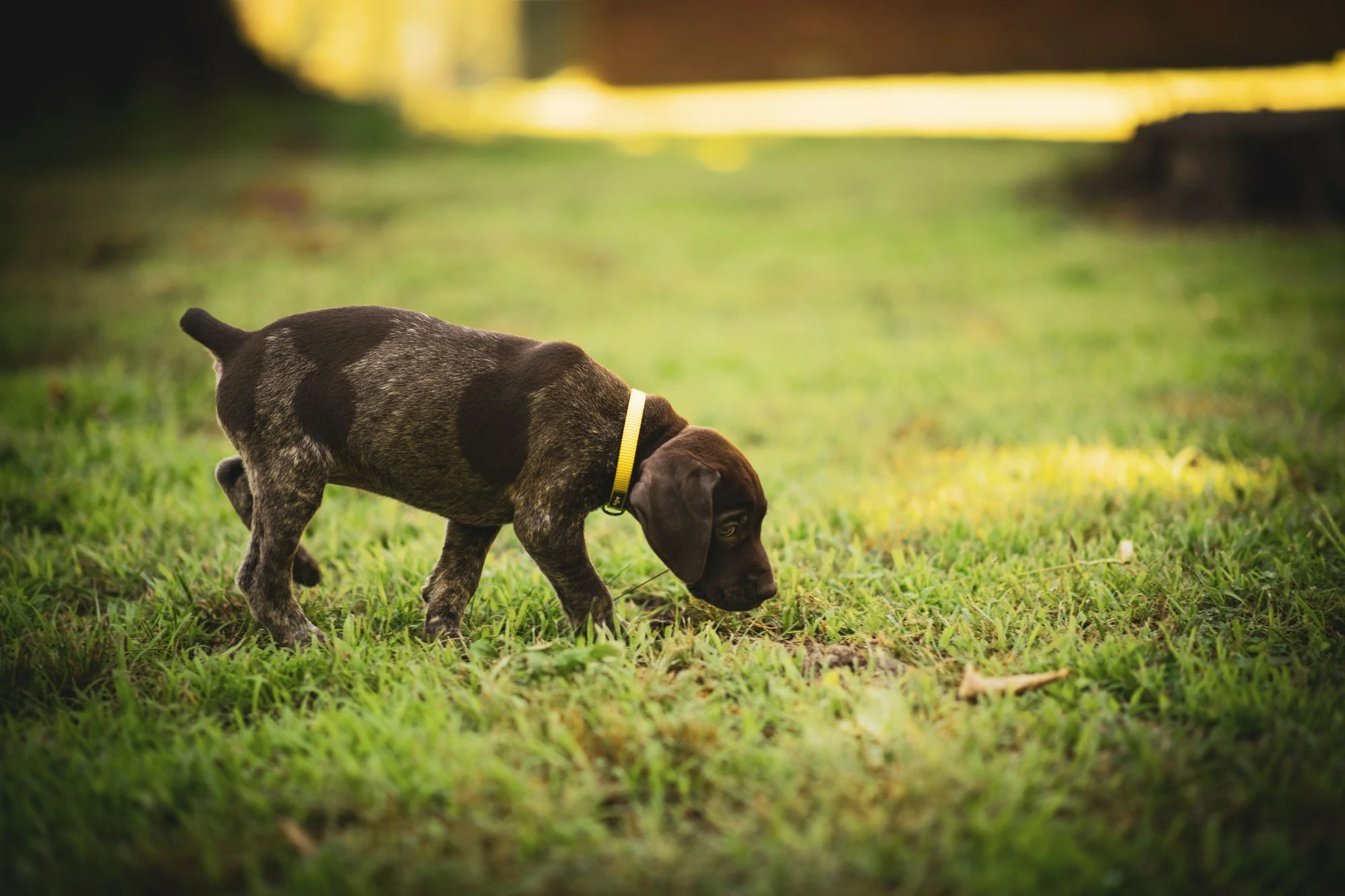
Prepare the first session
Choose a quiet place with enough room around the mat. Remove toys, bags, and other distractions that might invite a side quest.
Keep other pets elsewhere during the activity. Pets should eat separately, even if they usually seem relaxed around each other.
Use a few pieces of your puppy’s familiar, suitable food. Include that food within their normal daily intake rather than adding endless extras.
You don’t need fancy toppings or a complicated mixture. Familiar food makes the lesson clear and avoids changing several things at once.
Before starting, inspect the mat again. Give it a quick shake, check the seams, and remove anything left from an earlier session.
Then place it flat on stable flooring. Stay close enough to intervene immediately if your puppy starts chewing or tearing.
Make the first search very easy
For the first session, place a few food pieces where they’re clearly visible. Don’t push them deeply between the fabric strips yet.
Bring your puppy into the room and let them notice the mat. You can calmly point toward the visible food, but avoid pressing their face into it.
Some puppies begin searching immediately. Others circle the mat, paw it, sit down, or look at you as if you’ve misplaced their bowl.
Give your puppy time. They’re learning what the object is and how it works.
If they find the visible pieces calmly, add a few more near the top. Keep the first experience easy enough that searching pays off quickly.
Finish while the activity is still going well. Pick up the mat once the food is gone rather than leaving it available for chewing.
Let your puppy choose to participate
Don’t force your puppy onto the mat. Don’t hold them beside it or repeatedly push food under their nose.
Enrichment should suit the individual dog. RSPCA Sussex West advises choosing activities individually and watching for frustration during enrichment.
A hesitant puppy may need a simpler introduction. Try placing one piece beside the mat, then another on its edge, followed by one on top.
A puppy who walks away isn’t being stubborn. They may be tired, distracted, full, uncertain, or simply uninterested at that moment.
Put the mat away and try another day. Participation should remain optional.
Watch your puppy’s whole body while they search. Comfortable investigation may include sniffing, slow movement, and brief pauses.
Frustration may look different for each puppy. Watch for escalating barking, frantic pawing, repeated attempts to flip the mat, or giving up after struggling.
Make the task easier if your puppy seems frustrated. Move the food back to the surface, reduce the amount hidden, or end the activity calmly.
Know the difference between sniffing and chewing
Sniffing usually involves the nose moving over and between the folds. Your puppy may nudge the fabric gently or use a paw occasionally.
Chewing looks more like gripping the mat with the teeth. Your puppy may pull fabric, shake the mat, settle down to gnaw, or try to carry it away.
Interrupt biting, shaking, tearing, or fabric swallowing. Calmly remove the mat and offer an appropriate puppy toy or another suitable activity.
Don’t turn removal into an exciting tugging game. If possible, redirect your puppy away before picking up the mat.
Repeated chewing means the mat may not suit that puppy right now. It may also mean the search is too hard, the session is too long, or the mat feels more like a toy than a food activity.
Supervision needs to be active. Being in the room while reading messages isn’t enough if your puppy can shred fabric in seconds.
Never leave the mat down after the activity. Putting it away prevents chewing and helps it remain a clear signal for supervised searching.
If you suspect your puppy swallowed fabric or another piece of the mat, seek prompt veterinary advice. Don’t wait for symptoms or try to treat the problem yourself.
Increase the difficulty gradually
Once your puppy calmly finds visible food, tuck a few pieces slightly beneath the upper strips. Keep others on top so the search still starts easily.
On a later session, you can place food in several shallow hiding spots. Progress only while your puppy remains comfortable and successful.
Think in small steps:
- Put every piece in full view.
- Rest a few pieces beside the fabric strips.
- Tuck some pieces just beneath the top layer.
- Spread easy hiding places across more of the mat.
- Use deeper spots only if your puppy searches calmly.
You don’t need to reach the hardest stage. Easy searching is still enrichment.
Avoid packing food tightly into every hidden section. More difficulty isn’t automatically better, especially for a young puppy learning the activity.
Change only one thing at a time. If you hide food more deeply, don’t also introduce a new food and a noisier location.
Suppose your puppy succeeds with ten easy pieces but starts flipping the mat when five are deeply hidden. Return to easy placements next time. That adjustment keeps the game understandable.
You can also vary where you place the mat. Start in the same quiet area, then use another familiar room once your puppy understands the activity.
Always keep the footing stable. Novelty isn’t worth making your puppy slip or struggle.
Use the mat with everyday food
Part of your puppy’s normal meal can be used on the mat if the food suits both the puppy and the product. Dry pieces are often easier to place and remove, but follow the mat’s instructions.
Account for all activity food within your puppy’s normal intake. Several “tiny” food games can quietly become a substantial extra amount.
There’s no need to prescribe a universal portion or session length. Puppies differ in size, age, appetite, experience, and food plan.
A practical approach is to set aside the amount you intend to use before starting. When that portion is finished, the search is finished.
If your puppy needs a particular feeding plan, use food that already fits it. A snuffle mat isn’t a reason to improvise supplements, homemade meals, or unfamiliar treats.
Wet or sticky food may be unsuitable for some mats. It can become trapped in deep fabric and make thorough cleaning difficult. Check the actual product guidance before using it.
Keep sessions calm and manageable
A snuffle mat can fit into many parts of the day. You might use a little meal food during a quiet morning or after a toilet break.
Avoid bringing it out when several pets are crowding nearby. Separate feeding helps prevent competition and lets each animal work comfortably.
Young puppies can also become tired quickly. End the session if your puppy loses interest, becomes frantic, or begins treating the mat as something to destroy.
You don’t need a timer to prove the activity “worked.” Watch the puppy in front of you rather than aiming for a fixed number of minutes.
The best ending is pleasantly uneventful. Check that all food has been found, move your puppy away, and put the mat out of reach.
Clean and inspect it after use
Remove leftover food after every session. Search between folds and underneath sections where pieces may become trapped.
Follow the manufacturer’s washing instructions exactly. Materials differ, so one washing method won’t suit every mat.
Let the mat dry thoroughly before storing or using it again. Damp fabric and forgotten food aren’t a charming combination.
Inspect the mat once it’s clean. Check for loose strips, pulled stitching, holes, thinning fabric, or damage to the backing.
Stop using it if damage could let your puppy swallow material. Repair or replacement decisions should follow the manufacturer’s guidance rather than a hopeful “that bit looks fine.”
Store the dry mat where your puppy can’t reach it. A cupboard, secure container, or high shelf can help prevent unsupervised chewing.
If the mat isn’t a good match
Not every puppy enjoys the same activity. One may search carefully, while another immediately tries to perform an enthusiastic fabric demolition.
If your puppy repeatedly becomes frustrated, simplify the search. If chewing continues, stop using the mat for now.
You can still offer safe, supervised nose work without this particular product. Try one of these easy sniffing games for a puppy and choose options that match your puppy’s behavior.
Your puppy may do better with another suitable food-searching product. They may also prefer short training games or searching for visible food in a safe area.
If chewing is the main interest, review how to choose puppy toys instead. Toys and food-searching equipment have different jobs, even when puppies disagree.
Your simple plan for today
Inspect the mat, choose a quiet space, and set aside a few pieces of familiar food. Place every piece visibly on top.
Let your puppy approach freely while you supervise. Stop if the mat becomes a chew target, then put it away when the search ends.
That’s enough for day one. A successful first snuffle should feel easy, calm, and just a little bit nosey.
Photo credits: Photo by Brixiv on Pexels; Photo by Rebeca Medeiros on Pexels. Generated scenes are labeled in their image captions.