How to Teach Your Puppy \”Leave It\” Without Turning It Into a Battle
Puppies investigate life as if every sock contains breaking news.
Your first step is simple: choose a quiet room and one boring, harmless item. You’ll teach your puppy that moving away makes something better happen.
Know what “leave it” means
“Leave it” means, “Don’t pick that up. Move your attention away.”
It’s different from “drop it.” That cue asks your puppy to release something already in their mouth.
Keeping those lessons separate makes both clearer. If your puppy already has an item, use a learned fair trade or drop-it cue instead.
“Leave it” is useful around food scraps, tissues, wildlife, other dogs’ toys, and interesting rubbish. However, it isn’t an emergency force field.
You’ll still need to keep medication, toxic food, batteries, and choking hazards out of reach. The cue supports good management; it doesn’t replace it.
Prepare an easy first lesson
Start when your puppy is awake but reasonably calm. Pick a room with few distractions and put other pets elsewhere.
You’ll need:
- A low-interest, harmless practice item
- A reward your puppy enjoys more
- A marker word, such as “yes”
- A little patience and a sense of humor
A marker identifies the exact moment your puppy gets something right. You say “yes,” then promptly give the reward.
You can also use a clicker if your puppy understands it. Either way, the sound should predict a reward.
For the practice item, use something your puppy can safely investigate. A piece of their regular food can work if they find it only mildly interesting.
The reward should be more appealing than the practice item. Use food your puppy already eats safely.
Never train with medication, toxic foods, sharp objects, or choking hazards. Real danger isn’t a suitable training prop.
Reward the first glance away
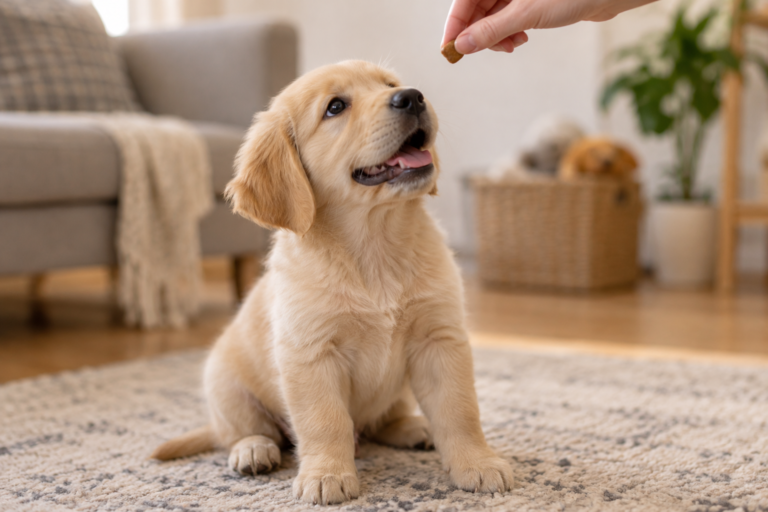
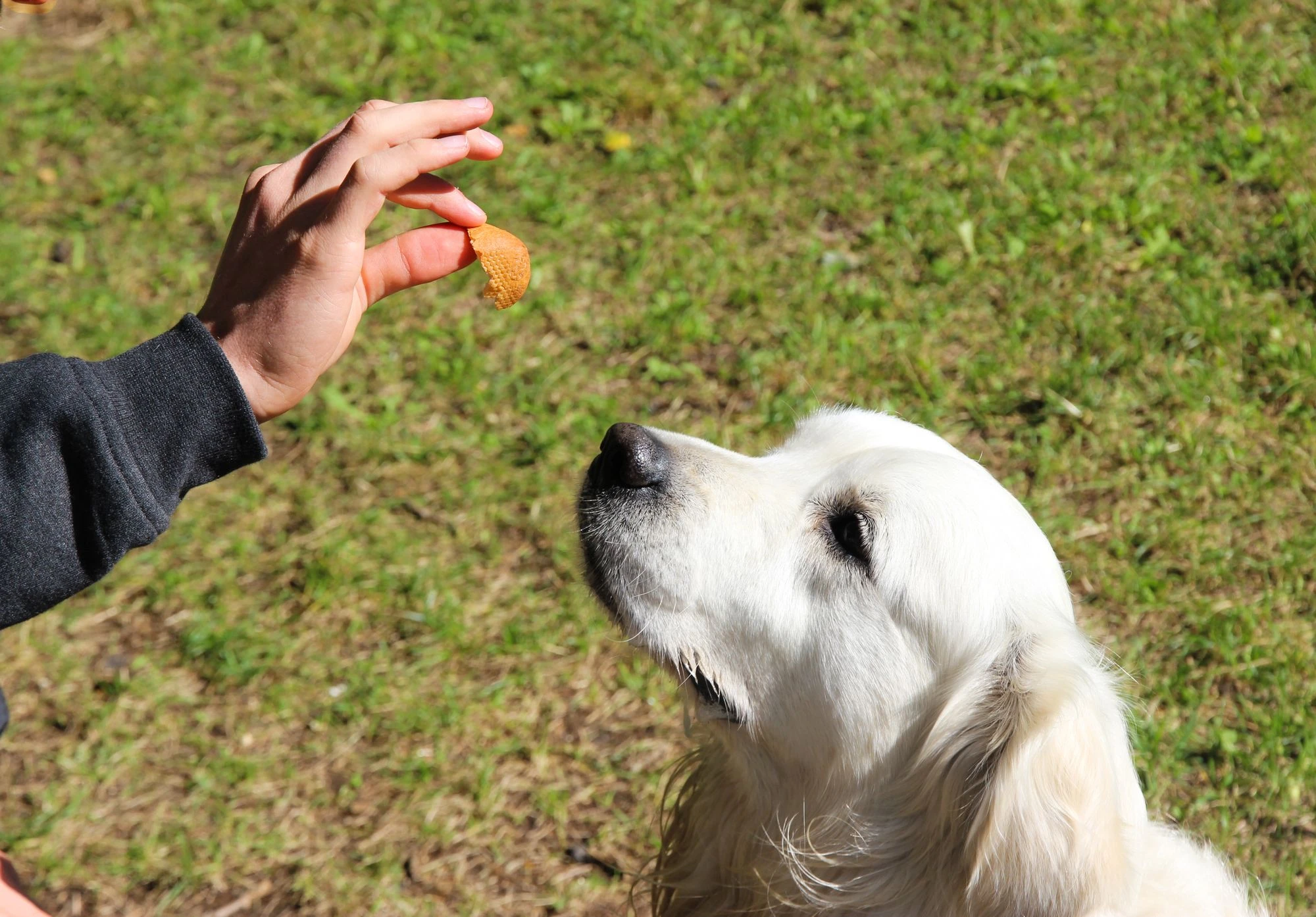
Place the low-interest item inside one closed hand. Keep the better reward hidden in your other hand.
Present the closed hand near your puppy, without pushing it toward their face. Don’t say “leave it” yet.
Your puppy may sniff, lick, or nudge your hand. Keep it calmly closed, but don’t turn the exercise into a staring contest.
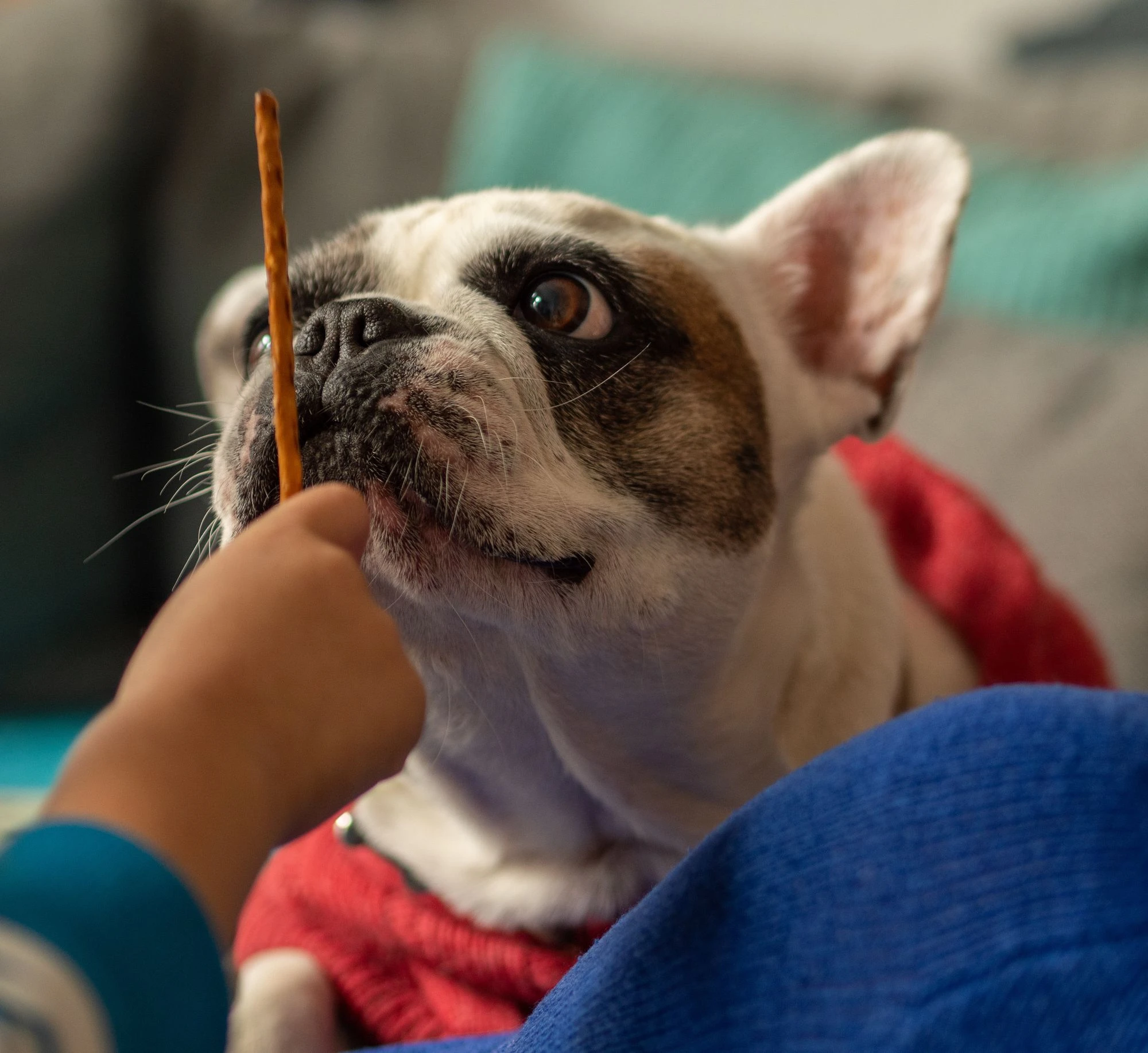
Wait for the smallest voluntary movement away. Your puppy might lift their nose, glance toward you, or shift backward.
The instant that happens, say your marker word. Then reward from your other hand.
That detail matters. Don’t open the first hand and give your puppy the ignored item.
The lesson is: “Moving away earns something better elsewhere.” It isn’t: “Keep pestering this hand until it opens.”
Reset calmly and try again. Keep the practice item protected without trapping paws, clamping down near your puppy’s nose, or slamming your hand shut.
If your puppy becomes frantic, mouthy, or frustrated, make the exercise easier. Move the hand farther away, use a less interesting item, or take a break.
Short, pleasant sessions work better than long negotiations. The Blue Cross training guidance also recommends easy sessions with few distractions and prompt rewards.
Add the cue after the behavior
It’s tempting to say “leave it” immediately and repeat it like a tiny alarm. Hold off for now.
First, wait until your puppy regularly disengages when the closed hand appears. You want the action to feel familiar before naming it.
Then say “leave it” once, just before presenting your closed hand. When your puppy moves away, mark and reward as usual.
Keep your voice light and ordinary. A cue should give information, not predict anger.
If your puppy doesn’t respond, don’t repeat the words louder. Calmly protect the item and wait for an easier success.
You can also increase the distance or return to the earlier step. Struggling usually means the setup became too difficult.
The Dogs Trust leave training guide follows this gradual approach. It recommends adding the cue once disengagement is predictable.
Move the practice item to the floor
A hand-held lesson is only the beginning. Floor items are harder because they look available.
Use the same harmless, low-interest item. Keep your puppy far enough away that they can still think and respond.
A harness and leash can provide backup control. Keep the leash loose rather than using it to pull, jerk, or correct your puppy.
Place the item on the floor where you can prevent access calmly. Start with plenty of space between your puppy and the object.
Say “leave it” once. Mark the moment your puppy looks away, turns toward you, or moves away.
Give the reward from the side opposite the practice item. This helps make turning away part of the behavior.
Gradually work closer only while your puppy remains successful. You can later add gentle movement, such as placing the item down while your puppy watches.
Change one thing at a time. Don’t add a more exciting object, a closer distance, and a busier room all at once.
If your puppy rushes forward, avoid a leash correction. Increase the distance and create an easier repetition.
If they reach the practice item, stay calm. Separate them from it, pick it up when safe, and reset with better access control.
Don’t chase or grab at your puppy. If the item is already in their mouth, switch to your trained fair trade or drop-it lesson.
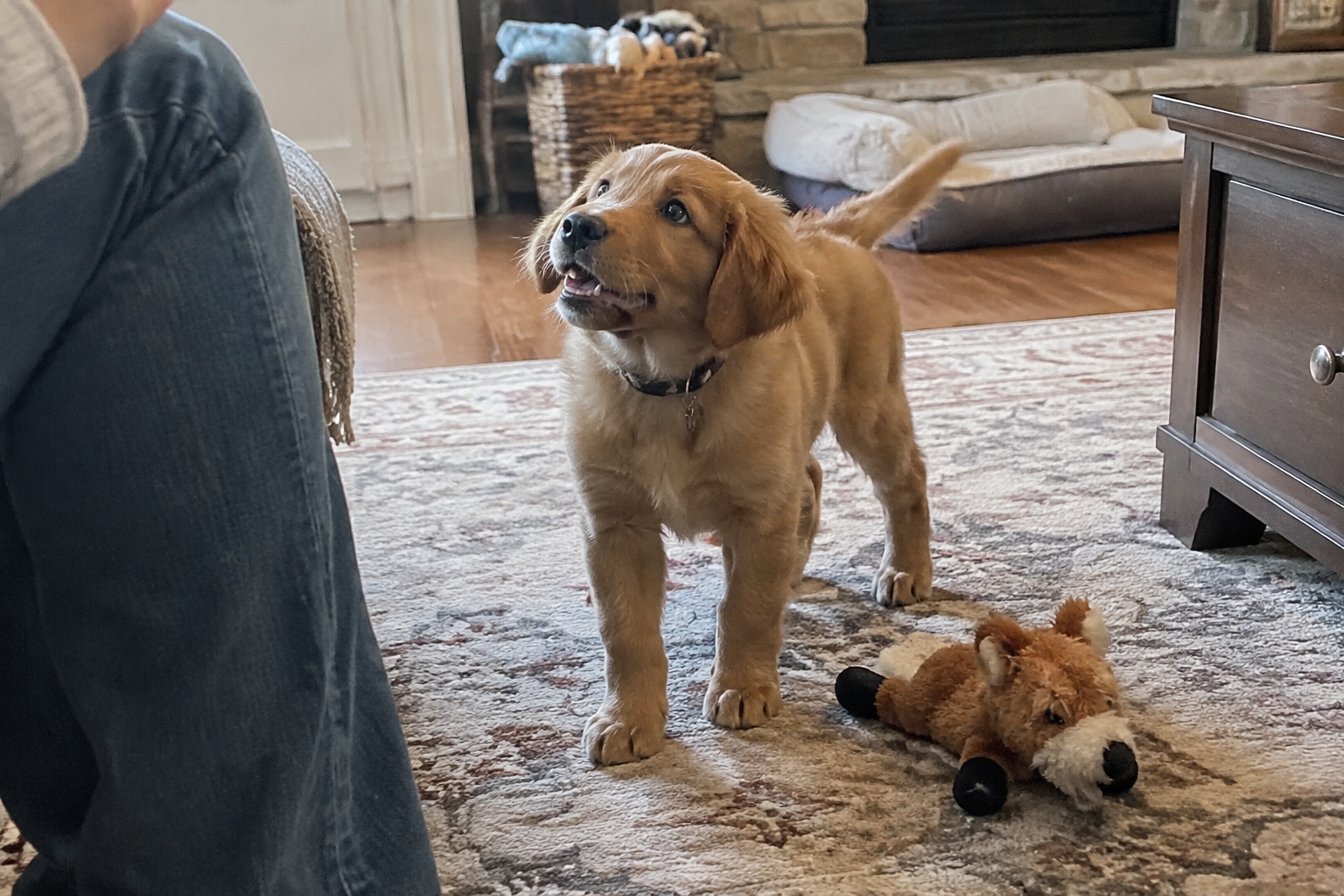
Use “leave it” before temptation wins
Everyday success depends heavily on timing. Give the cue while your puppy is still able to turn away.
Suppose you notice a sandwich wrapper ahead on a walk. Create distance, say “leave it” once, and reward your puppy for turning with you.
Don’t wait until their nose is pressed against it. At that point, use calm management and move away rather than testing the cue.
Distance is your friend around bigger distractions. Cross the street, walk in a gentle curve, or step behind a visual barrier.
You can practise around safe everyday distractions, including:
- A boring toy on the floor
- An empty food bowl
- A tissue placed beyond reach
- A stationary ball
- A familiar person holding a toy
- Garden smells viewed from a distance
Introduce new places gradually. A puppy who succeeds in the kitchen may not understand the cue beside a busy path.
That’s normal. Dogs don’t automatically apply a learned skill everywhere.
The American Kennel Club’s leave-it guidance also emphasizes easy stages and managed access. Don’t assume one successful setting makes the cue reliable in every situation.
Avoid turning the lesson into a battle
Conflict often begins when the item is too tempting or the puppy is already overexcited. Starting easier prevents most drama.
Try to avoid these common traps:
- Repeating “leave it” many times
- Scolding your puppy for investigating
- Staring them down
- Pushing them away from the object
- Jerking the leash
- Grabbing at their mouth
- Practising with genuinely dangerous items
- Making every session harder than the last
Your puppy isn’t being stubborn because they need an easier step. They’re telling you the current setup is beyond their skill level.
Make the item less interesting, add more distance, or return to hand practice. Reward a small glance away rather than waiting for a perfect turn.
Training should feel like a clear puzzle your puppy can solve. It shouldn’t feel like an argument neither of you can leave.
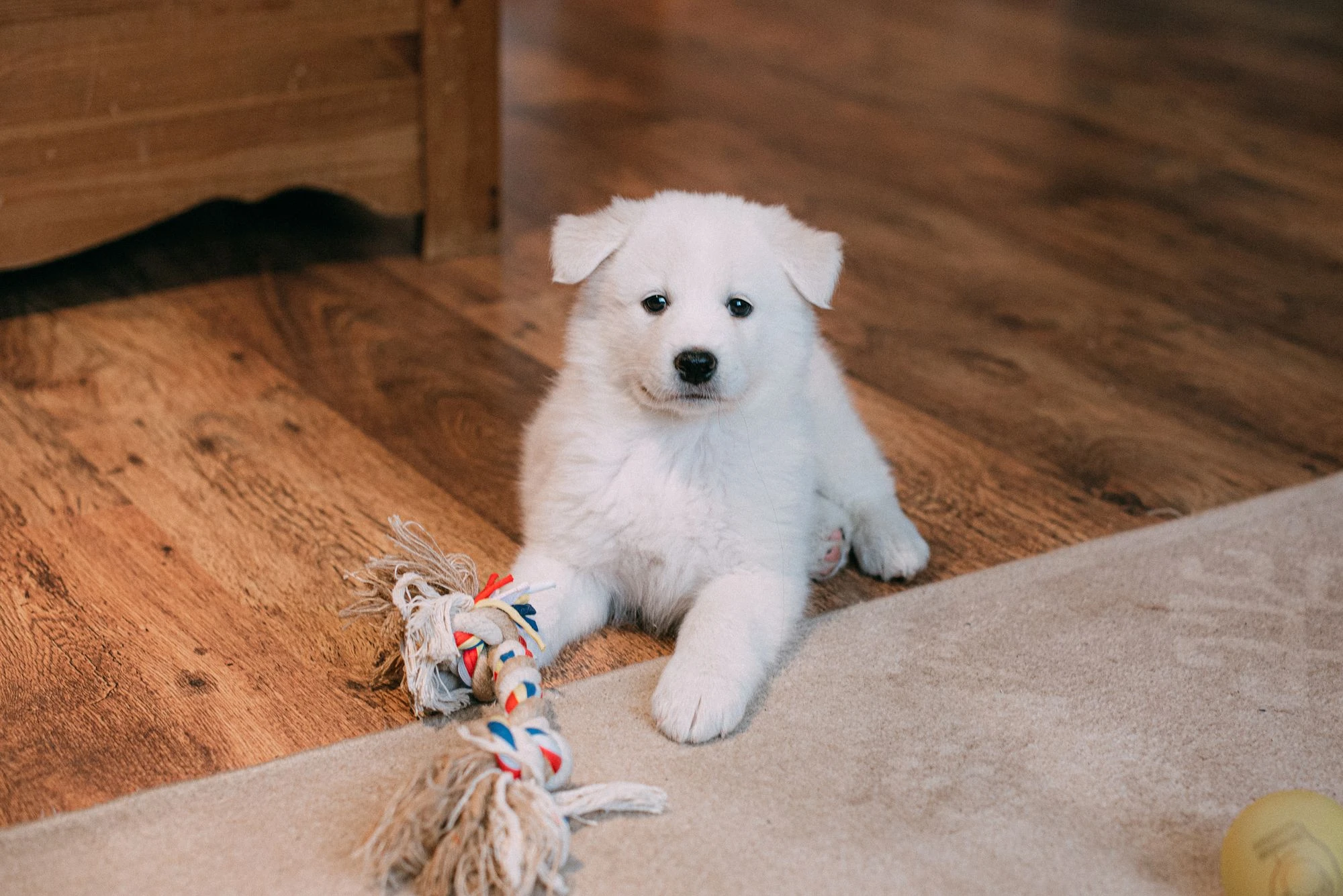
Fix common training snags
If your puppy keeps pawing your hand, the item may be too exciting. Try a duller item or hold it farther away.
If they bite or mouth your hand, end that attempt calmly. Reset in a way that keeps fingers safe and lowers excitement.
If your puppy stares at the item without moving, mark the smallest break in focus. Even a quick eye movement can be your starting point.
If they respond only when they see food, keep the reward hidden until after the marker. The cue should predict a reward, not depend on visible bribery.
If they respond indoors but not outside, reduce the outdoor difficulty. Begin in a quiet spot with extra distance from distractions.
If progress falls apart near the end of a session, finish sooner next time. Puppies often learn better from brief successes than from one long workout.
If your puppy gets the item, don’t let that mistake start a chase. Calmly use a fair trade if they’re holding it, then simplify the next repetition.
Treat guarding and fear differently
Freezing, guarding, or becoming distressed around objects isn’t a cue to push harder. Stop the exercise and give your puppy space.
Don’t repeatedly take food or possessions to prove you’re in charge. That can increase worry and make guarding more serious.
Persistent guarding, fear, distress, or aggression deserves qualified help. A veterinarian can check for health factors and help you find suitable behavior support.
Suspected swallowing of an unsafe object needs prompt veterinary help. Don’t wait for the “leave it” cue to solve an ingestion that may have already happened.
Build reliability without rushing
A useful “leave it” develops through many manageable successes. There’s no need to race toward the hardest possible test.
Vary one feature at a time. You might change the room while keeping the item boring, or increase interest while staying indoors.
Continue rewarding good responses. Real-life distractions can be powerful, so turning away should remain worthwhile.
Some responses will be faster than others. Puppies get tired, excited, distracted, and occasionally fascinated by one particular leaf.
For today, choose one harmless, low-interest item. Practise rewarding a single glance away, then stop while the lesson still feels easy.
Photo credits: Photo by Fabian Köhler on Pexels; Photo by Renato Rocca on Pexels; Photo by Tanya Gorelova on Pexels. Generated scenes are labeled in their image captions.