Getting Your Puppy Used to Brushing Without a Wrestling Match
A puppy can turn one hairbrush into an entire action movie.
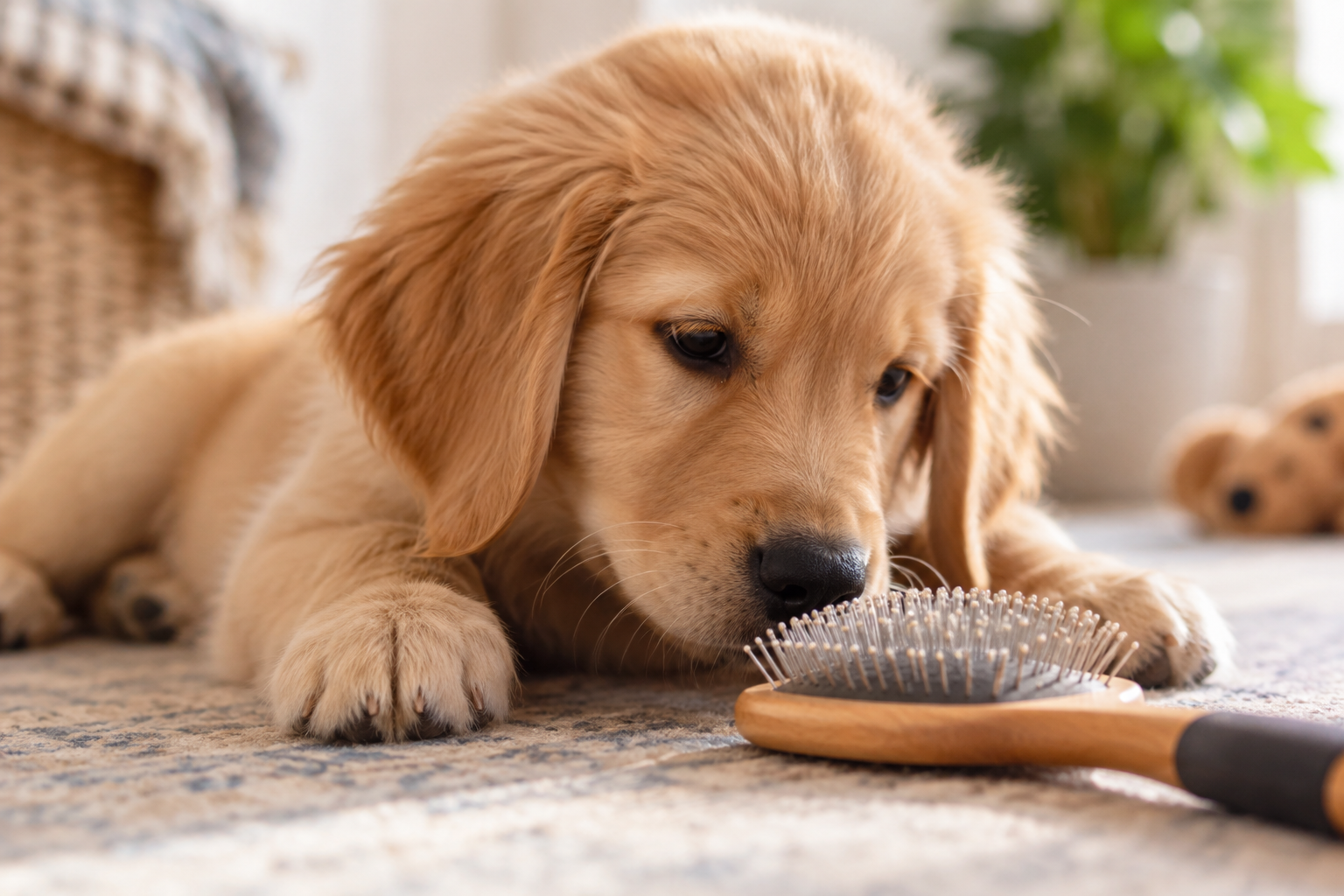
Start by placing the brush on the floor. Let your puppy look at it, then reward calm interest. That’s enough for the first lesson.
Choose a brush that suits your puppy
The right tool depends on your puppy’s coat. A short, smooth coat needs different care from thick curls or fluffy layers.
A soft rubber grooming brush often suits short coats. A pin brush may work well for longer, silky hair. Slicker brushes have fine bent wires and can help with fluffy coats, but they require a light touch.
Puppies with dense undercoats may also need a comb or undercoat tool. An undercoat is the soft layer beneath the visible outer fur.
Ask a qualified groomer which tools fit your puppy’s coat. Breed type can offer clues, but every coat is a little different.
Before brushing, run the tool across your own forearm. It shouldn’t scrape, pinch, or feel painfully sharp. Remember that a puppy’s belly, legs, and face are more sensitive than your arm.
Introduce puppy to brushing in tiny steps
Your first goal isn’t a perfectly brushed puppy. It’s teaching your puppy that the brush predicts safe, pleasant things.
Put the brush nearby during a calm moment. When your puppy notices it without barking, pouncing, or fleeing, offer a small treat. Regular kibble can work if your puppy enjoys it.
Next, hold the brush in your hand. Reward your puppy for staying relaxed. You don’t need to move it toward them yet.
Then touch your puppy’s shoulder with the back of the brush. That’s the smooth side without bristles. Reward, pause, and stop while things are still going well.
During another short session, make one gentle stroke with the bristles. Follow it with a treat and put the brush away.
Build from one stroke to two, then three. Progress based on your puppy’s comfort, not the calendar.
Pick an easy moment
Timing can make brushing much easier. Choose a time when your puppy is settled but awake.
A wildly excited puppy may treat the brush like a new chew toy. An overtired puppy may have no patience left. Try after a toilet break and a little gentle activity.
Use a quiet room with good lighting. A non-slip mat can help your puppy feel secure, especially on smooth floors.
At first, keep sessions very short. A few calm strokes are more useful than several minutes of squirming. You can brush another small area later.
End before your puppy becomes frustrated. Stopping on a good note makes the next session easier.
Help your puppy stay involved
Brushing shouldn’t become a contest about who can hold on longest. Give your puppy simple ways to participate.
Let them stand, sit, or lie in a comfortable position. Avoid pinning them down. Restraint can make the brush feel scary, even when brushing doesn’t hurt.
You can teach a predictable starting signal. For example, show the brush, say “brush,” and offer your hand for a sniff. Then begin only when your puppy stays nearby.
Pause every few strokes. If your puppy remains loose and comfortable, continue. If they move away, let them take a short break.
This teaches an important lesson: calm communication works. Your puppy doesn’t need to escalate into biting or thrashing to be heard.
Read the small signs
Puppies don’t always growl when they’re uncomfortable. Their first signals may be much quieter.
Watch for:
- Turning the head away
- Repeated lip licking
- Yawning when they aren’t tired
- Suddenly becoming very still
- Tucking the tail
- Trying to leave
- Biting at the brush or your hand
- Panting in a cool room
- Refusing food they normally like
One quick wiggle doesn’t necessarily mean distress. Look at your puppy’s whole body and the situation.
If tension increases, stop and make the next session easier. Return to an area your puppy already accepts, such as one stroke over the shoulder.
Handle easy areas before tricky ones
Most puppies find the shoulders and upper back easier than their feet, tail, belly, face, or rear end. Start with those comfortable areas.
Brush in the direction the fur grows. Use slow strokes and very light pressure.
Gradually work toward more sensitive places over several sessions. You can begin by touching a leg with your hand, rewarding calm behavior, and stopping. Add the brush only after handling feels comfortable.
Be especially careful around ears, eyes, skin folds, genitals, and the tail. Don’t pull a limb into an awkward position just to reach the fur.
Handling practice helps with future grooming, but comfort still matters. Your puppy should never need to “tough it out.”
Manage chewing without starting a tug game
Puppies explore with their mouths. A moving brush can look like a wonderfully rude little toy.
If your puppy grabs it, keep the brush still. Pulling back may start a tug game and make the brush more exciting.
Offer a treat or suitable toy away from the brush. Once your puppy releases it, calmly remove the grooming tool.
Don’t let your puppy chew brushes between sessions. Loose bristles, rubber pieces, or handles can be swallowed. Store grooming tools out of reach.
You can also reward your puppy for looking at the brush without biting it. That calm choice deserves attention.
Don’t brush through painful tangles
A tangle becomes a mat when fur knots tightly near the skin. Mats can pull with every movement and may hide sore skin underneath.
Don’t yank through one. Holding the fur close to the skin may reduce pulling while you gently work on a small, loose tangle. Stop if your puppy shows discomfort.
Avoid cutting a mat with household scissors. Dog skin can be pulled up inside the knot, making accidental cuts frighteningly easy.
A qualified groomer can safely handle tight mats or widespread tangling. If the skin looks red, wet, swollen, crusty, or painful, contact a veterinarian rather than continuing to brush.
Sudden resistance also deserves attention. A puppy who previously enjoyed brushing may be reacting to soreness, an injury, or a skin problem.
Build a calm routine
As your puppy becomes comfortable, slowly increase the number of strokes and body areas. Keep mixing easy spots with newer ones.
Rewards don’t have to disappear. You can offer them less often while still praising calm behavior. Treats used during training should remain small and puppy-safe.
Some coats need more frequent brushing than others. Coat length, texture, shedding, outdoor adventures, and grooming style all matter. A groomer can help you choose a realistic routine.
For today, put the correct brush on the floor, reward one calm sniff, and finish there. No wrestling match required.