Working From Home With a Puppy Who Thinks You’re the Entertainment
Your puppy sees a laptop and thinks, “Excellent, my human brought a tray.”
Start by creating one safe puppy area near your workspace. Add a bed, water, and a few suitable toys. This gives your puppy somewhere sensible to settle while you answer emails.
Working from home with a puppy takes planning, but not military precision. The aim is a flexible rhythm of toilet trips, play, training, food, and sleep.
Set up a safe place before work starts
Puppies explore with their mouths. Unfortunately, charging cables and chair legs are often included in that research.
Choose a puppy-proofed room, pen, or gated section of a room. Keep cables, medicines, cleaning products, plants, bins, and small objects out of reach. Check the floor from puppy height because dropped earbuds can look surprisingly snack-like.
Place the puppy area where your pup can see or hear you. At first, being nearby may help them settle. You can gradually increase the distance as their confidence grows.
A crate can also be useful if introduced kindly. It should feel like a safe resting place, not a punishment. Don’t shut a worried puppy inside and expect them to “get used to it.”
Some puppies relax better in a pen or small room. Others prefer an open crate inside a gated area. Watch your puppy’s behavior instead of forcing one setup.
Build a rhythm, not a rigid timetable
Puppies rarely respect calendar alerts. Still, a predictable order helps them understand what happens next.
A simple workday rhythm might look like this:
- Toilet trip after waking.
- Breakfast, play, or a short training game.
- Another toilet opportunity.
- Quiet time while you begin work.
- A break for toileting, movement, and attention.
- Another rest period with a safe activity.
- Repeat as needed through the day.
Your puppy’s age, health, size, and individual habits affect the timing. Very young puppies usually need more frequent toilet opportunities and closer supervision.
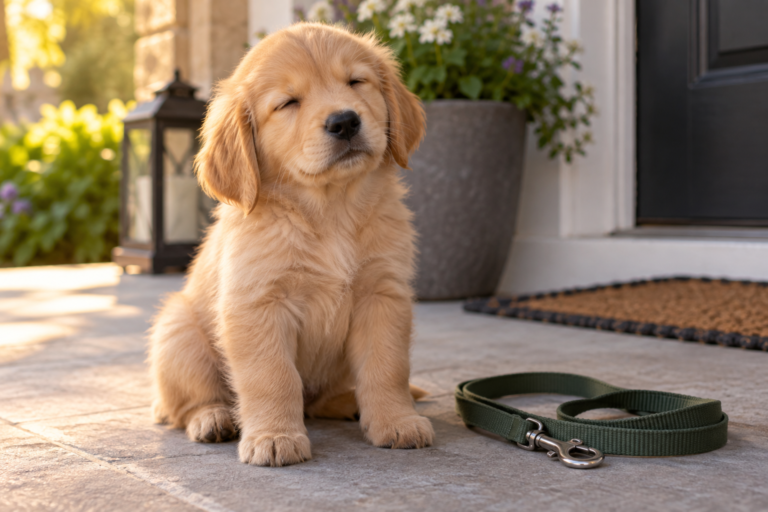
Take your puppy outside after waking, eating, drinking, active play, or excited greetings. Those moments commonly trigger the need to go.
Watch for sniffing, circling, wandering away, or suddenly stopping play. Calmly take your puppy to the toilet area when you see these signs.
Accidents will happen. Clean them without making a fuss, then adjust your routine. Punishment can create fear without teaching where you wanted the puppy to go.
Treat naps as part of puppy care
A tired puppy doesn’t always look sleepy. Sometimes they become a tiny whirlwind with teeth.
Puppies need plenty of sleep for healthy development. An overtired pup may bite more, zoom around, bark, or struggle to focus.
After play or training, guide your puppy toward a calm resting area. Lower the excitement and give them time to settle. You might sit nearby at first without constantly interacting.
Try not to turn every small noise into entertainment. If your puppy is safe and comfortable, pause before responding. They may simply be shifting position or deciding whether sleep is acceptable.
However, don’t ignore escalating distress. Frantic scratching, repeated escape attempts, heavy panting, or panic-like behavior needs attention. A veterinarian or qualified reward-based trainer can help you plan safer steps.
Use short activities between work blocks
Puppies don’t need nonstop entertainment. They need suitable ways to sniff, chew, explore, learn, and rest.
Keep activities short and change them through the day. Options include:
- A puppy-safe food toy filled with part of a meal
- A supervised chew suitable for your puppy’s size
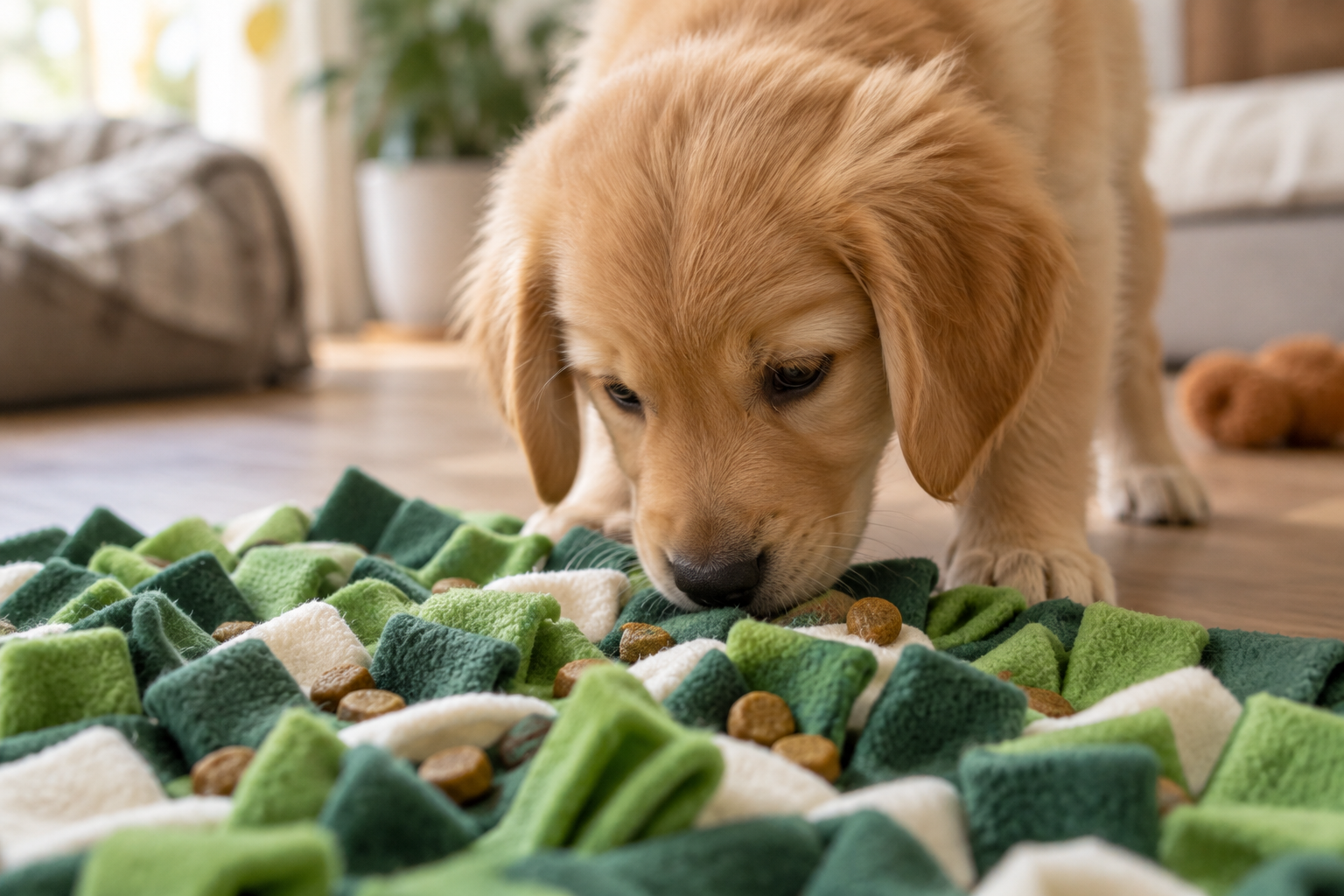
- Food scattered across a clean mat for sniffing
- A cardboard box containing paper and a few treats
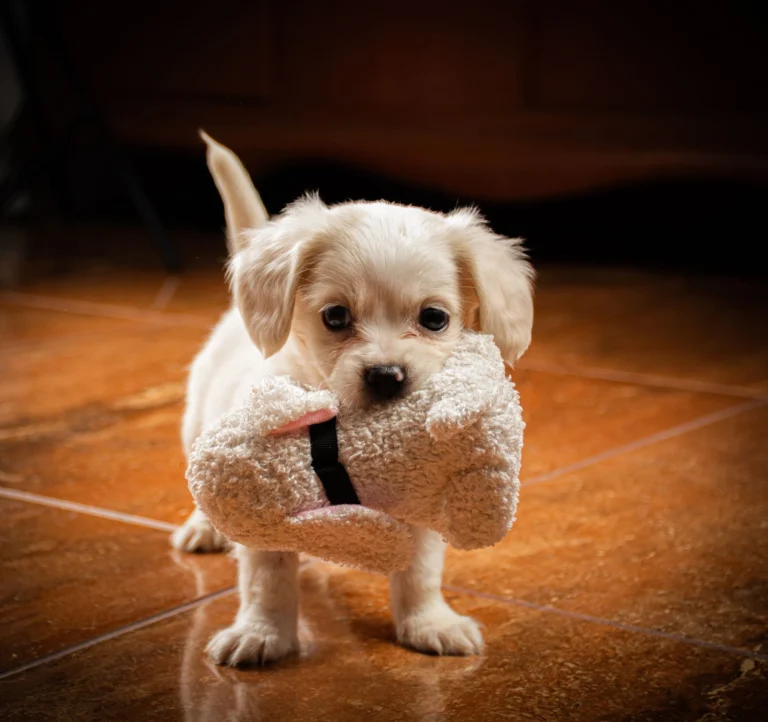
- A gentle game with a toy
- Two or three minutes of simple training
Supervise new toys, chews, and food puzzles. Remove anything that breaks into dangerous pieces or causes frustration. Choose items too large to swallow and appropriate for your puppy’s chewing style.
Count food used in toys and training as part of regular meals. Otherwise, a busy workday can quietly become an all-day buffet.
Cardboard activities also need supervision. Some puppies shred boxes and move on. Others try to eat their paperwork, much like certain office departments.
Teach calm behavior near your desk
Your puppy won’t automatically know that lying quietly is valuable. You can help them learn.
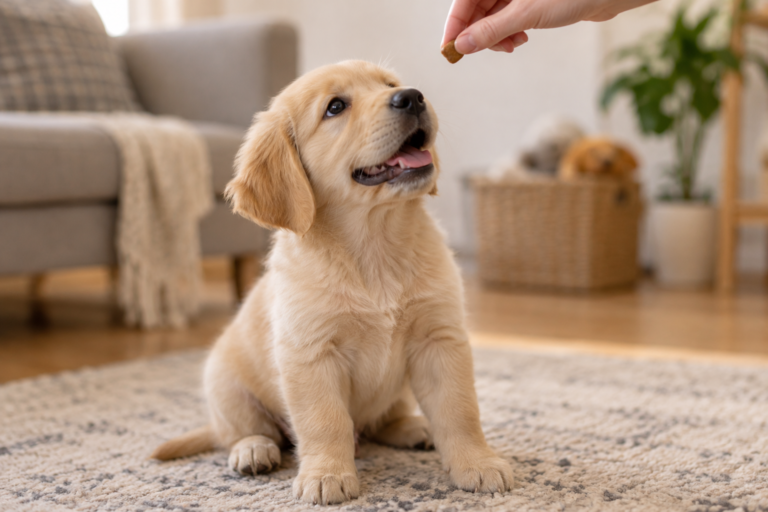
Place a mat or bed near your workspace. When your puppy steps onto it, calmly place a piece of food there. Reward sitting, lying down, or staying relaxed.
This is sometimes called “capturing calm.” It means rewarding peaceful behavior when it happens naturally.
Keep your praise gentle. Loud excitement can restart the party you were trying to pause.
Over time, the mat can become a clear resting spot. Use it during easy work periods before expecting it to survive an important video call.
If your puppy gets up, guide them back without frustration. They’re learning a skill, not breaking a workplace policy.
Prepare for meetings before they begin
A meeting that starts in two minutes isn’t the ideal time to discover your puppy needs the toilet.
Before an important call, offer a toilet break and a little gentle activity. Then provide a calm, familiar activity in the puppy area.
Avoid introducing a brand-new chew moments before muting your microphone. You need time to check that your puppy uses it safely.
Keep cleanup supplies nearby for unavoidable accidents. Headphones may help you hear colleagues while monitoring ordinary puppy noises.
If a meeting will be unusually long, plan human help. A family member, friend, sitter, or dog walker may be able to provide a toilet break and supervision. Choose someone who handles your puppy gently and follows your training approach.
Respond to barking without starting a debate
Barking has a reason, even when the reason seems to be “Your spreadsheet offends me.”
First, check the basics. Your puppy may need the toilet, feel frightened, want distance from something, or have excess energy. They may also be overtired and unable to settle.
Avoid shouting. To a puppy, shouting may sound like you joined the barking.
When the cause is attention-seeking, wait for a brief quiet moment before giving attention. This helps avoid teaching that barking immediately starts play.
Don’t wait indefinitely if your puppy is becoming distressed. Move closer, reduce the difficulty, and help them settle. Independence should be built gradually rather than forced through panic.
Sudden, persistent vocal behavior can also signal discomfort or illness. Contact a veterinarian if barking appears alongside pain, appetite changes, unusual tiredness, vomiting, diarrhea, or other concerning changes.
Keep play and training manageable
Long, intense exercise isn’t the answer to every focus problem. Young bodies are still developing, and puppies can become overstimulated.
Use several gentle activity breaks instead. Let your puppy sniff outdoors where it’s safe and appropriate. Sniffing offers mental activity without requiring a marathon.
Ask your veterinarian what outdoor access is suitable while your puppy completes early health protection. Local disease risks and your puppy’s medical needs can change the advice.
Training should stay simple. Useful early skills include:
- Responding to their name
- Coming a short distance when called
- Touching your hand with their nose
- Dropping or trading an object
- Settling on a mat
- Being comfortable with gentle handling
Use food, toys, or access to fun as rewards. End while your puppy is still interested. Several tiny lessons usually fit a workday better than one long class.
Make biting less rewarding
Puppy biting is normal, but that doesn’t make it pleasant during a deadline.
Keep a toy within reach and redirect your puppy before teeth reach your hands or clothes. If biting continues, calmly stop interaction for a short moment.
Avoid rough hand play if it makes biting harder to manage. Tug games can be useful, but use a toy long enough to keep teeth away from fingers.
Frequent biting may mean your puppy needs sleep, a toilet trip, or a calmer activity. Look at the whole situation before assuming they’re being difficult.
If biting is intense, unpredictable, or accompanied by stiff posture and guarding, seek qualified help. A reward-based trainer can observe the context and guide you safely.
Practice being apart while you’re still home
Constant company can make future separation harder. Your puppy needs gentle practice being comfortable without direct access to you.
Begin with tiny, easy moments. Step behind a gate while your puppy enjoys a familiar activity. Return before they become highly worried.
You can also work briefly in another part of the room. Later, move to the next room for a moment. Increase distance and time gradually.
Signs that the step is too difficult include refusing food, frantic movement, repeated barking, drooling, or desperate escape behavior. Go back to an easier version rather than pushing through.
Don’t sneak away every time. Quiet, ordinary departures help your puppy learn that people leave and return.
A camera can help you observe behavior when you’re out of sight. It’s a monitoring tool, not a substitute for gradually teaching comfort.
Protect some real work time
You’re allowed to concentrate. Meeting your puppy’s needs doesn’t require responding every second.
Use predictable breaks so your puppy receives attention before they demand it. Pair active periods with rest, and save high-value activities for work blocks when possible.
Your productivity may still look different for a while. Very young puppies need supervision, toilet help, and reassurance. Adjusting expectations is often more realistic than trying to maintain a completely unchanged schedule.
If possible, lighten important commitments during the first days at home. You’ll learn your puppy’s signals, and your puppy will learn the household rhythm.
Notice what your puppy is telling you
No routine fits every puppy. One may settle after sniffing, while another needs a brief training game. One may love a food toy, while another gives up quickly.
Keep a simple note of toilet trips, naps, meals, biting bursts, and barking. Patterns often become clear after several days.
You might discover that afternoon chaos follows a missed nap. You may notice that meetings go better after a calm sniffing break rather than energetic play.
Change one thing at a time. That makes it easier to see what genuinely helps.
For today, puppy-proof one small work area and place a comfortable mat beside your desk. Then reward your puppy the first time they choose to rest there. Your smallest coworker may not respect office hours yet, but they can learn the routine.