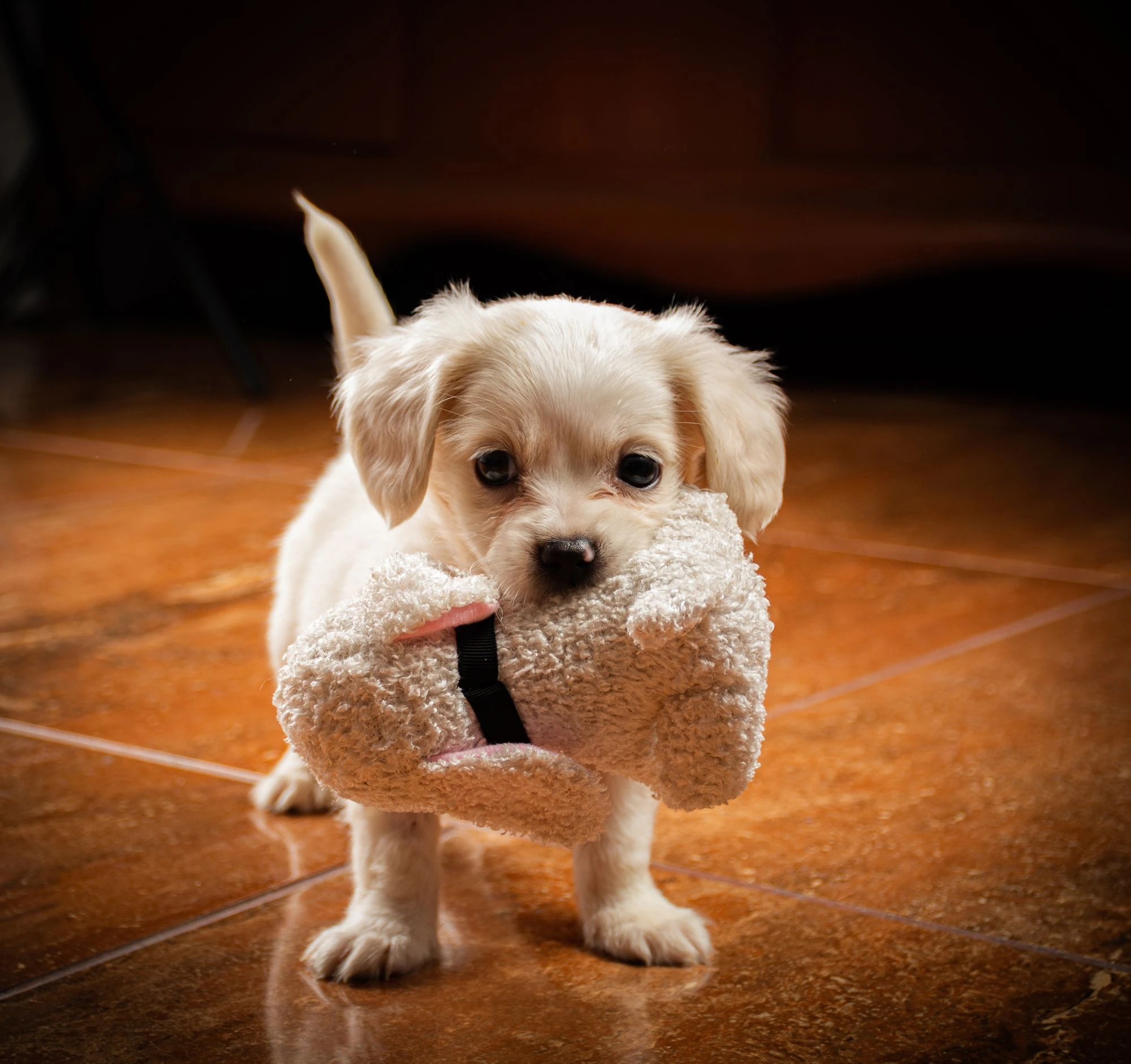
Teach Your Puppy \”Drop It\” Before the Next Sock Heist
A puppy holding a sock often looks like they’ve discovered buried treasure.
Your first step is wonderfully boring: put the socks away. Then grab a safe toy, a wanted reward, and your puppy’s attention for a short practice.
“Drop it” can become one of your most useful puppy cues. It helps during play, prevents tugging matches, and makes everyday swaps calmer.
The goal isn’t to overpower your puppy. You’re teaching them that releasing an item leads to something worthwhile.
Know what “drop it” means
“Drop it” tells your puppy to release something already in their mouth.
“Leave it” means turning away before picking something up. The two cues are related, but they solve different problems.
For example:
- Use “leave it” when your puppy notices a tissue on the floor.
- Use “drop it” when that tissue is already between their teeth.
Keeping those meanings separate makes training clearer. It also helps you choose the right response during real-life mischief.
Begin with a fair trade
If your puppy keeps stealing household objects, it’s tempting to practice with the latest prize. However, a real sock is a poor practice item.
Start with a safe toy your puppy likes but doesn’t treasure above everything else. Avoid their most exciting chew or favorite tug toy at first.
Choose a toy that:
- Is intended for puppy play
- Is in good condition
- Doesn’t have loose or easily swallowed pieces
- Is comfortable for your puppy to hold
- Can be used under suitable supervision
You’ll also need a reward your puppy genuinely wants. That might be a small piece of suitable puppy food.
Practice in a quiet room with few distractions. Keep children and other pets away during the first sessions.
This setup matters because difficulty changes with the item and location. Releasing an ordinary toy in the kitchen is easier than releasing exciting garden loot.

Teach the exchange before adding words
Your puppy doesn’t know what “drop it” means yet. Repeating it won’t make the meaning appear through sheer enthusiasm.
Instead, teach the action first.
Here’s the basic exchange:
- Give your puppy the safe practice toy.
- Let them hold or play with it briefly.
- Bring the wanted reward near their nose.
- Wait without pulling the toy.
- Let your puppy choose to open their mouth.
- Mark the release immediately.
- Give the reward promptly.
- Pick up the toy while your puppy eats.
- Offer the toy again when appropriate.
A marker identifies the exact moment your puppy gets something right. It can be a clicker or a short word such as “yes.”
Mark as the toy leaves your puppy’s mouth. Then follow that marker with the reward.
Prompt timing helps your puppy connect releasing the toy with the good result. The Blue Cross training guidance recommends marking wanted behavior and rewarding it promptly.
Don’t pry open your puppy’s mouth. Don’t pull the toy from between their teeth.
You’re looking for a voluntary release, not a wrestling victory.
Give the toy back during practice
Returning the toy teaches an important lesson: dropping something doesn’t always end the fun.
If every release makes a valued object disappear, your puppy may become reluctant to cooperate. They may also start dodging away when you approach.
After your puppy takes the reward, offer the safe toy again. Let them enjoy another short turn before repeating the exchange.
The Dogs Trust guide to leave training describes this as a fair trade. It also recommends allowing the dog to release voluntarily instead of forcing their mouth open.
Of course, you won’t return dangerous household objects. Returning the item is for planned practice with safe toys.
Add “drop it” when the release is predictable
Wait until your puppy readily releases the practice toy when the reward appears. Then add the verbal cue.
Use this order:
- Let your puppy hold the toy.
- Say “drop it” once, in a calm voice.
- Present the reward as you normally would.
- Mark the moment the toy drops.
- Give the reward.
- Return the safe toy.
The words should come just before the familiar exchange. That helps your puppy connect the cue with the action.
After successful practice, begin giving your puppy a brief chance to respond before showing the reward. Keep it easy and avoid turning this pause into a standoff.
If nothing happens, show the reward and complete the familiar trade. Your puppy may simply need more practice connecting the words with the action.
Don’t chant, “Drop it, drop it, drop it.” Repeating an unlearned cue can turn it into background noise.
Say it once. Then help your puppy succeed with the exchange they already understand.

Keep practice short and cheerful
Puppies learn better when practice feels manageable. A handful of successful exchanges is more useful than a long, frustrating session.
Stop while your puppy still seems interested. You can practice again later during another calm part of the day.
Keep early sessions:
- Short
- Pleasant
- Free from competition
- Away from busy doorways
- Easy enough for frequent success
If your puppy wanders away or stops taking the reward, pause. They may be distracted, tired, full, or simply finished.
Training doesn’t need a dramatic finale. Put the equipment away and try an easier setup another time.
Increase difficulty one change at a time
Once your puppy responds reliably with one toy, change a single detail.
You might try:
- A different safe toy
- A slightly more interesting toy
- Another quiet room
- A family member standing farther away
- A mild everyday distraction
Don’t change the toy, room, people, and distraction level together. That can turn a familiar exercise into a completely different challenge.
Puppies may also respond differently when excited. A cue learned during quiet practice might not work immediately during wild play.
Build gradually. If your puppy struggles, return to the easier toy or quieter location.
That step backward isn’t failure. It’s useful information about the current difficulty.
Practice during play without always ending it
“Drop it” is especially useful during tug and fetch-style games. However, start only when your puppy is playing comfortably.
Pause the game and ask for the release once. Complete the trade, then restart the game when appropriate.
Restarting play can help make cooperation worthwhile. It also prevents the cue from becoming a reliable announcement that fun is over.
Avoid yanking the toy away or lifting your puppy by it. Keep tugging gentle and suitable for your puppy.
If play becomes frantic, pause before practicing. Learning is harder when everyone has gone full goblin mode.
Don’t turn stolen objects into a chase
Chasing a puppy can make a stolen object more exciting. It may also teach them that grabbing laundry starts a brilliant game.
Instead, stay calm and create space. Use a practiced trade if the object isn’t an immediate hazard.
Then improve your home setup. Laundry baskets need secure lids or inaccessible storage. Shoes, tissues, children’s toys, remote controls, and rubbish should also stay out of reach.
This isn’t “giving in” to your puppy. It prevents them from rehearsing the exact habit you’re trying to change.
A puppy-safe home also reduces the number of stressful emergencies. This puppy-proofing guide can help you check tempting areas from your puppy’s low-level viewpoint.
Training and prevention work best together. Your puppy learns the right response while your belongings stop volunteering as practice material.

Save real hazards for safety action, not lessons
Never practice “drop it” with socks, pills, batteries, sharp items, or other hazards. Use safe toys during planned training.
If you suspect your puppy swallowed something unsafe, seek prompt veterinary advice. Don’t wait for another training attempt or try a homemade remedy.
Chasing, shouting, or grabbing may increase conflict. If it’s safe to do so, you can offer a familiar trade while arranging qualified help.
Don’t reach into your puppy’s mouth or attempt to pull out an object you can’t safely handle. Some objects may cause further injury when pulled.
The priority is professional advice, not proving that the cue works.
Watch for discomfort around possessions
A puppy holding a toy isn’t automatically guarding it. They may simply be chewing, playing, or waiting for interaction.
However, take certain changes seriously. These can include:
- Freezing suddenly
- Becoming stiff
- Growling when someone approaches
- Snapping
- Hovering tensely over an item
- Showing repeated distress during exchanges
Don’t punish a growl. Don’t confront the puppy or reach toward the item.
Create distance and prevent access to similar objects. Seek help from a qualified, reward-based professional.
Persistent fear, distress, or aggression needs individual support. A professional can observe the full situation and help you manage it safely.
Fix common training snags
Your puppy won’t release the toy
The toy may be too valuable, or the reward may not be appealing enough. The room may also be too distracting.
Switch to a less exciting safe toy. Move somewhere quieter and make the exchange easier.
Your puppy grabs the toy again immediately
That’s not necessarily a problem during practice. Mark the release, deliver the reward, and manage the toy calmly.
Offering the toy again is part of teaching that release can be temporary. Keep your hands relaxed and avoid snatching.
Your puppy runs away with the toy
Don’t chase. That can turn the situation into a keep-away game.
Practice in a smaller, uncluttered room with an ordinary toy. Stay close enough to offer an easy trade without cornering your puppy.
Your puppy only responds after seeing food
That’s common while the exchange is still being learned. Keep pairing the cue with the familiar sequence.
Once the response is predictable, allow a brief moment after the cue before showing the reward. If your puppy can’t respond, help them with the easier version.
Your puppy drops things before you ask
They’re anticipating the exchange. That shows they understand part of the pattern.
Reset calmly and vary the timing a little. Reward clear releases after your cue as their understanding improves.
Make today’s first practice tiny
Choose one ordinary, safe toy. Prepare a wanted reward and move to a quiet room.
Complete a few calm trades without saying “drop it.” Mark each voluntary release, reward promptly, and return the toy.
Then stop. Put the socks somewhere secure while you’re feeling productive.
That small session gives your puppy the foundation they need. The next sock heist may still happen, but you’ll both have a much better plan.
Photo credits: Photo by Geofre Sampen on Pexels; Photo by Erwin Bosman on Pexels; Photo by https://kaboompics.com/ on Pexels. Generated scenes are labeled in their image captions.


