Potty Training a Puppy in an Apartment Without a Garden
Puppies have tiny bladders and truly impressive comic timing.
Your first step is simple: choose one safe, practical toilet spot. It should be somewhere you can reach quickly, even at 2 a.m.
Potty training a puppy in an apartment takes planning, patience, and many lift rides. You don’t need a garden, but you do need a clear routine.
Choose the toilet plan you want long term
Decide whether your puppy will toilet outdoors, indoors, or use both options. Consistency makes the lesson easier to understand.
Outdoor toilet training often works well if you can reach a suitable area quickly. Use the same exit, route, and general toilet spot whenever possible.
An indoor toilet area may suit a high-rise building or limited mobility. It can also help when shared outdoor ground isn’t yet safe for your puppy.
Some owners use an indoor option temporarily, then move outdoors later. That can work, but the change needs to happen gradually.
Think about your normal life, not only the first few days. A plan that works during a quiet weekend may fail on a busy Tuesday.
Check where your puppy can safely go
Young puppies may not be ready to walk on every shared surface. Local disease risks vary, especially in places visited by many dogs.
Ask your vet which outdoor areas are suitable for your puppy right now. This advice may depend on vaccinations, local risks, and your building.
If public ground isn’t suitable yet, use an approved indoor toilet area. You may also be able to carry your puppy through shared spaces.
Don’t assume a communal courtyard is private or low risk. Other dogs, wildlife, and standing water can all affect safety.
Building rules matter too. Check where dogs are allowed to toilet and how waste must be handled.
Set up an indoor toilet area carefully
Puppy pads are convenient, but they can resemble rugs or bath mats. Some puppies need extra help learning which soft surface is correct.
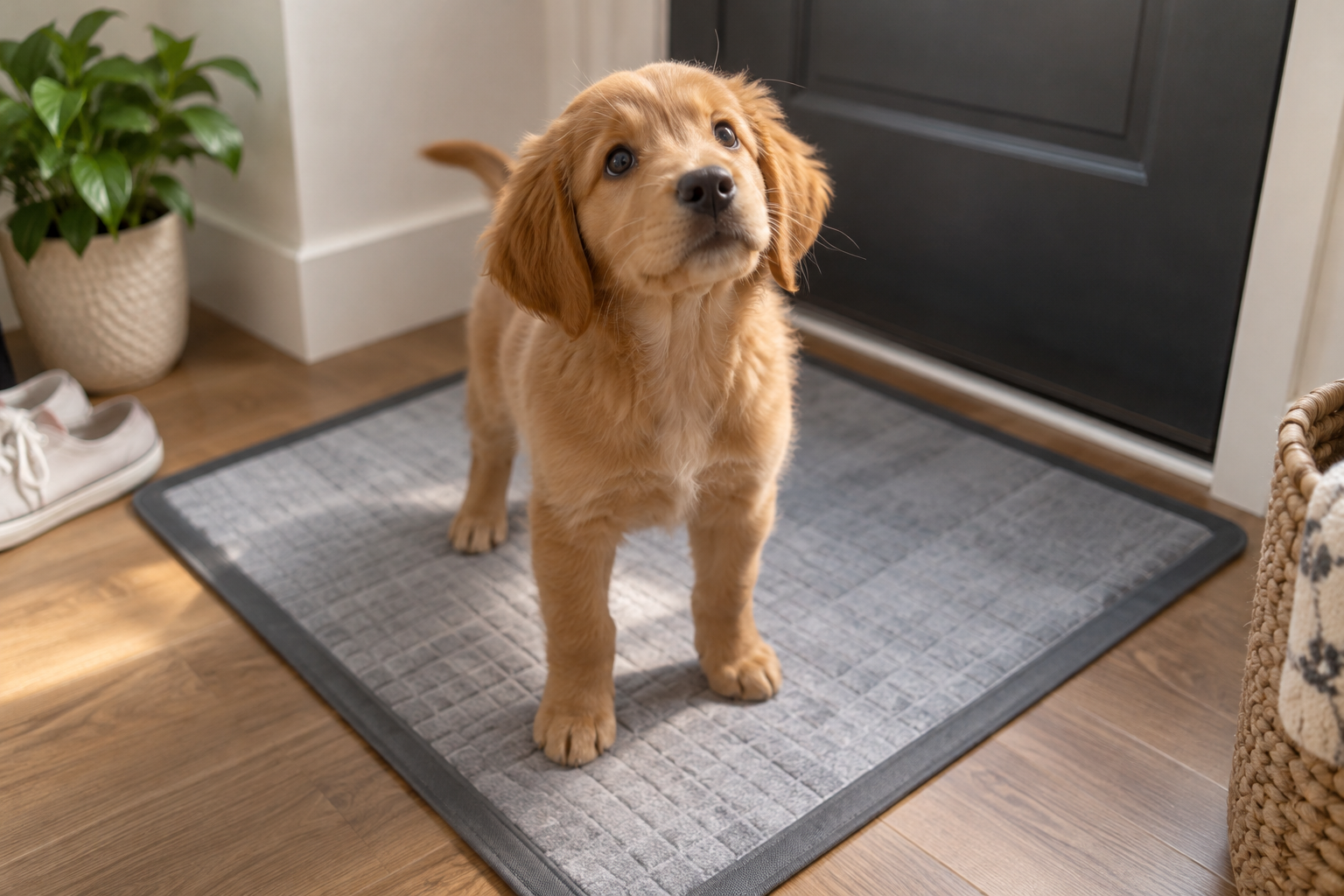
A washable toilet mat or dog grass tray may feel more distinct. Choose something easy to clean and large enough for your puppy to turn around.
Place the toilet in one quiet, easy-to-reach location. Keep it away from beds, food bowls, and busy walkways.
If you use a balcony, safety comes first. The balcony must be secure, and your puppy should always be supervised.
Prevent urine or cleaning water from draining onto another balcony. Follow building rules and keep the area sanitary.
Never treat a balcony as an all-day puppy room. It may become dangerously hot, cold, windy, or frightening.
Build the routine around likely toilet times
Puppies usually need toilet chances after certain everyday events. Take your puppy to the chosen spot:
- After waking up
- After eating
- After drinking a noticeable amount
- After energetic play
- After training sessions
- After excitement or visitors
- Before settling for sleep
- Whenever you notice toilet signals
Very young puppies need more frequent chances than older puppies. Stress, activity, food, and individual development also affect timing.
At first, offer more trips than you think you’ll need. Preventing an accident teaches more than reacting after one.
Regular mealtimes can make bowel movements easier to predict. Keep fresh water available unless a vet gives different instructions.
Don’t limit water to reduce accidents. That doesn’t teach bladder control and may put your puppy’s health at risk.
Learn your puppy’s early warning signs
Many puppies become restless before toileting. They may sniff closely, circle, wander away, or suddenly stop playing.
Some head toward a previous accident site. Others stand near the door without making a sound.
Watch especially closely after sleep, food, play, and excitement. These are useful moments to interrupt your own task and head out.
A simple written log can reveal patterns. Note meals, drinks, naps, successful toilet trips, and accidents for several days.
You don’t need a fancy app. A phone note with rough times works perfectly well.
Make apartment exits fast and boring
The distance between your apartment and the toilet spot creates the main challenge. Shoes, keys, stairs, and elevators all add delay.
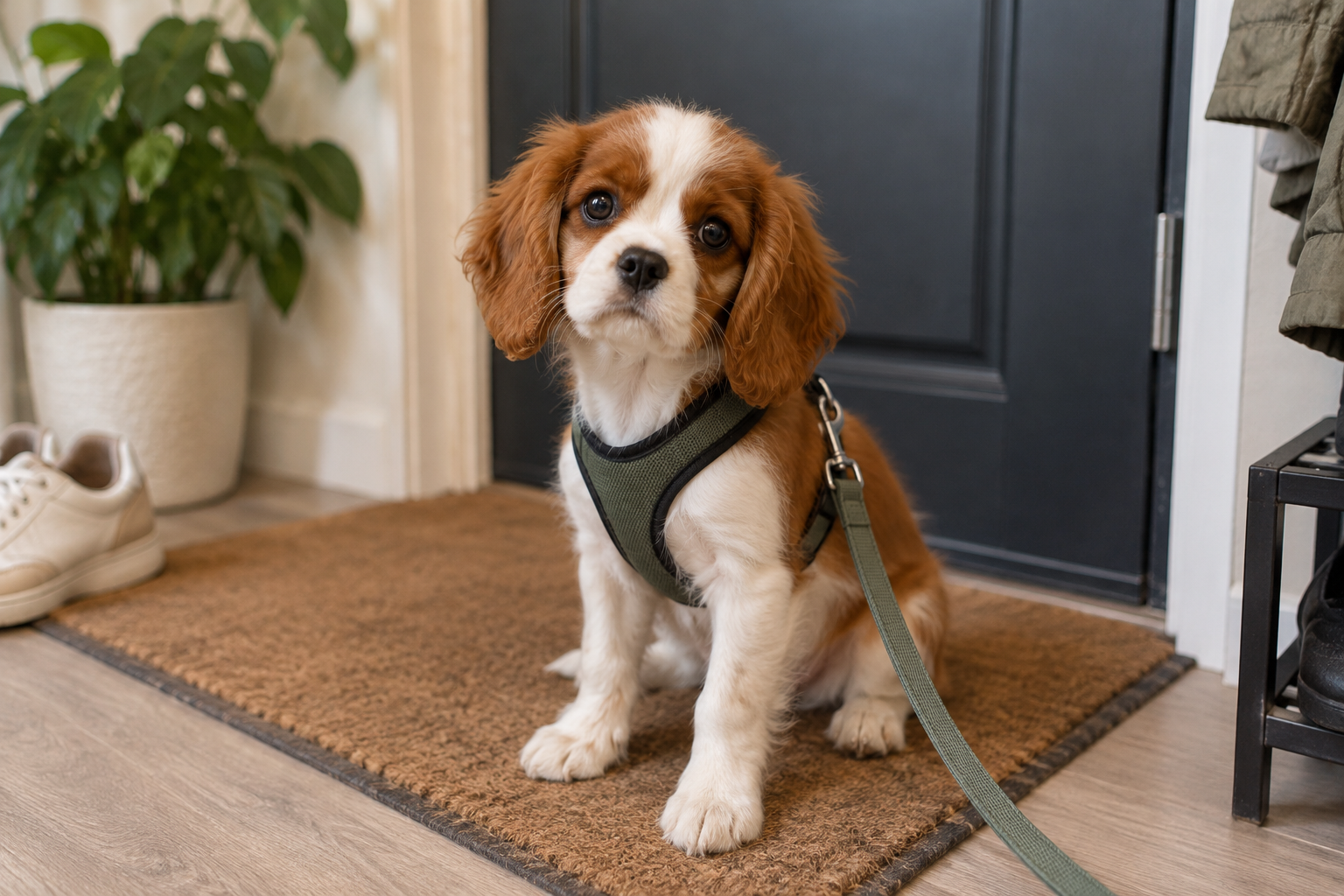
Keep a small toilet-trip kit near the door. It might include:
- Lead and harness
- Waste bags
- Keys or access fob
- A few tiny training treats
- Weather gear when needed
- Cleaning supplies for hallway accidents
Use a lead even if the toilet spot seems quiet. A passing dog, vehicle, or pigeon can derail the mission.
If your puppy is small enough to carry safely, carrying may prevent hallway accidents. Put them down only at the chosen toilet spot.
For larger puppies, move steadily without stopping for greetings. This trip has one job, and the neighbors can admire the puppy later.
Use one clear toilet cue
Choose a short phrase such as “go potty” or “toilet time.” Say it calmly when your puppy begins to toilet.
Avoid repeating the cue constantly while they search. You want the words connected to the action, not general outdoor wandering.
Once your puppy finishes, reward immediately. Use a tiny treat, warm praise, or both.
Timing matters more than enthusiasm. Reward beside the toilet spot rather than waiting until you return upstairs.
If the treat appears back inside, your puppy may connect it with entering the apartment. That’s adorable, but it’s the wrong lesson.
After a successful outdoor toilet trip, allow a short sniff or gentle walk when practical. Going straight home every time can teach some puppies to delay toileting.
Keep toilet trips calm and focused
Stand in a small area and give your puppy time to sniff. Avoid games and exciting social visits before they finish.
If nothing happens, return indoors calmly. Keep your puppy close and supervised, then try again soon.
Don’t give immediate freedom across the apartment after an unsuccessful trip. That often ends with a puddle behind the sofa.
A lead attached to you can help with supervision while you’re awake. Use it only when you can prevent tangling and chewing.
You can also use baby gates or a puppy-safe room. A smaller area makes toilet signals easier to notice.
Use a crate as a resting space, not a shortcut
A crate can support toilet training because many puppies avoid soiling their sleeping area. It should feel like a safe bedroom, never a punishment.
The crate should allow your puppy to stand, turn, rest, and stretch comfortably. An oversized crate may let them sleep at one end and toilet at the other.
Introduce it gradually with calm, positive experiences. Don’t place a frightened puppy inside and expect bladder control to appear.
Crates aren’t a solution for long absences. Puppies need toilet breaks, movement, company, and age-appropriate activity.
If work keeps you away for long periods, arrange suitable help. A trusted visitor, sitter, or walker may be needed.
Decide how to handle nighttime
Put your puppy’s sleeping area close enough that you can hear movement. Restlessness or whining may mean they need the toilet.
Keep nighttime trips quiet and businesslike. Use low lights, minimal talking, and no exciting play.
Take your puppy directly to the toilet place. Reward success, then return to bed calmly.
Some puppies settle quickly after a toilet trip. Others need reassurance while adjusting to a new home.
If nighttime distress continues despite toilet breaks and comfort, seek qualified help. Fear and separation distress shouldn’t be treated as stubbornness.
Clean accidents without creating drama
Accidents are information, not revenge. Your puppy hasn’t plotted against the carpet.
If you catch them starting, interrupt gently and move to the toilet spot. Reward if they finish there.
Don’t shout, rub their nose in it, or drag them toward the mess. Punishment can create fear and secret toileting.
If you find an old accident, simply clean it. Your puppy won’t connect punishment with something that happened earlier.
Use a pet-safe enzymatic cleaner where suitable. “Enzymatic” means it breaks down the compounds that leave lingering toilet smells.
Test any cleaner on a hidden patch first. Avoid products that could damage your flooring or expose your puppy to harmful residue.
Block access to favorite accident areas while training. A closed door or moved chair can break an unhelpful habit.
Move from pads to outdoor toileting gradually
If your puppy starts with an indoor toilet, don’t remove it suddenly. First, build plenty of successful outdoor trips.
You can slowly move the indoor toilet closer to the exit. Make each change small enough that your puppy still finds it.
Reward outdoor toileting more generously than indoor success. This makes your preferred option more valuable without punishing the other one.
Once outdoor habits are reliable, reduce access to the indoor toilet. Expect the occasional mistake during the change.
Some dogs continue using both options successfully. This can suit apartment living, severe weather, or owners with mobility limits.
Others become confused by having two places. Watch your puppy’s behavior and simplify the plan if accidents increase.
Prepare for weather, noise, and distractions
Rain, traffic, building works, and unfamiliar dogs can make toileting difficult. A nervous puppy may be too alert to relax.
Choose the quietest suitable spot available. Give your puppy space from busy paths, bins, and barking dogs.
Introduce umbrellas, coats, and wet pavements gently. Don’t wait for a storm to reveal that your puppy fears rain gear.
In harsh weather, keep trips safe and reasonably brief. An approved indoor option may be useful when outdoor conditions are genuinely unsafe.
If your puppy seems frightened, don’t pull them toward the toilet spot. Create distance from the trigger and try a calmer route.
Expect progress to wobble sometimes
Toilet training isn’t always a steady climb. Changes in routine, visitors, travel, illness, and adolescence can cause setbacks.
Return to closer supervision and more frequent toilet chances. Reward the correct behavior as if you’re teaching it for the first time.
Sudden accidents in a previously reliable puppy deserve attention. Frequent attempts, pain, straining, unusual thirst, diarrhea, or blood need prompt veterinary advice.
Don’t assume every accident is a training failure. Physical discomfort can change toilet habits quickly.
Make success easy for both of you
The most useful training plan is one you can repeat on tired days. Keep supplies ready, use the same cue, and reward at the right moment.
Share the plan with everyone in the home. Agree on the toilet place, cue, rewards, and cleanup routine.
For today, choose your puppy’s toilet spot and pack the door kit. That small setup will make the next urgent dash much easier.