Puppy Potty Training for Beginners: Start With the Basics
Puppies are tiny, charming, and remarkably casual about peeing on rugs.
Your easiest first step is to choose one potty spot today. Then take your puppy there after waking, eating, drinking, and playing.
That simple pattern is the heart of potty training. Your puppy learns where to go because you make the right choice easy and rewarding.
Know What Your Puppy Is Learning
A young puppy doesn’t arrive understanding human house rules. They also have limited bladder and bowel control.
Potty training teaches three separate skills:
- Where to pee and poop
- How to reach or ask for that place
- How to wait until they get there
Those skills take time to connect. A puppy may understand the outdoor spot but still have an accident on the way.
Progress is rarely perfectly smooth. You’ll probably see several good days followed by one very soggy surprise.
That doesn’t mean your puppy has forgotten everything. It usually means the routine needs a small adjustment.
Choose One Main Potty Area
Pick a convenient outdoor area that you can reach quickly. Consistency matters more than finding the perfect patch of grass.
Bring your puppy to the same general place each time. Familiar smells help them understand why they’re there.
If possible, use the same door and walking route. This builds a predictable chain of events:
- The puppy feels the need to go.
- You head toward the usual door.
- You follow the familiar route.
- The puppy reaches the potty area.
- Going there earns a reward.
Apartment living can make that route longer. Prepare your shoes, leash, keys, and waste bags before you need them.
Carry a very young puppy through shared indoor areas if needed. This can prevent an accident in the hallway or elevator.
Ask your veterinarian about safe outdoor access if your puppy hasn’t completed recommended vaccinations. Disease risks vary by location and by the dogs using an area.
Build a Potty Routine Around Daily Events
If you’re wondering how to potty train a puppy, start with events rather than the clock. Certain activities commonly trigger the need to go.
Offer a potty trip:
- Right after your puppy wakes
- Soon after meals or a big drink
- After active play or excitement
- After leaving a crate or resting area
- Before settling down for the night
- Before and after a car ride
- Whenever you notice potty signals
Young puppies usually need more frequent opportunities than older puppies. Individual control also varies with size, health, activity, and stress.
Don’t rely on a rigid rule about how many hours a puppy can wait. A puppy who can stay dry while sleeping may need to go much sooner while playing.
For the first few days, write down when your puppy eats, drinks, sleeps, pees, and poops. A simple phone note is enough.
Patterns will soon appear. You may notice that breakfast is followed by a poop, or zoomies are followed by a puddle.
Use those patterns to offer earlier trips. Prevention is much easier than interrupting an accident.
Learn Your Puppy’s Potty Signals
Some puppies make their needs obvious. Others give a signal so subtle that it deserves detective music.
Common signs include:
- Sniffing one small area intensely
- Circling or pacing
- Wandering away from play
- Suddenly becoming restless
- Heading toward a previous accident spot
- Moving toward the usual exit
- Whining near a door
- Squatting or raising a leg
Take your puppy out as soon as you notice these behaviors. Don’t wait to see whether you guessed correctly.
Over time, you can encourage a clearer request. For example, pause briefly at the exit before opening it.
Your puppy may begin waiting by that door. Some families teach a bell or button, but these tools aren’t necessary.
If you use a bell, help your puppy touch it before each potty trip. Open the door right away so the meaning stays clear.
Be aware that clever puppies may ring for outdoor play. That isn’t bad behavior; it simply means they’ve learned that ringing opens doors.
Keep those trips calm and potty-focused. Save playtime for after your puppy has gone.
Make Each Potty Trip Clear
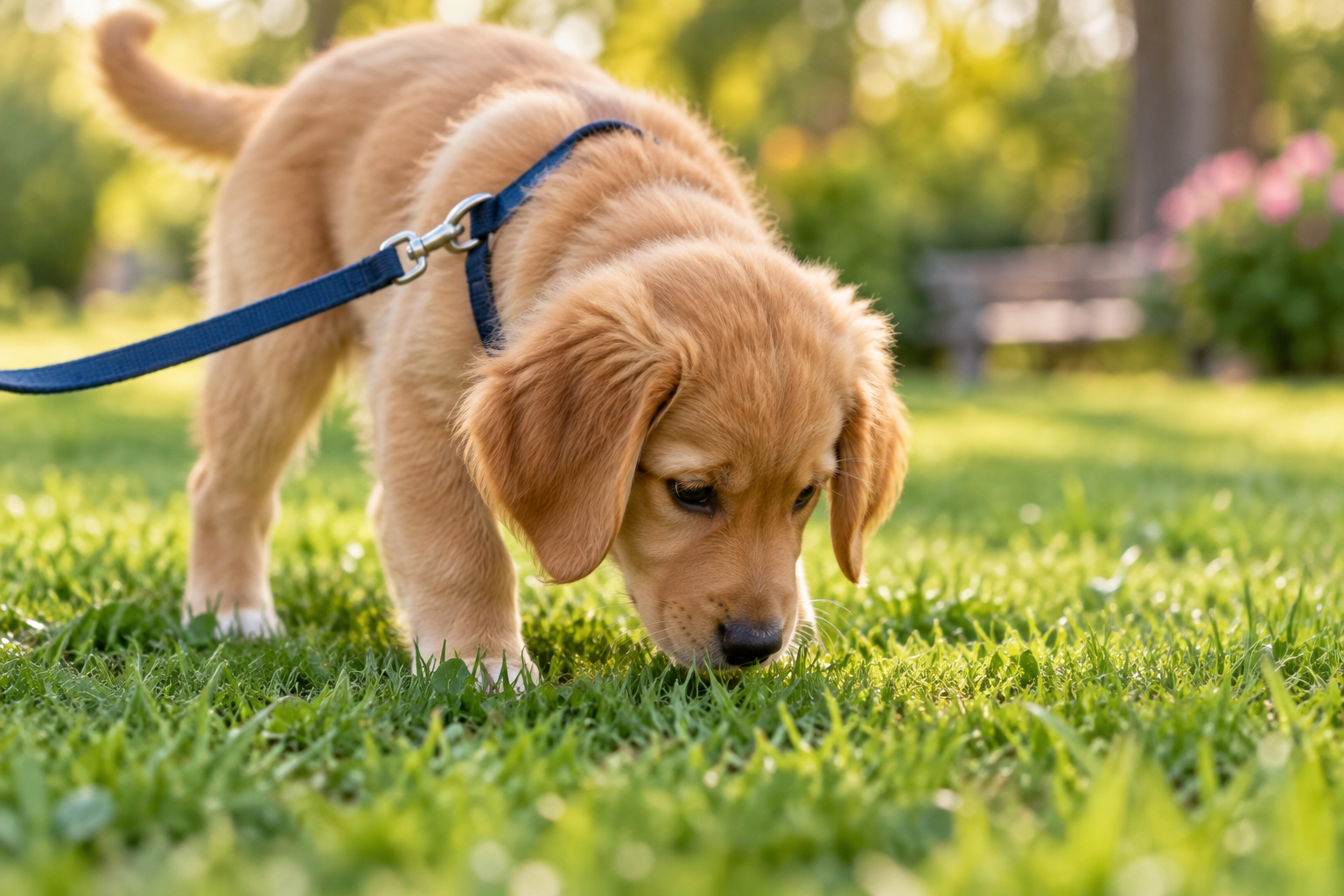
Take your puppy outside on a leash, even in a fenced yard at first. Staying nearby lets you notice the exact moment they finish.
Walk to the chosen area and give them time to sniff. Keep your voice and movements calm.
You can add a short cue such as “go potty.” Say it quietly when your puppy begins to go, rather than repeating it before they understand.
This connects the words with the action. Once that link is strong, the cue may help your puppy focus in new places.
Avoid turning the potty trip into an exciting game before they’ve gone. Play can distract a puppy from a full bladder.
If nothing happens, return inside and supervise closely. Try again after a short interval or when you see a signal.
Don’t give immediate freedom around the home after an unsuccessful trip. That’s often when a puppy trots behind the sofa and completes the mission.
Reward the Right Moment
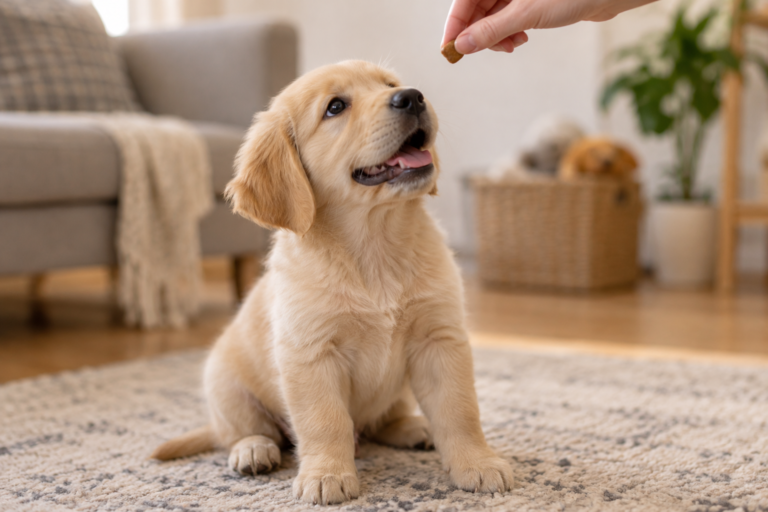
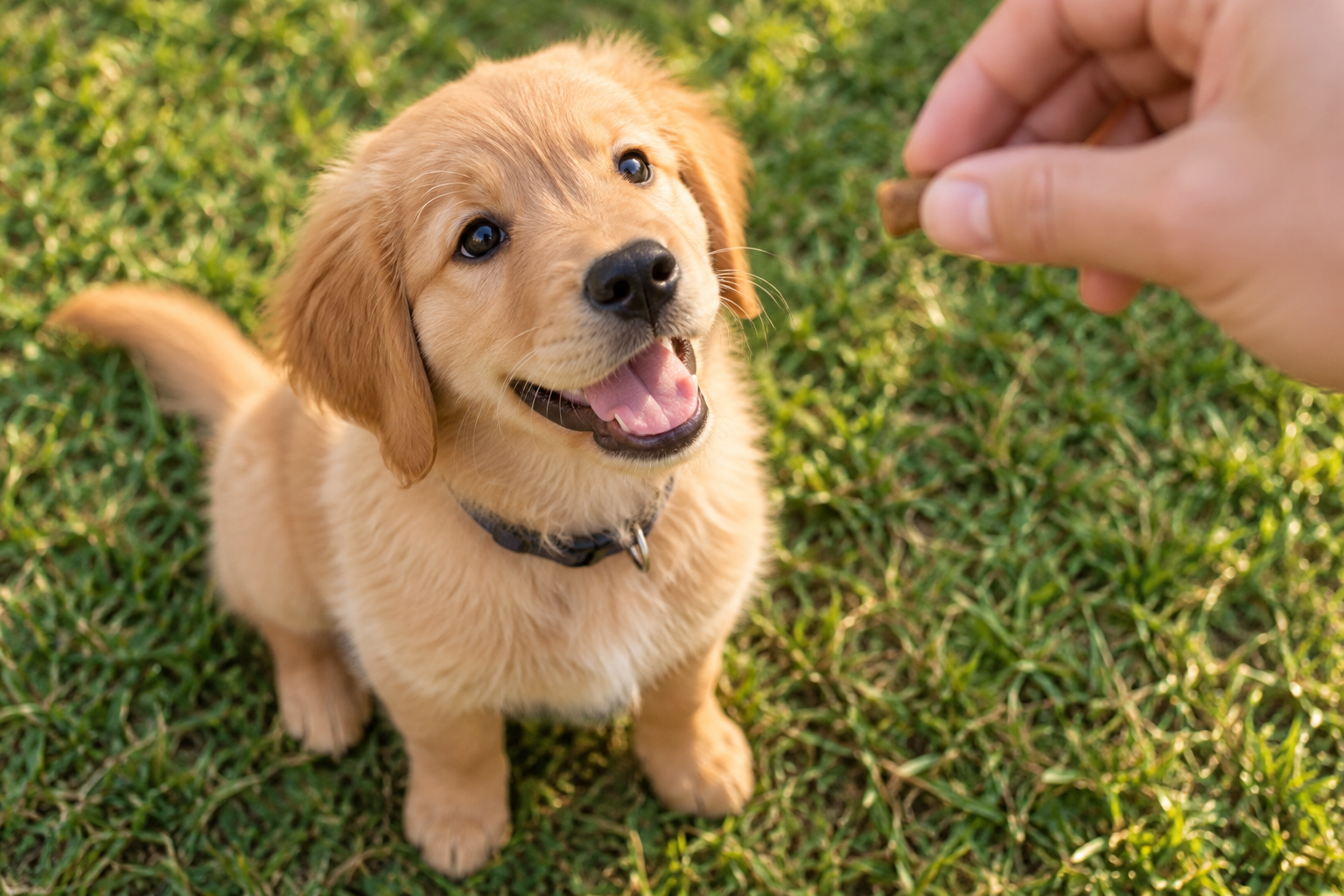
Reward your puppy immediately after they finish in the correct place. Use warm praise and a small treat if treats suit your puppy.
Timing is important. A reward given after you return indoors may seem connected to entering the house, not outdoor toileting.
Wait until your puppy has completely finished before celebrating. Excited praise given too early can interrupt them.
Then offer a little sniffing, play, or a pleasant walk when practical. This helps prevent another common problem.
If going potty always ends outdoor time, a puppy may learn to delay it. Staying outside briefly can make prompt toileting more worthwhile.
Use food rewards that are safe, small, and already suitable for your puppy. Treats shouldn’t replace balanced puppy food.
As the habit becomes reliable, you can gradually use treats less often. Praise and normal outdoor activities can continue.
Supervise Without Hovering Forever
During early training, your puppy needs either supervision or a safe resting setup. Too much unsupervised freedom makes accidents hard to prevent.
Keep your puppy in the same room when possible. Baby gates can block access to distant rooms and hidden corners.
Some people attach the puppy’s leash to themselves while moving around indoors. If you try this, stay attentive and prevent tangling.
Supervision means actively noticing your puppy. It doesn’t mean being in the same house while answering emails upstairs.
When you can’t watch, use a puppy-safe area. This might be a crate, pen, or small gated room with appropriate bedding and water access.
The setup should support comfort, not punishment. Puppies still need company, movement, play, training, rest, and regular potty trips.
Use a Crate Kindly
A crate can support potty training because many dogs prefer not to soil their sleeping space. However, it doesn’t teach the whole skill by itself.
The crate should allow your puppy to stand, turn around, and rest comfortably. An oversized space may let them sleep at one end and toilet at the other.
Introduce the crate gradually with calm, positive experiences. Never use it to punish an accident.
Take your puppy to the potty area after releasing them. Go directly rather than adding play or household wandering first.
A crate isn’t a way to make a puppy hold it beyond their comfort. If accidents happen inside, review the timing, setup, stress level, and your puppy’s health.
Repeated crate soiling deserves attention. Your puppy may need more frequent trips, a different setup, or qualified veterinary or training help.
Decide Whether You’ll Use Puppy Pads
Indoor pads can be useful when outdoor access is limited or temporarily unsafe. They may also help people with mobility challenges.
However, pads teach that toileting indoors is acceptable in a certain place. That can make an outdoor-only goal take longer.
If your long-term goal is outdoor toileting, use outdoor trips whenever practical. Keep any indoor potty station in one consistent location.
Place it away from sleeping, eating, and play areas. Replace soiled material often and keep the surrounding floor clean.
When transitioning outside, move gradually rather than changing every rule overnight. Reward outdoor success especially well.
Artificial grass trays and similar setups follow the same basic principle. They work best when their location and purpose stay consistent.
Handle Accidents Calmly
If you catch your puppy starting indoors, interrupt gently. A neutral sound can get their attention without frightening them.
Take them to the correct spot right away. Reward them if they finish there.
If you find an accident later, simply clean it. Your puppy can’t connect punishment with something that happened minutes ago.
Don’t rub their nose in it, shout, or drag them toward the mess. Those reactions can create fear without teaching the correct location.
A frightened puppy may learn to hide when toileting. That makes training harder and can damage trust.
Treat an accident as useful information. Ask what happened just before it:
- Was the potty trip delayed?
- Did the puppy drink or play recently?
- Was a signal missed?
- Did the puppy gain too much freedom?
- Was the outdoor trip distracting?
- Has the routine changed?
Adjust the next opportunity instead of dwelling on the puddle.
Clean the Area Thoroughly
Dogs can detect smells that people miss. A faint remaining odor may encourage your puppy to use the same place again.
Blot fresh liquid rather than rubbing it deeper into carpet. Then use a pet-safe cleaner made to break down urine residue.
An enzymatic cleaner uses enzymes, which are substances that break down odor-causing material. Follow the product instructions and check that it suits the surface.
Keep your puppy away while cleaning products are in use. Never mix household cleaners, since some combinations can create dangerous fumes.
Wash bedding according to its care directions. If an item keeps attracting accidents despite cleaning, remove it temporarily.
Expect Nights and New Places to Be Harder
Nighttime control develops gradually. Keep the route to the potty area simple and quiet.
A late potty opportunity before bed may help. If your puppy wakes and becomes restless, offer a calm trip without starting a midnight party.
Travel, visitors, bad weather, and a new home can disrupt progress. Excitement and uncertainty make signals easier to miss.
Return to the basics during changes:
- Offer more potty opportunities
- Reduce unsupervised freedom
- Use the familiar cue
- Reward correct choices
- Keep meals and rest fairly predictable
A puppy who is reliable at home may not understand the rules elsewhere. Dogs often need practice in each new setting.
Take your puppy outside soon after arriving somewhere new. Show them an appropriate spot before indoor exploration begins.
Respond to Setbacks Early
Accidents can increase during growth, schedule changes, stressful events, or bad weather. A short training reset often helps.
For several days, supervise more closely and record potty times again. Reward every outdoor success as if your puppy is brand new.
Sudden changes can also have a medical cause. Contact a veterinarian if a previously reliable puppy starts having frequent accidents without an obvious routine change.
Get qualified help promptly if you notice:
- Straining or obvious pain
- Very frequent attempts to pee
- Blood in urine or stool
- Ongoing vomiting or diarrhea
- Unusual thirst
- Weakness or marked tiredness
- Crying while toileting
- An inability to pass urine
These signs aren’t training failures. They need veterinary attention rather than stricter rules.
A reward-based dog trainer can help with persistent training problems. Look for someone who avoids fear, pain, and intimidation.
Keep Your Expectations Puppy-Sized
Potty training depends on repetition, not perfection. Your job is to provide enough correct opportunities for a strong habit to form.
Celebrate trends instead of demanding a flawless streak. Fewer accidents, clearer signals, and faster outdoor toileting all count as progress.
Everyone in the home should follow the same plan. Agree on the potty spot, cue, reward, and supervision rules.
Today, choose that spot and create a simple phone note. Record your puppy’s next meal, nap, and successful potty trip.
That tiny log will give you a practical starting point—and may save your favorite rug.