New Puppy Checklist: What to Have Ready Before the Big Arrival
Puppies are small, but somehow they arrive with the logistics of a tour bus.
Your easiest first step is to choose one quiet puppy area. Set up sleep, water, and a safe place to relax there. Once that spot is clear, the rest of this new puppy checklist becomes much simpler.
Start with the information you already have
Before buying food or booking appointments, contact the breeder, rescue, or foster carer. Ask what your puppy currently eats and how their day usually works.
Useful questions include:
- What food are they eating now?
- How much do they receive at each meal?
- When are their usual meal and toilet times?
- Where have they been sleeping?
- Have they used a crate, pen, collar, or harness?
- What toys and chews do they already enjoy?
- Do they have any known fears or sensitivities?
- Which health records and identification details come with them?
Sudden changes can upset a puppy’s stomach or make settling harder. Keeping familiar food and routines at first gives you a gentler starting point.
You can change routines later in small steps. Ask a vet for guidance before changing food if your puppy has health concerns.
Create a calm home base
A puppy doesn’t need access to your whole home on day one. A smaller, quiet area is usually easier to understand and supervise.
Choose a spot near normal family life, but away from constant traffic. A kitchen corner, utility room, or section of the living room may work.
Your puppy’s home base might include:
- A comfortable bed
- A water bowl
- A few safe toys
- A washable blanket
- A crate or puppy pen, if you plan to use one
- A gate blocking unsafe rooms or stairs
- Easy access to the chosen toilet area
A crate is a secure resting space, not a punishment box. It should allow the puppy to stand, turn, stretch, and lie comfortably.
Introduce it gradually with an open door, treats, and calm praise. Never use a crate to avoid giving a puppy attention, exercise, or toilet breaks.
A puppy pen offers more room for short periods of safe management. It can be useful while you cook, shower, or answer the door.
Neither tool replaces supervision. Puppies are talented little engineers when they spot a loose edge or climbable object.
Prepare a safe sleeping area
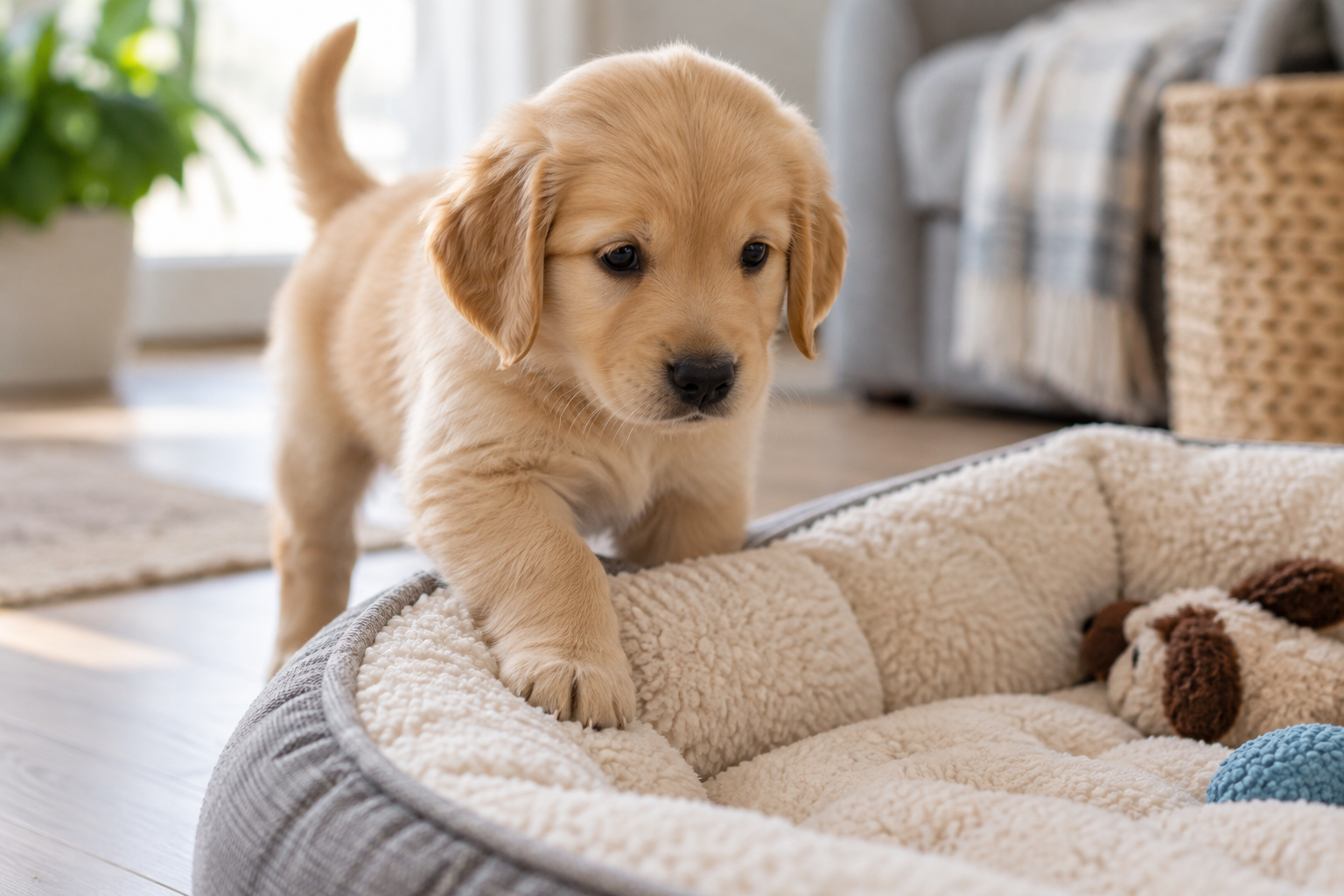
Choose a washable bed with enough room for your puppy to stretch. Avoid expensive beds at first because chewing and toilet accidents are common.
A flat mat or folded blanket may be more practical for some puppies. Check it often for torn fabric, loose stuffing, or chewed threads.
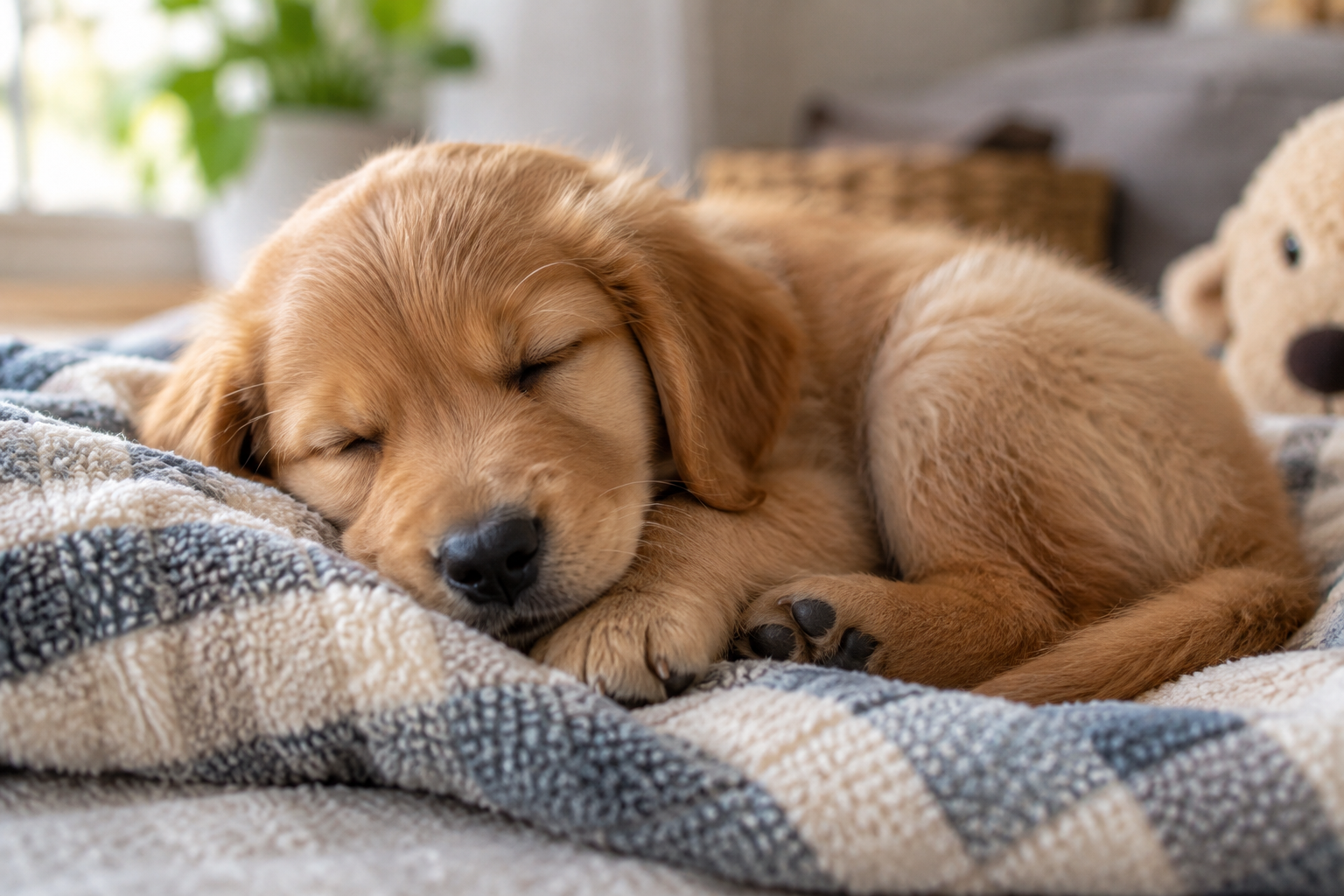
Decide where your puppy will sleep before arrival. Young puppies may feel frightened when suddenly left alone in a distant room.
Placing their bed or crate near you at first can provide reassurance. You can make gradual changes once they’re settling comfortably.
Night-time crying may mean fear, discomfort, or a need to toilet. Keep night trips quiet and boring, then guide the puppy back to bed.
Persistent distress shouldn’t be treated as stubbornness. Ask a qualified trainer or vet for help if your puppy panics, cannot settle, or becomes increasingly upset.
Stock familiar puppy food
Buy a small supply of the food your puppy already eats. Check the exact brand, recipe, and form rather than guessing from the packaging color.
You’ll also need:
- A food bowl
- A water bowl
- A scoop or simple measuring cup
- An airtight storage container
- Small training treats suitable for puppies
Choose bowls that are stable and easy to wash. Fresh water should be available unless a vet gives different instructions for a medical reason.
Use part of your puppy’s normal food for training when practical. This helps prevent treats from quietly becoming a large part of the day’s food.
If you want to change foods, do it gradually with qualified guidance. Vomiting, repeated diarrhea, refusal to eat, unusual tiredness, or a painful-looking belly needs prompt veterinary advice.
Choose a collar, harness, lead, and ID tag
A lightweight collar is useful for identification. It should fit securely without pressing tightly into the neck.
Check the fit every few days while your puppy grows. Puppies have a rude habit of changing size just after you’ve adjusted everything.
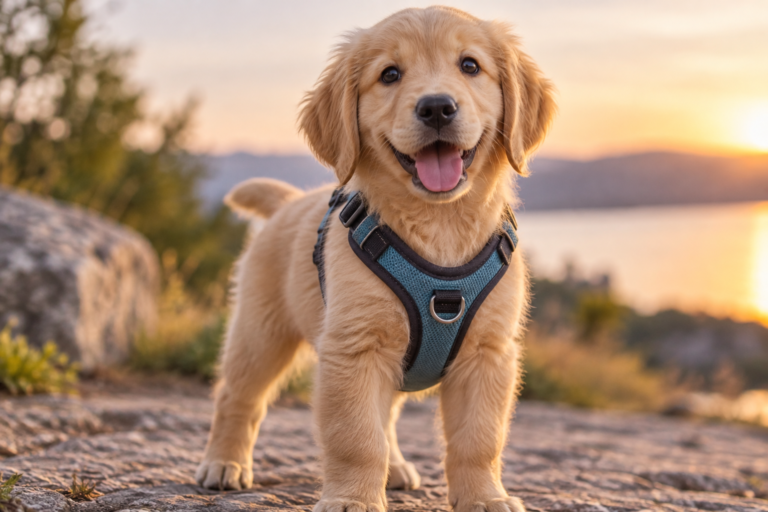
A well-fitted harness can make lead walks more comfortable. It should not rub the armpits, restrict the shoulders, or allow the puppy to back out.
Bring or request your puppy’s measurements before shopping. Keep receipts when possible because first sizes don’t always work.
Your walking kit should include:
- A lightweight collar
- An identification tag
- A well-fitted harness
- A standard fixed-length lead
- Waste bags
- A treat pouch or small pocket container
Avoid leaving collars or harnesses on during unsupervised crate or pen time. Straps and tags can catch on bars, furniture, or fabric.
Ask your vet about local identification and microchip requirements. A microchip is a tiny identification device placed under the skin, but its contact details must be registered and kept current.
Plan a safe ride home
Arrange your puppy’s transport before collection day. They shouldn’t travel loose in the car or sit on the driver’s lap.
Use an appropriately sized travel crate or a dog restraint designed for vehicle travel. Follow the product instructions and your local road rules.
Pack a small travel bag containing:
- A towel or washable blanket
- Water and a bowl
- Waste bags
- Cleaning wipes or paper towels
- A spare layer of bedding
- Any records provided at collection
- A safe chew for breaks or arrival
Keep the journey calm. Avoid turning the trip home into a tour of shops, relatives, and busy public places.
Some puppies become carsick or frightened. If you notice repeated vomiting, breathing trouble, collapse, or severe distress, seek veterinary help.
Puppy-proof one room at a time
Get down to puppy height and look around. If something can be chewed, swallowed, pulled down, or peed on, assume it may be.
Start with the puppy’s main area. Then work outward as access increases.
Move or secure:
- Electrical cords and chargers
- Medicines and cleaning products
- Small toys and children’s craft supplies
- Shoes, socks, and hair ties
- Food wrappers and rubbish bins
- Houseplants that may be unsafe
- Hanging blind cords
- Tablecloths and low decorations
- Batteries and small electronics
- Laundry and bathroom products
Use secure gates around stairs or unsafe rooms. Check that balcony rails, garden fencing, and gate gaps cannot trap or release a small puppy.
Never rely on a puppy simply “knowing better.” Management prevents accidents while training teaches better choices.
Check the garden and toilet area
Choose the toilet spot before your puppy arrives. Taking them to one consistent area makes the routine easier to learn.
Inspect the route and the area itself. Remove sharp objects, accessible chemicals, unsafe plants, and anything small enough to swallow.
Check fences from puppy height. Look for gaps under gates, loose panels, climbable objects, and ponds or other water hazards.
Stay outside with your puppy during toilet trips. Praise calmly after they finish, rather than distracting them halfway through.
If your puppy cannot safely use public ground yet, ask your vet what’s appropriate. Advice depends on local disease risks and your puppy’s health history.
Gather cleaning supplies
Toilet accidents are part of puppy life. They’re information, not revenge.
Keep supplies where you can reach them quickly:
- Paper towels or washable cloths
- Pet-safe floor cleaner
- An enzymatic cleaner
- Disposable gloves
- Laundry detergent
- Spare bedding
- A lidded waste bin or waste bags
An enzymatic cleaner breaks down the material that causes lingering smells. Ordinary cleaners may leave traces your puppy can still detect.
Check that any product suits your floor or fabric. Keep all cleaning products locked away after use.
If you catch an accident happening, interrupt gently and guide the puppy outside. Don’t shout or rub their nose in it, as that can create fear without teaching the right place.
Offer safe things to chew
Chewing helps puppies explore and can be soothing during teething. Your job is to make the legal options easier to find than the furniture.
Start with a small variety:
- A durable rubber puppy toy
- A soft toy without loose parts
- A puppy-safe chew
- A food-dispensing toy
- A simple tug toy
Choose toys that cannot fit completely inside your puppy’s mouth. Remove anything that cracks, splinters, unravels, or loses pieces.
Supervise new toys until you know how your puppy uses them. A gentle chewer and a determined toy surgeon need different products.
Rotate a few toys rather than covering the floor with twenty. Familiar toys often become interesting again after a short break.
Buy basic grooming supplies
Early grooming should feel calm and ordinary. You’re building comfort with handling, not trying to create a salon masterpiece.
Your starter kit may include:
- A brush suited to the coat type
- A gentle dog shampoo
- Soft towels
- A dog toothbrush and dog toothpaste
- Nail-care tools recommended for your puppy
- A washable mat for grooming practice
Never use human toothpaste because its ingredients aren’t intended to be swallowed by dogs.
At first, keep handling sessions very short. Touch a paw, reward calm behavior, and stop before your puppy gets overwhelmed.
Coat and grooming needs vary widely. Ask a groomer or vet what’s suitable for your puppy’s coat, skin, ears, and nails.
Organize health records and professional help
Choose a veterinary practice before your puppy arrives. Ask how registration works and what records they need.
Create one folder for:
- Vaccination records
- Microchip information
- Adoption or purchase documents
- Previous health notes
- Insurance documents, if relevant
- Breeder, rescue, or foster contact details
- Current food information
- Vet and emergency clinic contact details
A vet can advise you on vaccinations, parasite prevention, growth, feeding, and safe social experiences. These plans should fit the individual puppy and local risks.
You may also want to find a reward-based trainer. Reward-based training uses food, play, and access to wanted activities to teach behavior without fear or force.
Look for someone who explains their methods clearly. Avoid trainers who recommend pain, intimidation, or frightening “corrections.”
Agree on household rules
Puppies learn faster when people respond consistently. Have a quick household meeting before the big arrival.
Decide:
- Which rooms the puppy may enter
- Where the puppy will sleep
- Who handles each meal
- Who takes each toilet trip
- Whether furniture access is allowed
- Which words you’ll use for common cues
- How children will interact with the puppy
- Where food, leads, and cleaning supplies belong
Keep rules realistic. If the puppy won’t be allowed on the sofa, don’t invite them up during the first week because they look tiny and bewildered.
Children should sit calmly and let the puppy approach. Adults should supervise every interaction, even when both child and puppy seem gentle.
Give the puppy a resting place that nobody disturbs. Sleep is important, and tired puppies often become extra bitey and wild.
Make a simple first-day plan
Keep arrival day quiet. Let your puppy sniff the toilet area, then introduce their home base.
Offer water and follow the familiar meal routine. Avoid crowding them with visitors, toys, cameras, and enthusiastic cuddles.
A simple first-day rhythm might look like this:
- Arrive and visit the toilet area.
- Explore one small part of the home.
- Offer water and a familiar meal when appropriate.
- Have a short, gentle play session.
- Return to the toilet area.
- Allow a long, peaceful rest.
- Repeat calm toilet, food, play, and sleep routines.
Watch your puppy’s body language. Turning away, hiding, freezing, trembling, or refusing food can mean they need more space.
Some uncertainty is expected after a major move. Sudden weakness, breathing difficulty, repeated vomiting, severe diarrhea, collapse, or rapidly worsening behavior needs qualified veterinary help.
The complete new puppy checklist
Before collection day, aim to have these essentials ready:
- Familiar puppy food
- Food and water bowls
- Small training treats
- Bed, blankets, and spare bedding
- Crate or puppy pen, if using one
- Baby gates or room barriers
- Collar and identification tag
- Well-fitted harness
- Fixed-length lead
- Waste bags
- Safe travel restraint or crate
- Several suitable toys and chews
- Pet-safe cleaning supplies
- Enzymatic accident cleaner
- Basic grooming tools
- Secure food storage
- Health and identification records
- Vet and emergency contact details
- A planned toilet area
- A calm first-day routine
You don’t need every gadget with the word “puppy” printed on it. Safe basics, clear routines, and patient supervision matter far more.
For today, choose your puppy’s home base and clear the floor. That one small job gives your new companion a calmer place to land.