Puppy Enrichment in a Small Space
A puppy can turn one dropped sock into a major cultural event. Start by hiding a few pieces of food nearby and letting that busy nose work.
That tiny search is enrichment. Enrichment means giving your puppy safe ways to sniff, think, chew, move, explore, and relax.
You don’t need a huge home or a garden. A thoughtful puppy enrichment small apartment plan can fit beside the sofa.
Start with what your puppy needs today
Puppies don’t need constant entertainment. They need a healthy mix of activity, sleep, toilet breaks, social contact, and quiet time.
Your puppy’s age, size, confidence, and health will shape each activity. One puppy may love cardboard searches. Another may worry about rustling sounds.
Begin with easy games lasting a few minutes. Stop while your puppy still seems cheerful and interested.
Watch their body language as you play. Loose movements, a relaxed face, and eager returns usually mean the game feels good.
Slowing down, hiding, repeated yawning, or refusing food may signal discomfort. Make the activity easier or offer a quiet break.
Turn meals into sniffing games
A food bowl is useful, but it isn’t the only option. Some meals can become simple searches or puzzles.
Set aside part of your puppy’s usual food. Place several pieces around one puppy-safe room while your puppy watches.
Say a simple cue, such as “find it.” Let your puppy search without pointing out every piece.
Keep the first search obvious. Food beside a chair leg is challenging enough for a beginner.
Later, try these small-space variations:
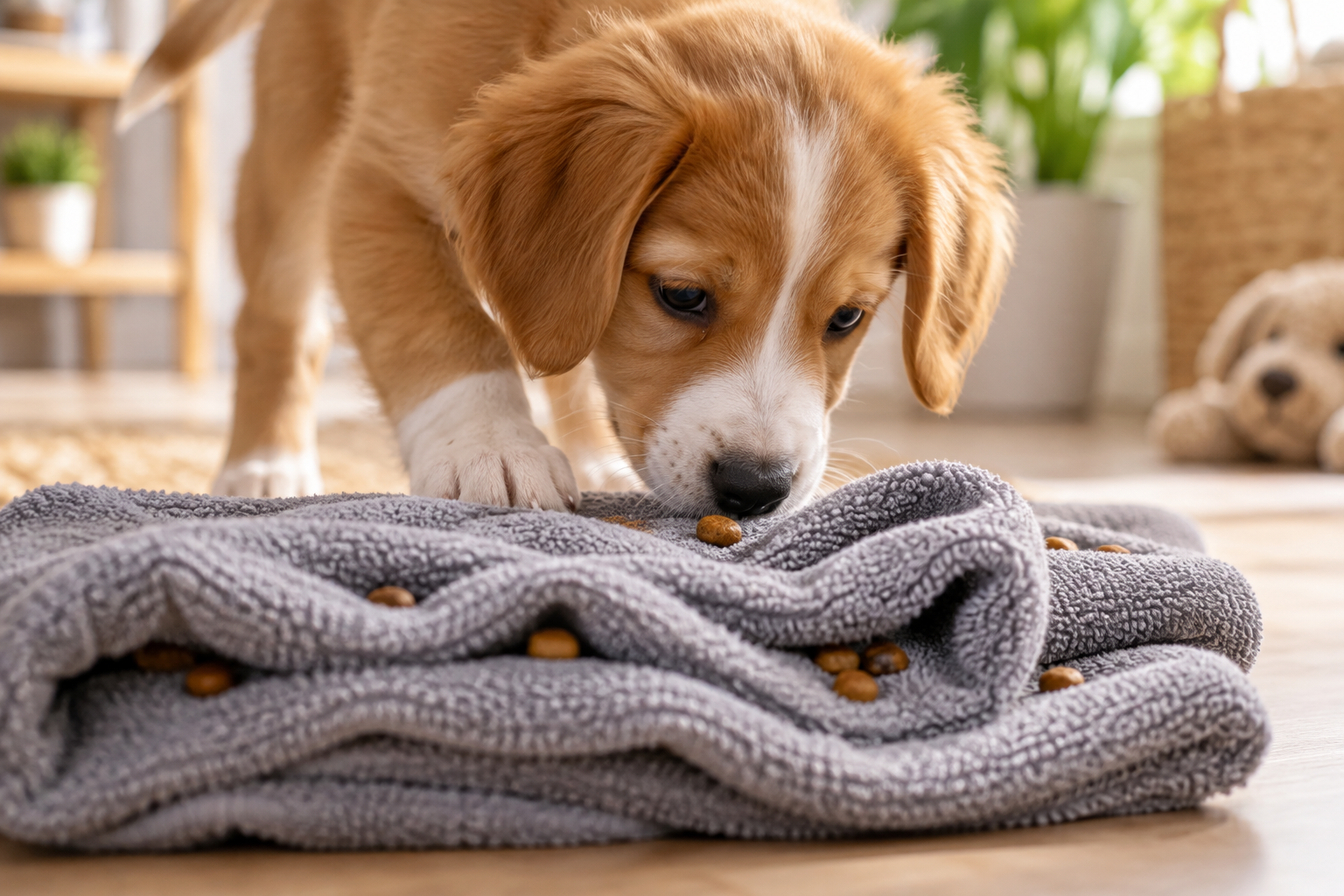
- Scatter food across a clean towel.
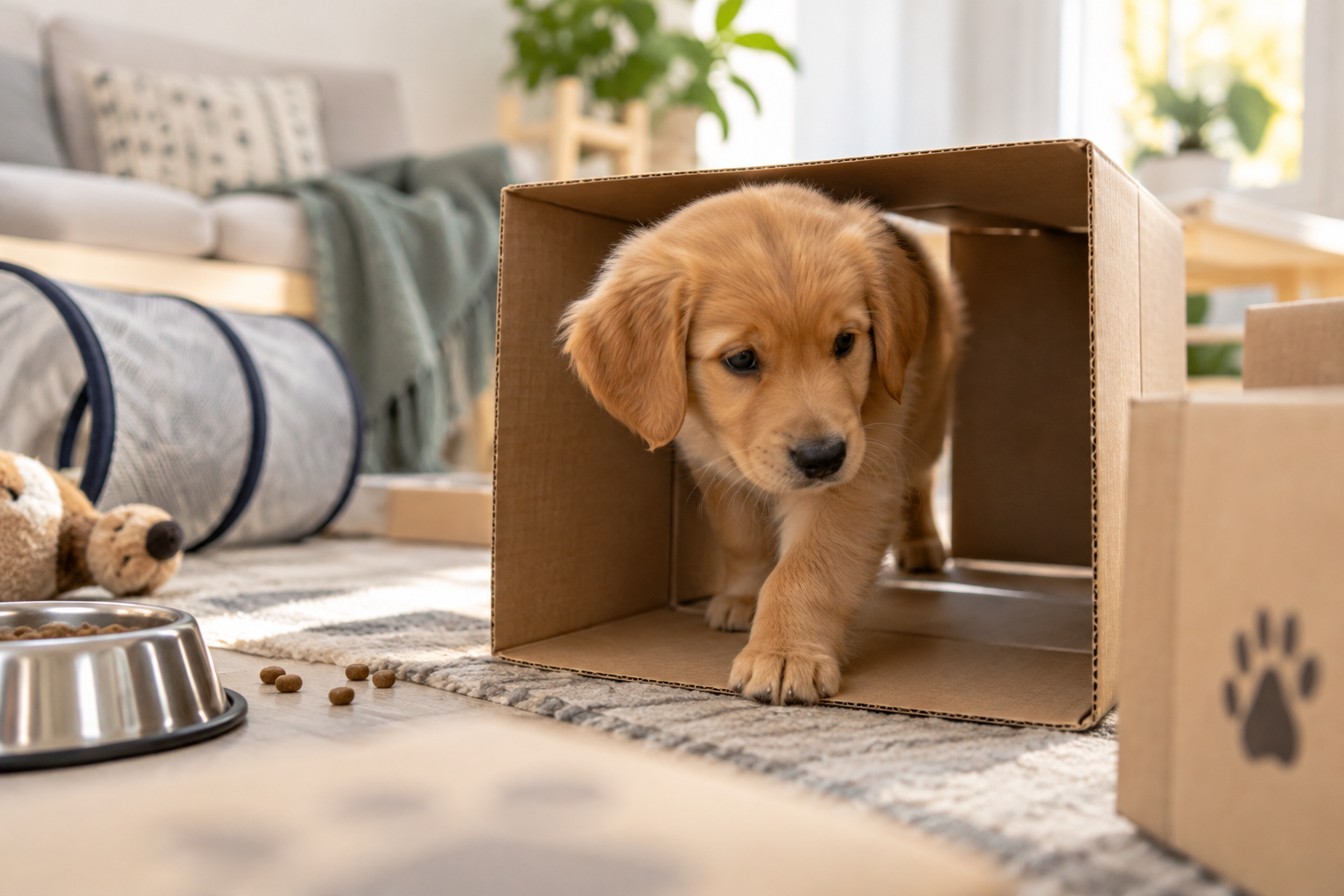
- Place pieces inside an open cardboard box.
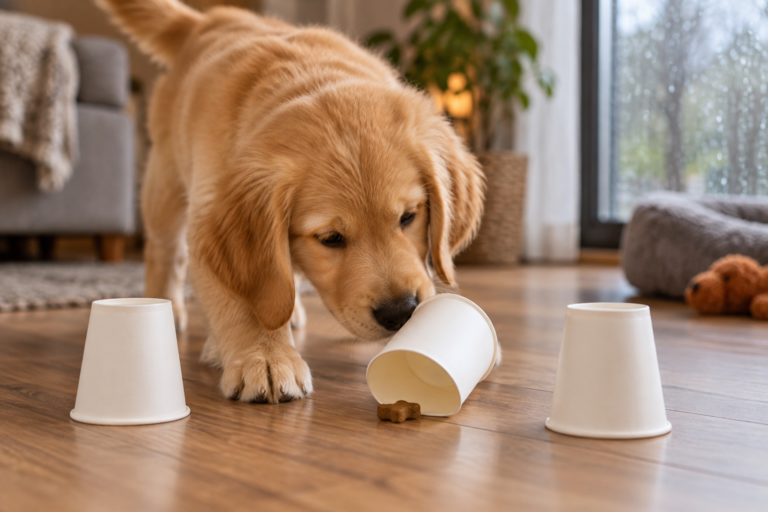
- Hide food beneath lightweight cups.
- Drop pieces along a short indoor trail.
- Put food into a suitable puzzle toy.
- Roll food inside a loosely folded towel.
Supervise games involving towels, boxes, or cups. Remove them if your puppy starts swallowing fabric, paper, or plastic.
Food puzzles should be easy at first. A puppy who can’t reach the reward may become frustrated instead of enriched.
Use food from your puppy’s normal daily amount when possible. Too many extras can upset their stomach or unbalance meals.
Choose treats that are suitable for your puppy’s size and health. Ask a vet if you’re unsure what foods are appropriate.
Use tiny training sessions
Training is excellent mental exercise. It also helps apartment life feel more predictable.
Keep sessions short and upbeat. One minute while the kettle heats can still be useful.
Teach practical skills that fit your daily routine:
- Responding to their name
- Touching your hand with their nose
- Sitting before doors open
- Dropping an item when asked
- Going to a bed or mat
- Waiting briefly for food
- Settling while you move around
Reward the behavior you want with food, praise, or play. Avoid pushing your puppy into positions or repeating cues until everyone gets grumpy.
A hand target is a handy starting skill. Hold out your palm, then reward your puppy for touching it.
You can use that skill to guide them around furniture. It also gives your puppy a clear, achievable job.
Train on rugs or other non-slip surfaces. Slippery flooring can make movement awkward, especially during turns.
Build a safe indoor adventure course
You can create a gentle exploration area without converting your lounge into an obstacle arena.
Arrange a few safe household objects on the floor. Let your puppy investigate them at their own speed.
Possible objects include:
- An open cardboard box
- A towel with a few folds
- A firm cushion lying flat
- A low, stable step
- A paper bag with handles removed
- A mat with a different texture
Scatter some food around the objects. Your puppy can step over, walk around, sniff, or simply observe.
Keep everything low and stable. Young joints aren’t ready for repeated jumping, sharp turns, or tall climbing challenges.
Never place your puppy on an object to force interaction. Choosing to approach is an important part of the activity.
Remove anything that could collapse, trap a paw, or be swallowed. Clear away staples, tape, strings, and loose stuffing.
Give chewing a proper place
Chewing is normal puppy behavior. It can soothe sore gums and help a puppy settle.
Offer puppy-safe chews and sturdy toys suited to their size. The item should be large enough that it can’t be swallowed.
Supervise new chew items. Puppies can damage products in surprisingly creative ways.
Remove anything that splinters, breaks into chunks, or develops sharp edges. Follow the maker’s guidance for safe use and replacement.
You can make legal chewing more appealing by offering it during calm periods. A bed or mat can help create a clear chewing spot.
If your puppy grabs furniture, trade for an appropriate item. Don’t chase them, because chasing can turn theft into a fantastic game.
Keep shoes, cables, medicines, batteries, and remote controls out of reach. Prevention works better than trying to supervise every second.
Play without shaking the whole building
Indoor play can be active without becoming wild or noisy. The goal is controlled fun, not total exhaustion.
Try gentle tug with a suitable toy. Keep the toy low and allow your puppy to maintain a comfortable footing.
Pause often and ask for a simple cue. Then restart the game as a reward.
A short toy search is another quiet option. Let your puppy sniff a toy, hide it nearby, and encourage them to find it.
You can also roll a toy along the floor. Avoid throwing it toward furniture, stairs, or slippery areas.
Long hallway sprints may look convenient, but repeated hard turns can be rough on a growing puppy. Choose slower searches and controlled movement instead.
If play becomes frantic, pause calmly. Scatter a few pieces of food or offer a quiet chew to help your puppy shift gears.
Let the world provide enrichment
A puppy doesn’t need to greet every person or dog. Calm observation can be valuable social learning.
Sit together near a window, balcony door, or building entrance. Reward your puppy for noticing sounds and then checking back with you.
Keep windows secure and balconies inaccessible unless fully puppy-safe. Screens alone may not prevent a fall.
Common apartment sounds can become gentle listening practice. Elevators, doors, footsteps, and delivery carts are all part of home life.
Pair mild sounds with food or calm attention. Increase distance if your puppy freezes, barks continuously, or tries to escape.
Outdoor exploration matters too, but the safest options depend on local disease risks and your puppy’s health. Ask your vet where your puppy can walk or explore safely.
When direct ground access isn’t suitable, your vet may suggest safer ways to experience the outside world. Don’t assume every shared dog area is appropriate.
Rotate toys instead of covering the floor
More toys don’t automatically create more enrichment. A giant toy pile can become background clutter.
Leave out a small selection with different purposes. You might offer one chew, one food toy, one soft toy, and one play toy.
Put the others away, then swap them later. Rotation can make familiar objects interesting again.
Inspect each item during the change. Discard damaged toys that expose stuffing, squeakers, threads, or sharp pieces.
Notice which toys your puppy actually uses. Preferences may change as they grow and begin teething.
Toy rotation also helps in a small home. Your toes will appreciate the reduced obstacle course.
Teach calm as an enrichment skill
Rest isn’t the absence of good care. Puppies need plenty of sleep, and overtired puppies often become extra bitey or chaotic.
Create a quiet resting spot away from busy walkways. It might be a bed, crate, pen, or puppy-safe corner.
Make the area comfortable and positive. Never use it as a punishment.
Offer calm activities there, such as a safe chew. Lower household activity when your puppy begins to settle.
You can quietly reward relaxed behavior. Place a piece of food between their paws when they lie down calmly.
Don’t keep waking a sleeping puppy for another game. Sleep supports learning, growth, and emotional balance.
If your puppy struggles to settle, check the basics first. They may need the toilet, a drink, less stimulation, or a more comfortable room.
Practice short periods of independence
Apartment puppies can easily become used to constant company. Gentle independence practice helps them feel safe when you move away.
Start while your puppy is relaxed. Step a short distance away, return calmly, and keep the moment uneventful.
You can give them a safe activity before moving away. Stay close enough that they remain comfortable.
Build time and distance gradually. Don’t use prolonged crying as an independence exercise.
Signs such as panic, frantic escape attempts, heavy drooling, or persistent distress need proper attention. Contact a vet or a qualified reward-based trainer for guidance.
A camera can help you observe your puppy when you’re briefly out of sight. It shouldn’t be used to leave them longer than they can manage.
Create a simple daily rhythm
You don’t need a packed activity schedule. Small moments spread through the day are often easier for puppies.
A flexible apartment routine might include:
- A toilet break and gentle sniffing opportunity
- Breakfast in a simple food search
- A short training game
- Quiet rest
- A supervised chew or toy
- Safe outdoor exploration or indoor movement
- Another long rest period
Adjust the order around your puppy’s needs. Toilet training, meals, health needs, and sleep take priority.
Mix different kinds of enrichment across the day. Five food puzzles in a row aren’t as balanced as sniffing, training, chewing, movement, and rest.
Also leave some peaceful gaps. Your puppy should gradually learn that ordinary home life isn’t always an event.
Know when a game isn’t working
Good enrichment should suit the puppy in front of you. It shouldn’t leave them frightened, sore, or endlessly frustrated.
Stop and simplify if your puppy:
- Avoids the activity
- Barks or paws frantically
- Guards the toy or food
- Starts swallowing unsafe materials
- Slips, limps, or seems uncomfortable
- Can’t settle after the game
- Shows a sudden behavior change
Guarding means stiffening, growling, snapping, or hovering protectively over an item. Don’t grab the object or punish the warning.
Create distance and seek help from a qualified reward-based professional. Sudden aggression, pain, appetite changes, or unusual tiredness also warrant veterinary advice.
Make one small change today
Choose one room and remove anything unsafe from puppy height. Then hide five pieces of your puppy’s usual food in easy places.
Let your puppy sniff, search, and succeed. That’s useful enrichment, even if the whole adventure happens three steps from your sofa.