Bringing Home a Puppy: A Gentle Plan for the First Day
A new puppy can turn one quiet room into a tiny sock-hunting festival.
Start simply. Before your puppy arrives, prepare one calm, safe area. You don’t need to introduce the whole house on day one.
The goal isn’t a perfect first day. It’s helping your puppy feel safe, comfortable, and gently connected to you.
Prepare a small welcome zone
Choose an easy-to-clean room near normal family life. A kitchen corner or gated living area often works well.
Your puppy’s space might include:
- A comfortable bed
- Fresh water in a stable bowl
- A few safe puppy toys
- A crate or puppy pen, if you’re using one
- A baby gate to limit wandering
- Cleaning supplies stored out of reach
- The same food they were already eating
A crate is a secure resting space with a door. It should allow your puppy to stand, turn around, and lie comfortably.
A puppy pen is a larger contained area for supervised rest and play. Neither space should be used as punishment.
Keep the setup simple. Too many beds, toys, noises, and visitors can make settling harder.
Puppy-proof before the paws arrive
Puppies investigate with their mouths. Unfortunately, they have no sense of what belongs in a stomach.
Move these items out of reach:
- Electrical cords and chargers
- Medicines and vitamins
- Cleaning products
- Shoes, socks, and children’s toys
- Food wrappers and rubbish
- Small objects that could be swallowed
- Houseplants unless you know they’re dog-safe
- Remote controls and batteries
Block access to stairs, balconies, fireplaces, and open water. Check fences for gaps that look far too small—puppies enjoy proving otherwise.
Place bags and coats somewhere secure. They may contain gum or sweets made with xylitol, which is highly dangerous to dogs.
Chocolate, grapes, raisins, onions, and some other human foods can also be harmful. When you’re unsure, keep the food away and ask a veterinarian.
Make the journey home calm
Use a secure travel carrier or a suitable dog restraint in the car. Don’t let a puppy travel loose or sit on the driver’s lap.
Bring an absorbent towel and a spare one. Car sickness, nervous drooling, and toilet accidents can happen.
Keep the temperature comfortable and the music low. Avoid passing your puppy between excited passengers.
For a longer journey, ask the puppy’s breeder, rescue, or veterinarian about safe stops. Young puppies may not be fully protected from contagious diseases, so busy dog areas may be unsuitable.
Never leave your puppy alone in a parked vehicle. Temperatures can become dangerous quickly, even on an ordinary-looking day.
Go to the toilet area first
When you arrive, take your puppy straight to the planned toilet spot. Use a leash, even in a fenced garden, so you can calmly guide them.
Stand quietly and give them time. When they finish, praise them warmly and offer a tiny treat if appropriate.
Don’t turn the toilet trip into immediate outdoor play. Puppies learn more easily when toileting happens before the fun begins.
If nothing happens, take your puppy inside under close supervision. Try again when they start sniffing, circling, wandering away, or becoming restless.
Young puppies often need toilet opportunities after waking, eating, drinking, playing, or getting excited. Their control is still developing, so accidents are information rather than misbehavior.
If an accident happens, clean it without fuss. An enzymatic cleaner breaks down the smell that can draw a puppy back to the same spot.
Don’t shout, rub their nose in it, or punish them afterward. They won’t connect delayed punishment with the accident.
Offer a quiet tour, not a grand expedition
Let your puppy explore one small area first. Keep doors closed and use gates to prevent overwhelming adventures.
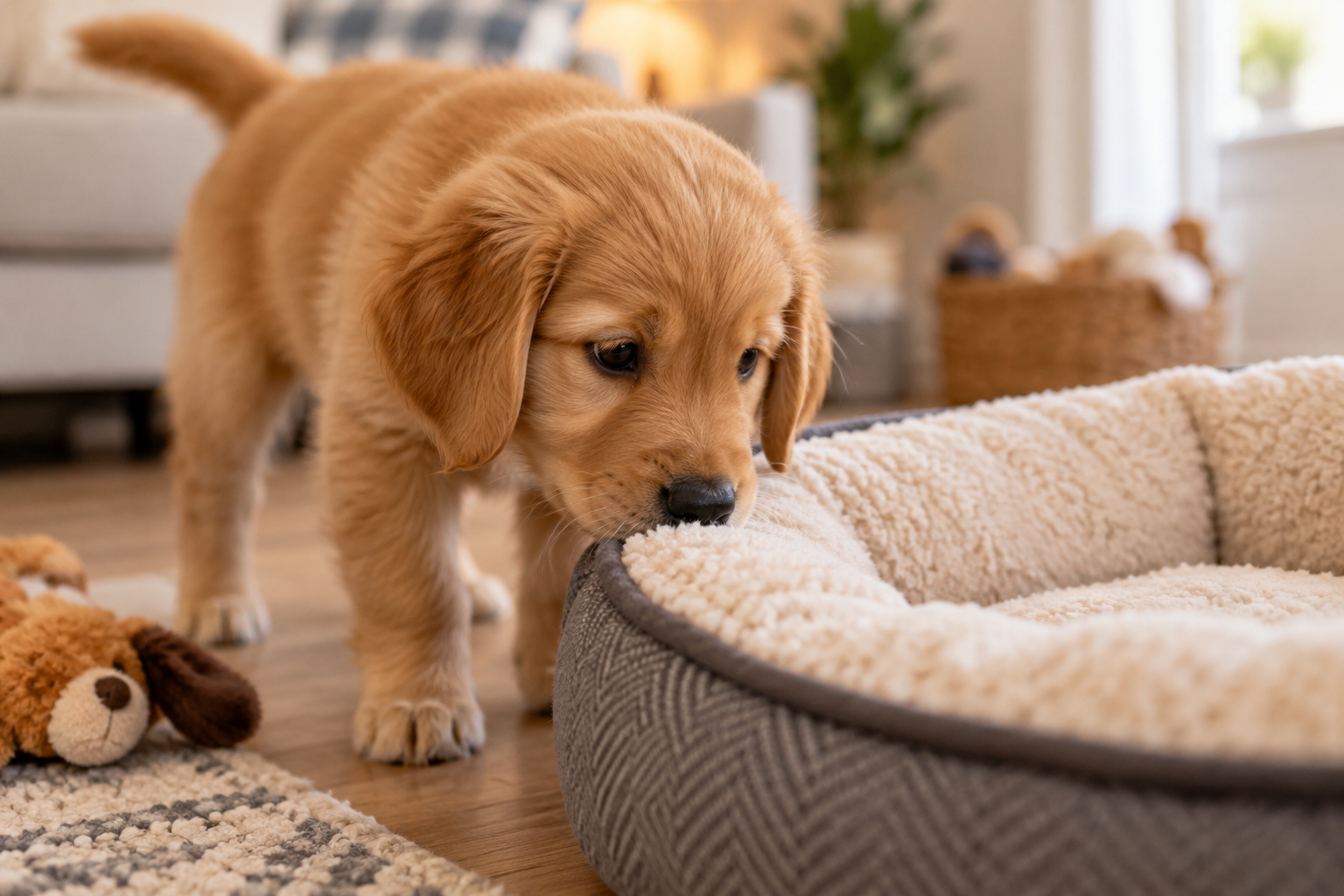
Allow sniffing at their own pace. Sniffing helps dogs gather information and can reduce tension.
Show them the water, bed, and exit used for toilet trips. Then sit nearby and let them decide whether to approach.
Some puppies bounce around immediately. Others hide, freeze, whine, or fall asleep.
Neither response tells you what their full personality will be. Travel, separation, unfamiliar smells, and tiredness can all affect first-day behavior.
Keep greetings gentle
A puppy doesn’t need to meet every friend, neighbor, and distant cousin today. Quiet time is more useful than a welcome parade.
Ask household members to sit down and let the puppy approach. Calm voices and slow movements make greetings easier.
Children should always have adult supervision. Teach them to avoid hugging, chasing, lifting, or waking the puppy.
A puppy that turns away, licks their lips, tucks their tail, hides, or tries to leave may need more space. Don’t force contact for a photo or cuddle.
Pet briefly around the shoulder or chest if the puppy seems comfortable. Pause and see whether they choose to stay.
Introduce other pets carefully
Keep first meetings short and controlled. Separate pets whenever nobody can actively supervise.
For a resident dog, begin in a quiet area if health and vaccination guidance allows. Use loose leashes and avoid forcing nose-to-nose contact.
Watch both dogs’ bodies. Relaxed curves, easy movement, and brief sniffing are encouraging signs.
Stiff posture, hard staring, repeated pinning, hiding, or frantic escape attempts mean they need distance. Calmly separate them rather than waiting for things to “sort themselves out.”
Remove food, chews, and favorite toys during early meetings. These resources can create tension, even between friendly dogs.
For cats, use a barrier and provide high escape routes. Don’t allow chasing, even if the puppy appears playful.
Small pets should remain securely separated. A playful puppy can frighten or injure them without meaning to.
Keep food familiar
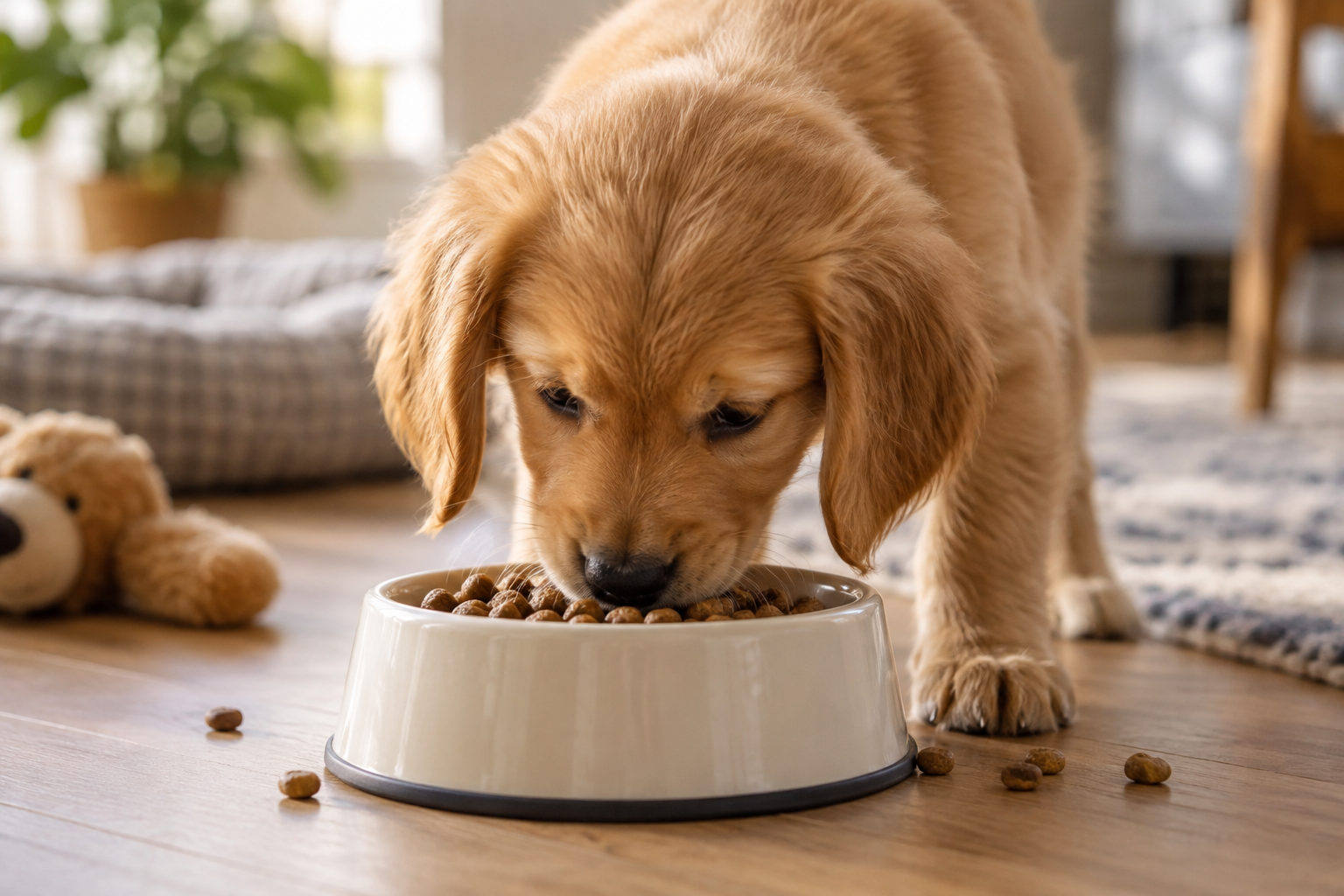
Offer the food your puppy was already eating, following the amount and routine provided by their breeder or rescue. A sudden food change may cause an upset stomach.
If you plan to change foods, ask your veterinarian how to do it gradually. The best choice depends on your puppy’s age, size, health, and expected adult growth.
Keep fresh water available. Don’t limit drinking just to prevent toilet accidents.
Use treats in small pieces. Too many rich treats on an already stressful day can upset a puppy’s stomach.
Avoid adding supplements or making a homemade puppy menu without qualified guidance. Growing puppies need the right balance of nutrients, and guesswork can cause harm.
Some puppies eat less during their first meal because they’re nervous. However, a puppy that refuses food and water, seems weak, or develops other symptoms needs prompt veterinary advice.
Make learning light and easy
Your puppy is already learning, even when you aren’t holding a training session. They’re noticing which actions bring safety, attention, and rewards.
Begin with their name. Say it once in a cheerful voice, then reward a glance toward you.
You can also reward simple choices, such as:
- Toileting in the right place
- Walking toward you
- Settling on a bed
- Chewing an appropriate toy
- Remaining calm during gentle handling
Keep practice brief. A few successful moments are more useful than a long lesson with a tired puppy.
Redirect unwanted chewing toward a safe toy. If your puppy grabs something dangerous, calmly trade it for food instead of chasing them.
Chasing can turn stolen socks into a thrilling game. It can also encourage a puppy to swallow items quickly.
Avoid punishment-based tools or frightening corrections. Fear may stop behavior in the moment without teaching a safe alternative.
Balance play with plenty of rest
Puppies often keep playing after they become tired. The result may be wild running, harder biting, barking, or general gremlin behavior.
Offer short periods of gentle play, sniffing, and exploration. Follow them with a toilet trip and quiet rest.
Choose toys made for a puppy’s size and chewing style. Supervise new toys until you know how your puppy uses them.
Remove toys that split, shed pieces, or become small enough to swallow. Strings and fabric can also be dangerous when eaten.
Don’t encourage repeated jumping, slippery-floor skidding, or strenuous exercise. Growing bodies need sensible movement rather than a first-day fitness challenge.
Your veterinarian can guide exercise as your puppy grows. Breed, body shape, age, and health all make a difference.
Plan for the first night
Place your puppy’s bed or crate somewhere they won’t feel isolated. Many puppies settle more easily near a sleeping person at first.
Keep bedtime boring and predictable. Try a toilet trip, a calm return indoors, and quiet settling with low lights.
A familiar-smelling blanket from the previous home may help, if one was provided. Check that your puppy isn’t chewing or swallowing the fabric.
Some whining is normal in a new place. Pause briefly to see whether your puppy settles, but don’t ignore escalating distress.
Your puppy may need the toilet, feel too hot, or be frightened. Calmly meet the need without beginning a midnight play session.
Young puppies may need nighttime toilet trips. Follow the guidance from their breeder, rescue, and veterinarian, since age and development vary.
Take the puppy out quietly, praise toileting, and return to bed. Keep lights, chatter, and games to a minimum.
Expect the routine to wobble
The bringing home a puppy first day plan is really a flexible guide. Puppies rarely read the schedule.
A useful rhythm is:
- Toilet trip
- Quiet exploration or gentle play
- Food or water when appropriate
- Another toilet opportunity
- Rest
Repeat that pattern according to your puppy’s cues. Don’t worry if a meal, nap, or toilet trip happens earlier than expected.
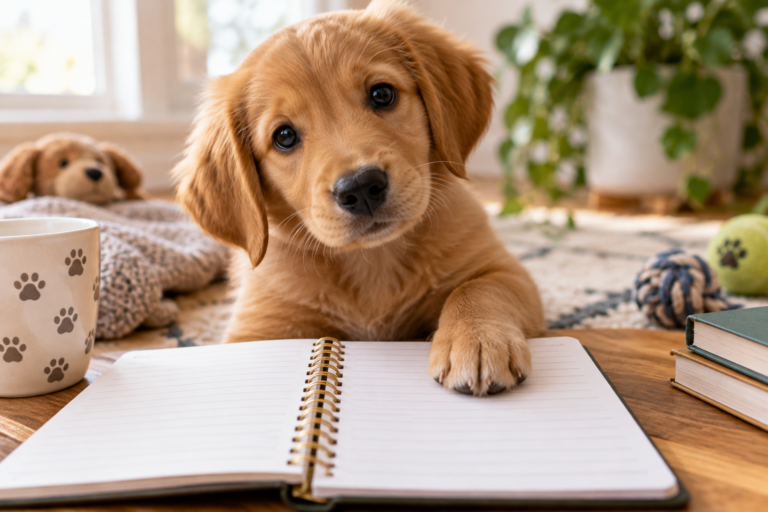
Keep notes on eating, drinking, toileting, sleep, and any symptoms. A simple phone note can help you spot changes and answer veterinary questions.
Arrange professional care
Collect any records provided by the breeder or rescue. Keep details about previous food, parasite care, vaccinations, identification, and known health concerns.
Arrange an appointment with a qualified veterinarian. Ask when your puppy can safely visit public places, meet unfamiliar dogs, and begin group training.
Disease risk varies by location and vaccination status. Until you have guidance, avoid dog parks and heavily used public toilet areas.
Check identification details too. Make sure tags and microchip records have your current contact information where applicable.
Know when to get help
Nerves can cause mild changes, but serious or sudden symptoms shouldn’t be dismissed as first-day stress.
Contact a veterinarian promptly if your puppy has repeated vomiting or diarrhea, refuses water, becomes unusually weak, or seems painful.
Seek urgent veterinary help for:
- Trouble breathing
- Collapse or inability to stand
- Pale, gray, or blue gums
- A swollen or painful belly
- Blood in vomit or stool
- Repeated unproductive retching
- Inability to urinate
- A seizure
- Suspected poisoning
- Swallowing a battery, medicine, toy, string, or other object
Very young puppies can worsen quickly. If something feels seriously wrong, call rather than waiting overnight.
Keep today’s goal small
Your puppy doesn’t need to master the house, meet everyone, or learn five commands. They need safety, rest, toilet opportunities, familiar food, and patient company.
For today, set up one peaceful puppy zone and sit there for a few quiet minutes. That small welcome is an excellent place to begin.