How to Train Your Puppy
To train your puppy, reward the behavior you want, prevent unwanted behavior from becoming a habit, and practice in short, easy sessions. Use food, toys, praise, and access to enjoyable activities as rewards. Give each cue once, reward promptly, and make the task easier if your puppy struggles.
Training does not happen on a fixed timeline. A young puppy may understand a cue at home but forget it outside, when excited, or when tired. That is normal. Consistent practice in different places gradually turns a new skill into a reliable habit.
Start With Rewards, Timing, and Clear Expectations
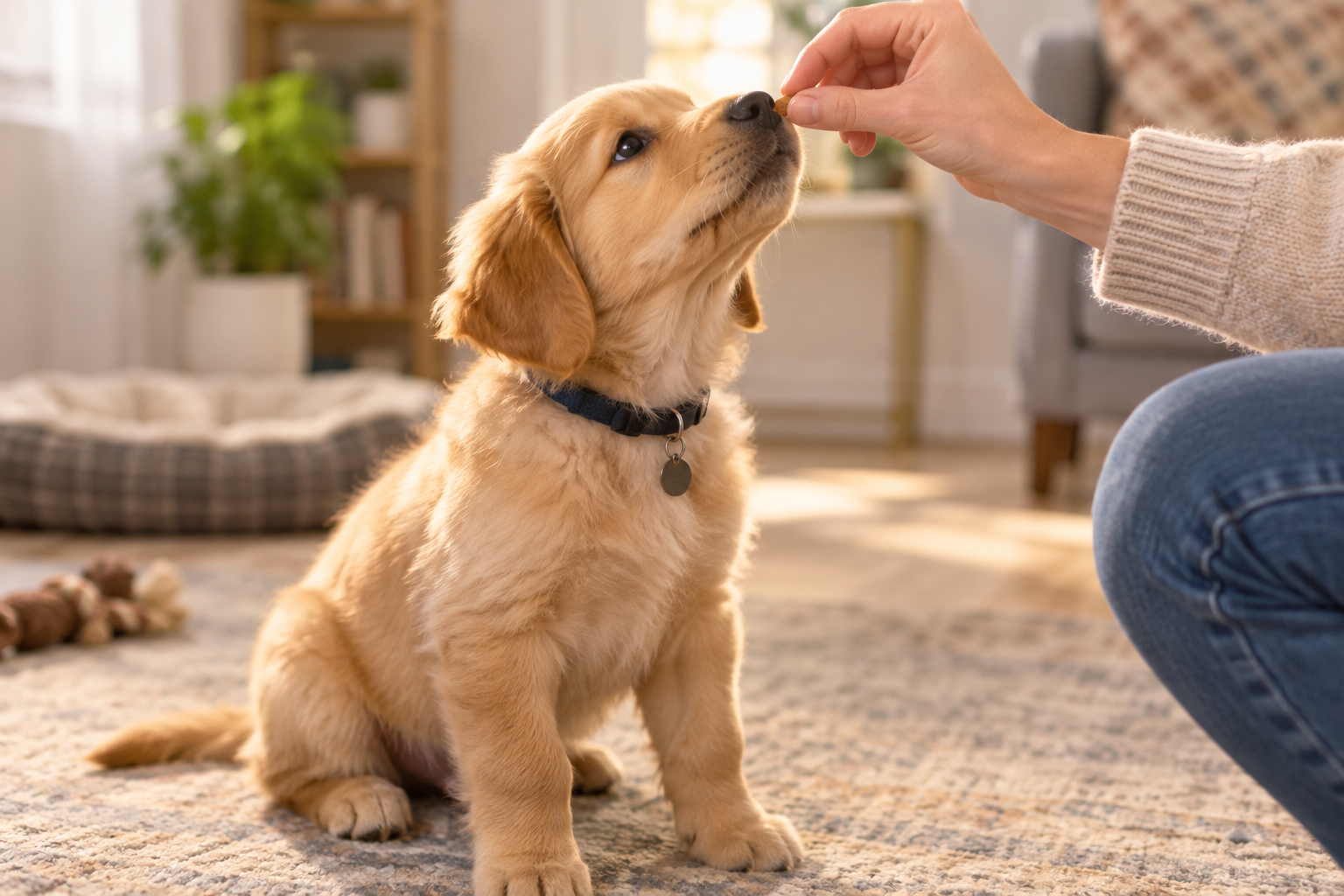
Choose small, soft treats your puppy can eat quickly. You can also use part of their regular food, a favorite toy, praise, or permission to sniff. Pick rewards that your puppy actually values in that moment.
Mark correct behavior with a short word such as “yes.” Say it the instant your puppy does what you want, then deliver the reward. The marker acts like a snapshot: it tells your puppy exactly which action earned the treat.
For example, when teaching “sit”:
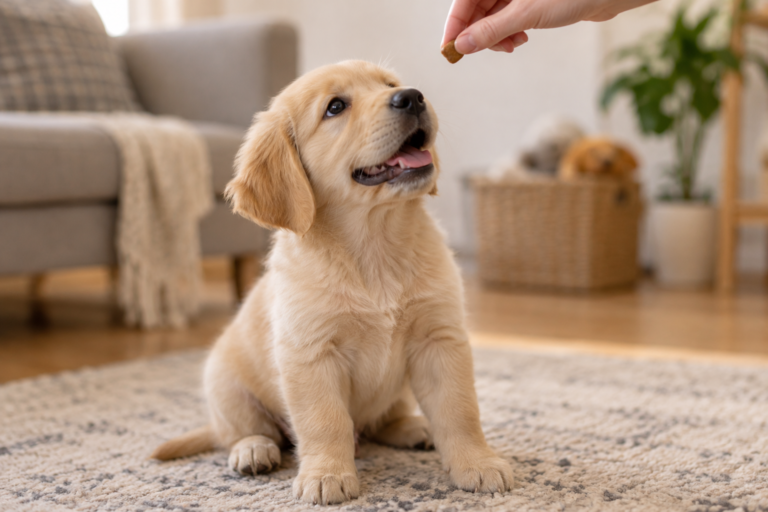
- Hold a treat near your puppy’s nose.
- Move it slowly up and slightly back.
- As your puppy’s bottom touches the floor, say “yes.”
- Give the treat.
- After several successful repetitions, say “sit” just before guiding the movement.
Do not push your puppy’s rear down. If they jump, back away, or lose interest, reset and make the exercise easier.
Progress looks like your puppy offering the behavior more quickly and needing less help. Practice for a minute or two, then stop while your puppy is still interested. Several tiny lessons during the day are usually more useful than one long session.
Set Up the Home to Prevent Mistakes
Management is part of learning. Puppies explore with their mouths, have limited bladder control, and do not automatically know which objects belong to them.
Use baby gates, closed doors, a puppy-safe pen, or close supervision to limit access to hazards. Put shoes, cords, food, rubbish, medicines, and fragile objects out of reach. Provide safe chew toys in the areas where your puppy spends time.
A lightweight leash can help you supervise indoors while you are actively present, but do not leave a puppy tethered or dragging a leash unattended. Use a crate or pen as a comfortable resting place rather than punishment, and make sure your puppy receives regular toilet breaks, movement, company, food, water, and sleep.
The goal is not to control every movement. It is to arrange the environment so that good choices are easy and unwanted habits receive less practice.
Teach Attention and a Reliable Name Response
Your puppy’s name should mean, “Look toward me because something good may happen.”
Say your puppy’s name once in a cheerful voice. When they turn toward you, mark with “yes” and reward. If they do not respond, avoid repeating the name louder and louder. Move closer, make a gentle sound, or practice in a quieter room.
A realistic early practice might look like this:
- Say “Milo.”
- Milo turns his head.
- Say “yes.”
- Give a treat.
- Pause before repeating.
When your puppy responds easily indoors, practice in the garden or another calm place. Increase distractions gradually. Progress means your puppy can look away from something mildly interesting and check in with you. Do not expect the same response beside a busy path that you get in the kitchen.
Build a Consistent Toilet-Training Routine
Take your puppy to an appropriate toilet area after waking, eating, drinking, playing, or becoming restless. Young puppies may also need additional opportunities based on their individual needs.
Go with your puppy rather than sending them outside alone. Stay calm and give them time to sniff. As they finish toileting, mark and reward immediately, while you are still in the toilet area. Waiting until you return indoors can accidentally reward coming inside instead.
Watch for signs such as circling, intense floor sniffing, wandering away, or heading toward a previous accident spot. If you notice them, calmly take the puppy outside.
If an accident happens, clean it thoroughly and adjust your supervision or toilet opportunities. Do not scold, rub your puppy’s nose in it, or punish them after the event. They will not connect delayed punishment with toileting, and they may become afraid to eliminate in front of you.
Progress includes fewer accidents, clearer signals, and your puppy toileting sooner after reaching the correct place. Temporary setbacks can happen after changes in routine or environment. A sudden change in toilet habits, straining, pain, unusual thirst, or repeated accidents after prior reliability deserves veterinary advice.
Redirect Puppy Biting and Chewing
Mouthing is ordinary puppy behavior, especially during play and teething. Teach your puppy what to bite rather than trying to eliminate all chewing.
Keep suitable toys nearby. If teeth touch your hands or clothing, pause movement and redirect your puppy to a toy. Resume play when they engage with it. If biting continues, calmly end interaction for a brief moment by standing up or stepping behind a gate.
Avoid hitting, holding the muzzle shut, shouting, or deliberately provoking the puppy with your hands. Rough reactions can increase excitement or make handling frightening.
Puppies often become more mouthy when tired, overstimulated, hungry, or in need of a toilet break. If redirection repeatedly fails, consider what your puppy needs. A calm chew, toilet trip, drink, or nap may help more than another training repetition.
Progress looks like softer mouthing, quicker redirection to toys, and an increasing ability to settle after play.
Teach Useful Everyday Cues
Focus first on skills that make daily life safer and easier:
- Come: Say the cue cheerfully when your puppy is already moving toward you, then reward generously. Practice in a secure area or on a safely held leash.
- Leave it: Present an uninteresting item in a closed hand. When your puppy stops investigating it, mark and reward from the other hand.
- Drop: Offer a treat or another toy in exchange for the object. Reward the release, and sometimes return safe items so giving things up does not always end the fun.
- Wait: Reward a brief pause before placing a food bowl down or opening a door. Build duration gradually.
- Settle: Reward your puppy for choosing to lie quietly on a mat or bed.
Do not use “come” only for unpleasant events or repeat it while your puppy ignores you. If you are not confident they will respond, move closer or use a leash rather than testing the cue.
Practice Calm Leash Walking and Positive Exposure
Begin leash practice in a quiet area. Reward your puppy for standing near you and for taking a few steps while the leash remains loose. If the leash tightens, pause or change direction instead of pulling your puppy along. Continue when the leash loosens.
Introduce new people, surfaces, sounds, objects, and friendly animals at a level your puppy can handle. Let the puppy observe from a comfortable distance while receiving treats or playing. Positive exposure does not mean forcing greetings or placing the puppy in a crowded setting.
Watch body language. A puppy who can eat, explore, and respond to you is generally coping better than one who freezes, hides, repeatedly tries to escape, refuses food, or cannot recover after the trigger passes. Increase distance if your puppy appears worried.
Ask your veterinarian how to balance safe exposure with local health risks while your puppy is completing recommended preventive care.
Fix Common Training Problems by Making the Task Easier
If training stalls, check these common issues:
- The reward arrives too late: Mark the behavior immediately, then reach for the treat.
- The lesson is too long: Stop after a few successful repetitions.
- The environment is too distracting: Return to a quieter location.
- The cue is repeated: Say it once, pause, and help your puppy succeed.
- Different people use different rules: Agree on cues and household boundaries.
- The reward is not valuable enough: Try better food, a toy, sniffing, or play.
- The puppy is tired or overwhelmed: Meet their needs and practice later.
Seek help from a qualified, reward-based trainer if you are unsure how to proceed. Contact a veterinarian about sudden behavior changes or signs of pain. Intense fear, panic when left alone, repeated guarding, or biting that causes injury also deserves prompt professional guidance rather than punishment or forced exposure.
Take One Small Step Today
Choose one simple behavior—such as responding to a name—and practice five easy repetitions in a quiet room. Mark each success with “yes,” reward immediately, and stop before your puppy loses interest. That short, positive lesson is the foundation of how to train your puppy successfully: make the right behavior clear, worthwhile, and easy to repeat.