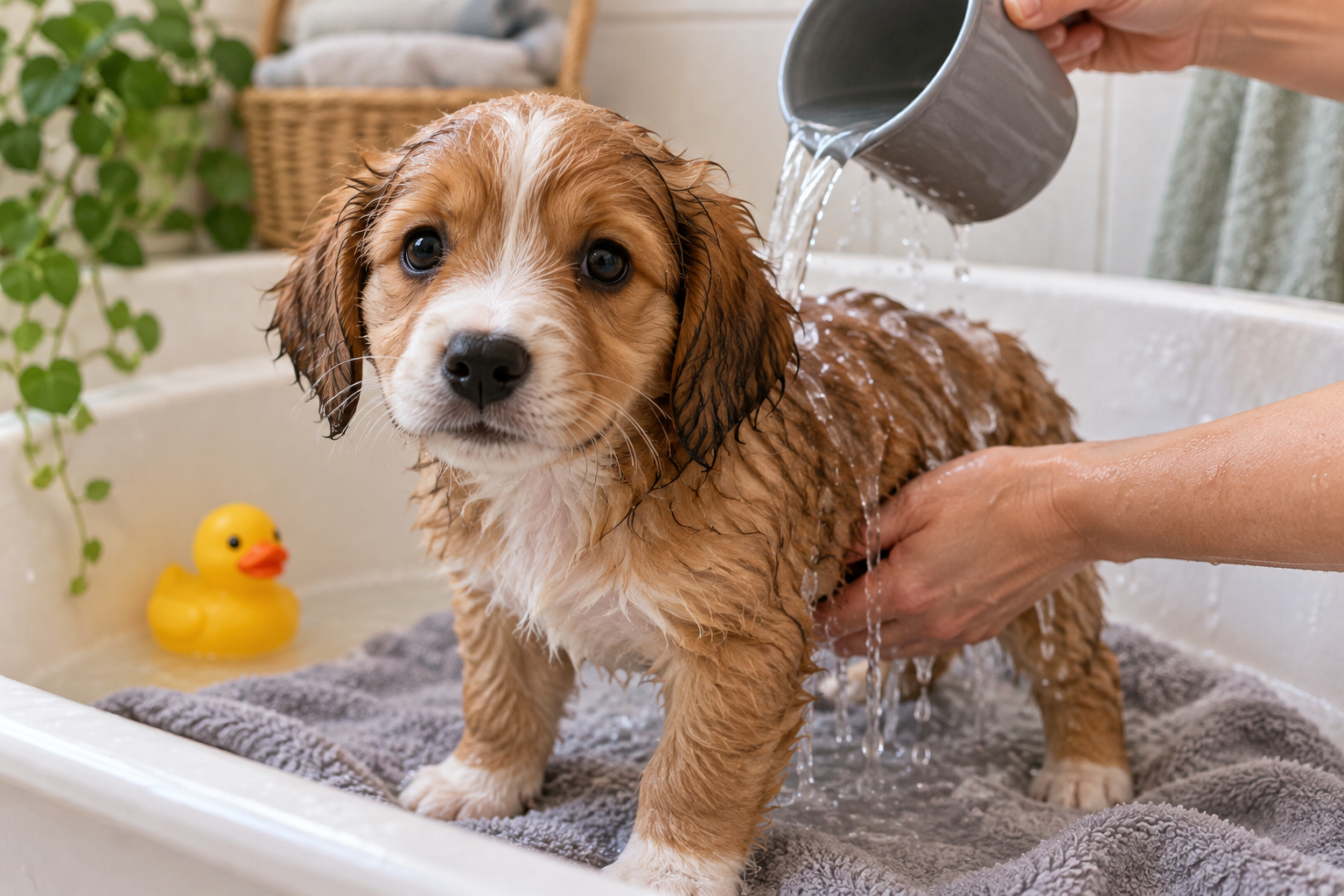
Your Puppy’s First Bath: A Calm, Simple Setup
A wet puppy can shake water into places physics can’t explain.
Your easiest first step is simple: place a towel beside the sink or tub. Then gather everything else before your puppy gets anywhere near the water.
A calm puppy first bath isn’t about perfect grooming. It’s about helping your puppy feel safe while getting clean.
Decide whether a full bath is needed
Puppies don’t need a full bath for every muddy paw or messy chin. A damp cloth may handle small spots with much less fuss.
A bath makes sense when dirt covers much of the coat. It may also be needed after contact with something smelly, sticky, or irritating.
If your puppy touched paint, chemicals, oil, or an unknown substance, pause first. Call a veterinarian or animal poison service for instructions rather than adding water or products.
Newly adopted puppies may benefit from a little settling time before bathing. If your puppy is reasonably clean, let them become comfortable at home first.
Ask a veterinarian before bathing a puppy who is unwell, injured, unusually cold, or recovering from a procedure. Sudden skin redness, sores, strong odors, or heavy itching also need professional guidance.
Choose a quiet place
A small sink can work for a tiny puppy. A bathtub or walk-in shower may suit a larger one.
The best place is warm, quiet, and easy to leave safely. Close the door so your damp puppy can’t launch a slippery hallway adventure.
Put a rubber mat or folded towel under your puppy’s feet. Smooth, sliding surfaces can feel frightening and make struggling more likely.
If you use a sink, make sure the drain is clear. Keep your puppy away from taps, sharp edges, and hot water controls.
Avoid shared public washing areas if your veterinarian has advised limiting outside exposure. This can matter while a young puppy is still completing early preventive care.
Gather everything before you start
Once your puppy is wet, you shouldn’t have to search for supplies. Set these items within easy reach:
- Puppy-safe shampoo
- Two or more absorbent towels
- A cup or gentle handheld sprayer
- A non-slip mat or folded towel
- A brush suited to your puppy’s coat
- A few small treats
- A clean cloth for the face
Use shampoo labeled for dogs or puppies. Human shampoo and household soap can irritate a dog’s skin, even if they smell lovely to us.
Skip perfumes, essential oils, flea products, and medicated shampoos unless a veterinarian recommends them. “Natural” doesn’t automatically mean safe for puppies.
Remove your puppy’s collar before washing. Keep it nearby so you can put it back on once the coat is dry.
If possible, ask another calm adult to help. One person can steady the puppy while the other handles water and shampoo.
Introduce the bath before adding water
Let your puppy inspect the empty bathing area first. Toss in a treat, offer praise, and let them step out again.
Keep this practice short. Several easy visits can build more confidence than one long session.
You can also touch your puppy’s legs, chest, back, and paws gently. Reward relaxed behavior so handling starts to feel ordinary.
Don’t force your puppy to remain in the tub during practice. The goal is comfort, not winning a tiny wrestling match.
If your puppy looks worried, slow down. Signs can include crouching, freezing, repeated escape attempts, trembling, or refusing treats they normally enjoy.
Use lukewarm water
Test the water with the inside of your wrist. It should feel comfortably lukewarm, never hot.
Start with only a small amount of water. A roaring tap or powerful sprayer may frighten a puppy before washing even begins.
Keep one hand on your puppy for support. Never leave them alone in a sink, tub, or shower, even briefly.
Wet the body gradually, beginning around the feet or lower legs. Move toward the back and chest once your puppy settles.
Avoid spraying the face and ears. Water in the eyes, nose, or ear canals can cause discomfort and turn the bath into a battle.
Wash gently and efficiently
Use only the amount of shampoo suggested on the label. More foam doesn’t mean a cleaner puppy, but it does mean more rinsing.
Massage the shampoo through the coat with your fingertips. Use gentle pressure and avoid pulling at tangles.
Work across the back, sides, chest, belly, legs, and tail. Be careful around the groin, bottom, and other sensitive areas.
For the face, use a clean, damp cloth without shampoo. Wipe gently around the muzzle and outside of the ears.
Don’t place cotton swabs or anything else inside the ear canal. The ear canal is the passage leading deeper into the ear, and it can be easily irritated.
Keep the session short and steady. Calm praise helps, but excited chatter may add more energy than your puppy needs.
Offer a tiny treat when your puppy can eat calmly. Don’t push food toward a puppy who is panicking, coughing, or trying to escape.
Rinse more than you think
Leftover shampoo can make the skin itchy. Rinse until the water runs clear and the coat no longer feels slippery.
Check thicker areas carefully, including the chest, armpits, belly, and base of the tail. Long or dense coats can hide soap surprisingly well.
Use low water pressure. Keep rinsing water away from the eyes, nose, and ears.
If your puppy becomes increasingly distressed, stop when it’s safe to do so. Rinse away any remaining shampoo, wrap them in a towel, and finish calmly.
Breathing trouble, collapse, extreme weakness, or blue or very pale gums require urgent veterinary help. These are not normal bath nerves.
Dry your puppy in a warm room
Before lifting your puppy, place a towel over their back. Support the chest and hindquarters, especially if the bathing surface is slippery.
Blot and squeeze the coat rather than rubbing hard. Rough rubbing can tangle longer coats and may overstimulate an already excited puppy.
Keep your puppy indoors and away from cold drafts until fully dry. Replace soaked towels with dry ones as needed.
A household hair dryer can be noisy and may become dangerously hot. Towel drying is the simplest choice for most first baths.
If a dryer is necessary for a thick coat, ask a groomer how to use one safely. Keep air cool, maintain distance, and stop if your puppy becomes frightened.
Brush only when it suits the coat type. Tugging through wet mats can hurt, so serious tangles are better handled by a professional groomer.
Expect a burst of puppy energy
Many puppies race, roll, rub, and bounce after bathing. This behavior is often called the “zoomies,” meaning a sudden burst of excited running.
Prepare a safe, warm room without slippery floors or fragile objects. Let your puppy shake before opening the door, unless you enjoy damp walls.
Offer a calm chew or quiet rest after the excitement passes. Bathing brings new sounds, handling, smells, and sensations, so your puppy may be tired afterward.
Wash and dry the collar before replacing it if it became dirty. A damp collar can trap moisture against the skin.
Make the next bath easier
Baths shouldn’t happen simply because the calendar says so. Coat type, activity, skin health, and grooming needs all affect timing.
Too much washing can dry or irritate some puppies’ skin. Your veterinarian or a qualified groomer can help you choose an appropriate routine.
Between baths, use brushing, paw wiping, and spot cleaning. Check the coat after outdoor play for mud, burrs, and anything sticky.
Keep practicing bath skills without always washing. Briefly standing on the mat, hearing gentle running water, or accepting paw handling can all earn treats.
End each practice while your puppy is still coping well. Small successes build trust faster than pushing through fear.
For today, place a non-slip towel in the empty tub and let your puppy explore it for one minute. That tiny, dry introduction is a great start.