
Dog Walking Station Ideas for an Entryway That Actually Works
A leash can turn itself into a knot while nobody’s looking.
Your first step is simple: gather the things needed for one normal walk. Put them near the door, then remove anything that doesn’t belong.
That small edit matters. A useful walking station isn’t a pet supply warehouse. It’s a clear, safe place for getting out the door without hunting for bags.
Decide what your station needs to do
Before choosing hooks or baskets, think through your walking routine.
Where do you put on your dog’s harness? Which door do you use? What do you often forget after everyone is ready to leave?
Most everyday stations only need space for a few basics:
- A leash
- A collar or harness
- Small waste bags
- Treats, if you carry them
- Keys or another human essential
- A light or reflective accessory used on darker walks
Keep backup supplies somewhere else. A large box of waste-bag rolls doesn’t need prime entryway space. Neither does every coat your dog has ever worn.
The station should shorten your departure routine. If it creates another cupboard to rummage through, simplify it.
Choose a spot along your natural route
The best location is usually beside the door you actually use. It doesn’t need to be directly next to the handle.
Watch how people and your dog move through the entryway. Storage shouldn’t block the door, narrow a busy path or create a leash-level trip hazard.
A spot several steps from the door may work better in a tight hall. You can collect the gear before approaching the exit, which may also make the doorway feel less crowded.
Keep hanging items away from:
- Door hinges
- Handles that catch loose loops
- Radiators or heaters
- Shoe piles
- Low shelves a puppy can reach
- Areas where the leash trails across the floor
Try opening the door fully after choosing the location. Then walk through while carrying a bag or wearing a bulky coat. If you bump the station, it’s probably too close.
Start with one hook
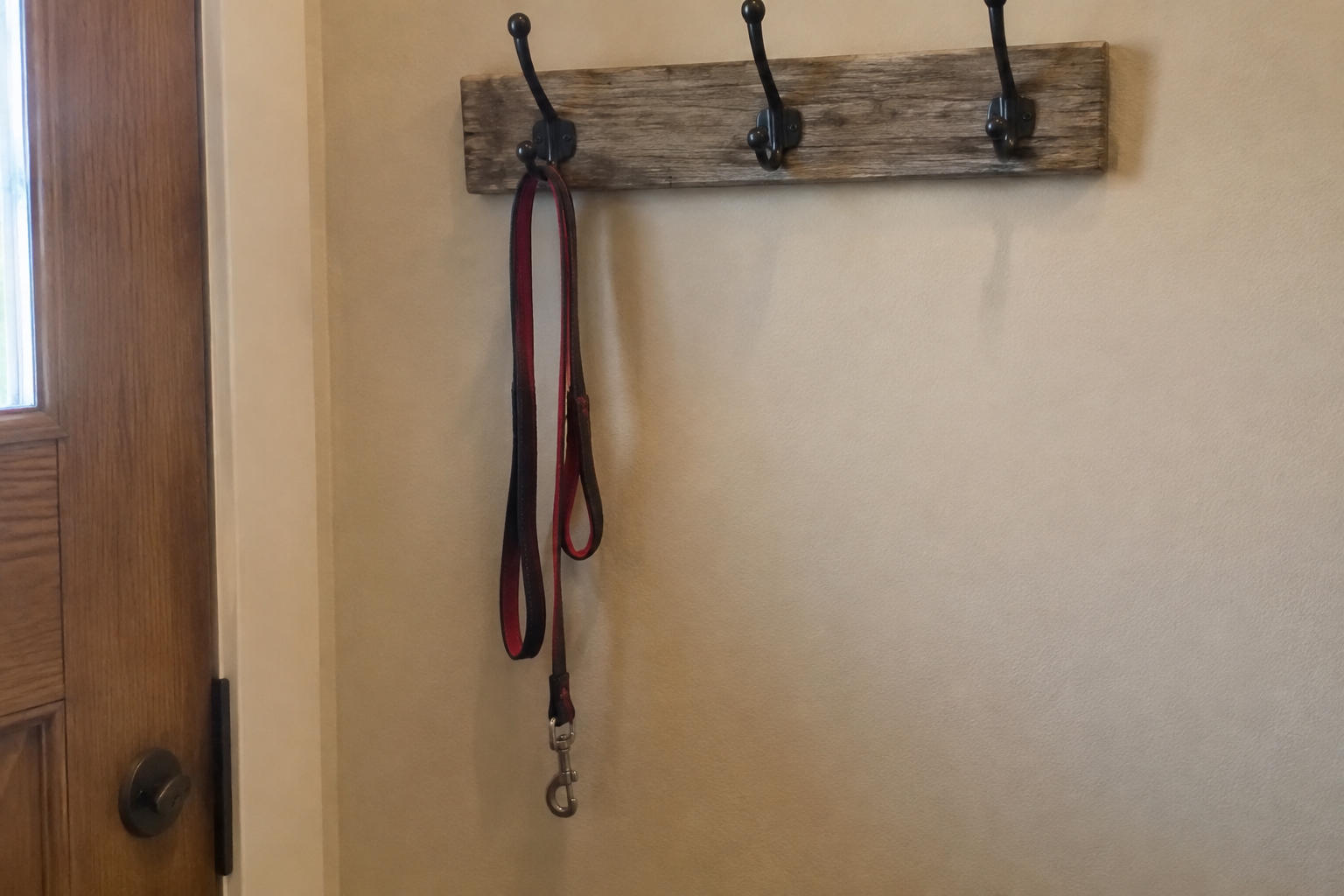
Some of the best dog walking station ideas are barely stations at all.
One well-placed hook can hold the leash and daily harness. A small bag dispenser may clip to the leash, reducing the need for another container.
This setup suits a tiny entrance or a dog with minimal equipment. It also makes missing items obvious. If the hook is empty, the leash is somewhere else.
Avoid piling several heavy or tangled items onto one hook. Gear becomes harder to grab, and the lowest loops may hang within chewing reach.
Mount the hook by following its manufacturer’s directions. The right fixing depends on the hook and the wall surface. Don’t assume a screw, adhesive strip or plasterboard anchor can support any load.
A storage hook is not a tether point. Never leave a puppy tied to it, even for a moment.
Use vertical space in a narrow hallway
A narrow hall needs storage that stays close to the wall.
Try two or three hooks arranged vertically rather than side by side. The everyday leash can go at adult hand height, with less-used equipment above it.
Keep the arrangement easy to understand. For example:
- Top hook: seasonal walking accessory
- Middle hook: everyday leash
- Lower adult-reachable hook: harness
“Lower” shouldn’t mean puppy height. Leash loops and straps can become chewing, tangling or catching hazards.
A slim wall pocket can hold a few waste bags. Choose one that doesn’t bulge into the walkway when full. Restock it from a larger supply stored elsewhere.
In an especially tight hall, mark the station’s footprint mentally. Nothing should project farther than nearby trim or furniture if people regularly brush past that wall.
Try a small basket for grab-and-go gear
A small basket works when hooks alone feel messy.
Place it on a stable shelf or console near the exit. Use it for light items such as waste bags, a compact light and keys.
Give each item a rough place instead of filling the basket randomly. A tiny open container inside can separate rolled bags from human belongings.
Don’t use a low floor basket for puppy-accessible supplies. Curious dogs may chew plastic bags, clips or containers. Treats also need secure storage rather than an open basket.
A basket shouldn’t become a landing place for mail, receipts and mystery screws. If unrelated clutter keeps arriving, add a separate tray for human odds and ends.
Limit the dog basket to what you reach for during departure. Backup gear can live in a cupboard.
Turn a drawer into a hidden station
A drawer is useful when you want the entryway to look calm. It also keeps loose items from spreading across a surface.
Use shallow sections or small containers to divide the contents. One area might hold bags, while another holds a light and spare keys.
Avoid stuffing a damp leash or harness into a closed drawer. Moisture and stale smells will have a little party in there.
Create a separate drying place for wet equipment. Once it’s fully dry, return it to the drawer.
A drawer is only puppy-resistant when it stays closed and can’t be easily opened. Store treats as food: sealed securely and inaccessible to your dog.
Cleaning products shouldn’t share an open or reachable dog station. Keep them safely stored according to their labels.
Make a no-drill station for a rental
Renters can build a useful station without making holes.
Possible options include:
- An over-door organizer that doesn’t stop the door closing safely
- A freestanding coat stand with a stable base
- A basket inside an existing cabinet
- A removable hook used according to its instructions
- A drawer divider in entryway furniture you already own
Test the door after adding an over-door option. It should still latch properly, and the organizer shouldn’t drop straps into the opening.
With adhesive hooks, follow the stated surface preparation and use limits. Paint type, wall texture and humidity can affect how well they stay attached.
A freestanding rack must remain steady when gear is removed from one side. Keep leash loops high and prevent your dog from bumping or pulling the rack.
You can also make the station completely portable. Put daily gear in a handled container on a high shelf, then bring it down before each walk. Return it immediately afterward.
Separate ready gear from wet gear
A walking station works best when “ready” and “needs attention” aren’t mixed together.
Dry equipment can return to its usual hook, basket or drawer. Wet equipment needs airflow before storage.
Choose a designated drying point that stays out of the walkway and beyond your dog’s reach. Follow the equipment’s care instructions, especially for padded harnesses or items with lights.
Don’t leave a damp leash draped over a door handle. It may fall, catch in the door or block quick access.
If wet walks are common, use a simple two-step routine:
- Hang wet equipment in the drying spot.
- Return it to the main station once dry.
This prevents the daily hook from becoming a heap of damp straps. It also makes it clear when the gear isn’t ready yet.
Put items in departure order
Your station should match the order you use things.
Imagine a typical walk. You may take the harness first, attach the leash, grab bags and then collect your keys.
Arrange the station in that sequence. Frequently used items should be easiest to reach. Occasional items can sit higher or farther back.
For example, a simple setup could have:
- Harness on the main hook
- Leash beside or over it
- Several bags in a high wall pocket
- Keys in a small tray
- Seasonal gear on an upper hook
Don’t stack the leash behind three coats if it’s used several times daily. Every extra shuffle makes it less likely that items will be returned properly.
If you’re introducing new equipment, take that process slowly rather than only bringing it out during a rushed departure. This guide to getting your puppy used to a harness and leash covers that separate step.

Check the station from puppy level
Crouch down and look at the entryway from your puppy’s height. This may feel silly, but it reveals dangling loops, tempting buckles and reachable bags.
Puppy-proofing guidance recommends keeping hazards inaccessible. That matters even if your puppy has ignored the station so far. Curiosity can arrive without an appointment.
Pay close attention to:
- Hanging leash loops
- Loose waste bags
- Treat containers
- Clips and small accessories
- Cleaning products
- Cords from rechargeable lights
- Unstable furniture
Move these items higher or behind a secure door. Store treats in a closed container your dog can’t access.
Check the setup again as your puppy grows. A shelf that was unreachable last month may suddenly be nose height.
Give each dog a clear place
With two or more dogs, mixed equipment can slow every departure.
Assign one hook, basket section or drawer area to each dog. Simple labels can help other household members return things correctly.
Color can also help, but don’t rely on it if several items look similar in dim light. A written name or clear position is easier to follow.
Keep each leash with the harness it normally accompanies. If one dog uses different equipment for different outings, store the daily set closest to hand.
The station still needs limits. If every dog has several leads, coats and accessories, move the backups elsewhere. Only the current walking setup needs to live by the door.
Keep toys in their own zone
Walking gear and toys serve different routines.
A favorite outdoor toy may join some walks, but a whole toy collection can swallow a small entryway. Keep general toys in a separate home so the leash remains easy to find.
For that project, see these dog toy storage ideas for a tidy home.
This separation also makes resetting the walking station faster. You won’t need to dig beneath balls and tug toys to find a bag.
Build a quick reset habit
Even the neatest setup will drift without a reset.
After each walk, put dry equipment back in its assigned place. Move wet gear to the drying spot. Refill the small bag supply before it runs out.
Keep the reset short. If putting everything away takes several minutes, the station probably contains too much.
Other household members should be able to understand it without instructions. A leash hook, a small bag pocket and a key tray are often enough.
Every so often, remove expired clutter from the area. Old receipts, broken clips and unused accessories shouldn’t become permanent residents.
Make one small station today
You don’t need matching containers or a grand entryway makeover.
Gather only what one walk actually needs. Choose one safe spot, keep the doorway clear and place puppy hazards out of reach.
Then give the leash a proper home. It may still tie itself into a knot, but at least you’ll know where the knot is.
Photo credits: Photo by Fernando B M on Pexels; Photo by Hope Pontifex on Pexels. Generated scenes are labeled in their image captions.


