Muddy Paw Cleanup Station Ideas for Rainy Walks
Rainy walks turn some dogs into four-legged paint rollers.
Start by clearing one small area beside your usual entrance. You don’t need a renovation, special plumbing, or a row of matching baskets.
A useful muddy paw cleaning station is simply an organized arrival zone. It gives your dog stable footing while putting cleanup supplies within easy reach.
Decide where the muddy pause will happen
Choose the entrance your dog uses after most wet walks. That might be a front hallway, apartment doorway, utility room, or back door.
Look at the route from outside to the cleanup spot. Remove shoes, bags, cords, and anything else you might trip over.
You’ll probably enter while holding a lead and managing an excited dog. The layout must work with one hand occupied.
Try standing at the closed door and imagining the full arrival. Can you reach a towel before your dog crosses the room? Is there space for your dog to stand without sliding?
The station shouldn’t block your normal exit route. Keep doors, stairs, and narrow walkways clear.
This area is different from a departure storage station. Leads and coats may live near the door, but the cleanup zone handles wet arrivals.
It’s also not an accident-cleaning kit or bathroom makeover. Its main job is containing outdoor water and mud before they travel.
Begin with stable footing
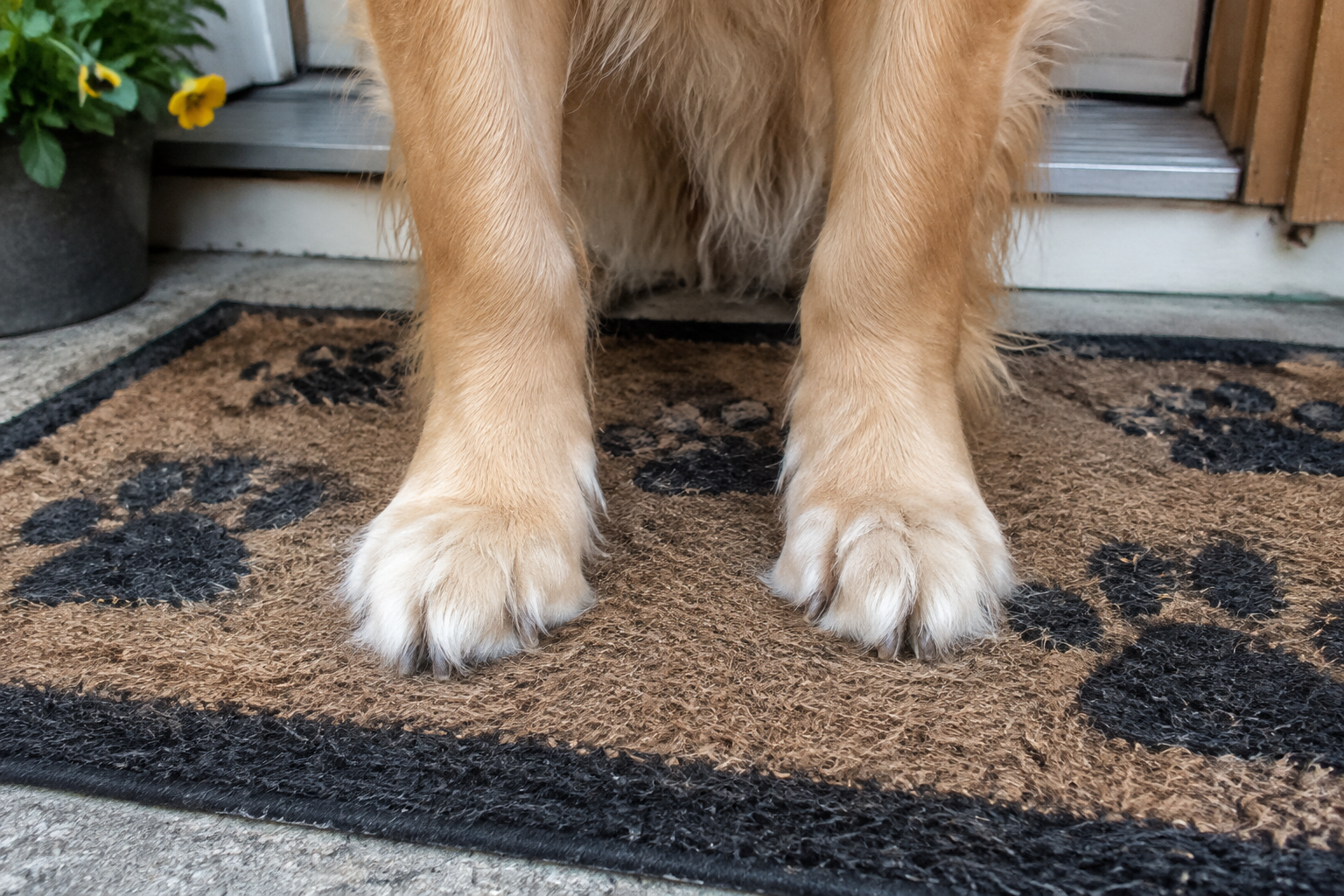
Wet flooring can be slippery for dogs and people. A washable nonslip mat gives your dog a clearer, steadier place to pause.
Choose a mat that fits without curling into the walkway. Its backing should stay put on your particular floor.
A large mat gives bigger dogs room to turn safely. A smaller dog may need less space, but should still fit all four paws comfortably.
If your dog tends to shake immediately, allow extra coverage around the standing area. A second washable mat can protect the nearby floor, though it isn’t essential.
Check beneath the mat after especially wet walks. Trapped moisture can affect some flooring and may make the mat slide.
Wash and dry the mat according to its care label. Replace it if the backing cracks, lifts, or stops gripping.
Avoid balancing your dog on a tiny towel laid over a slick floor. Towels can bunch up just when everyone is already doing the rainy-day shuffle.
Put a clean towel within easy reach
Keep at least one clean, absorbent towel where you can grab it immediately. A hook, open shelf, or wall-mounted basket may work.
The towel should be reachable without dropping the lead or leaving your dog unattended. Test this before the next downpour, not during it.
An older bath towel works well for many dogs. A smaller towel may be easier for little paws and lower legs.
If your dog has a long coat, you may want two towels. One can handle paws, while the other dries the belly and legs.
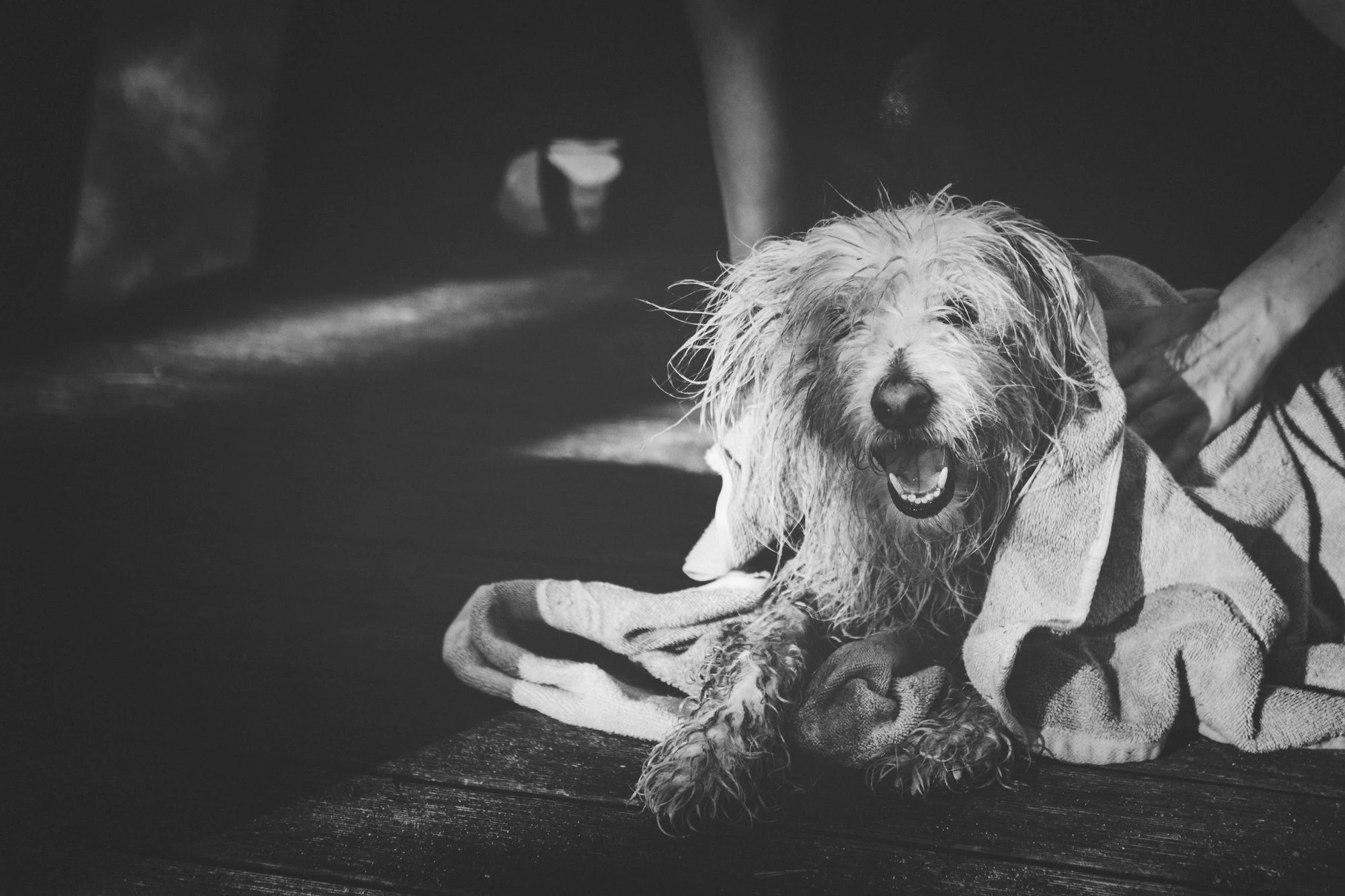
Use gentle wiping and drying rather than forceful scrubbing. The goal is to remove surface water and loose mud without making handling unpleasant.
Don’t use human wipes, disinfectants, essential oils, or household cleaning mixtures on your dog’s skin. This station is for simple wiping and drying, not home treatment.
If a dog needs a proper wash after a spectacular mud dive, move calmly to a suitable washing area. This guide to a puppy’s first bath can help beginners separate routine doorway cleanup from bath time.
Give used towels somewhere to dry
Wet towels need airflow. Hang them on a sturdy hook, rail, or drying rack after use.
Don’t push damp towels into a closed basket. They can stay wet and become unpleasant before laundry day.
A two-hook system is simple:
- One hook holds a clean towel.
- One hook holds the used towel to dry.
- A laundry basket elsewhere takes dry, dirty towels.
If wall space is limited, use an over-door rail where it won’t obstruct the entrance. Make sure your dog can’t pull hanging towels down and chew them.
For households with several dogs, label hooks or use different towel colors. It’s less fancy than it sounds and helps on busy mornings.
Keep enough spare towels to cover washing days. You don’t need a mountain; just consider how often wet walks happen.
Create a secure spot for wet walking gear
After drying your dog, you still have a damp lead, coat, harness, and possibly your own dripping jacket.
Give wet equipment a defined place. Hooks above a washable mat, a ventilated rack, or an open tray can contain drips.
Place gear where your dog can’t chew, pull, or become tangled in it. Dangling leads and swinging metal clips can be tempting.
Don’t leave a wet harness on your dog longer than necessary. Remove it calmly, then hang it where air can circulate.
A waterproof tray may be useful for muddy boots. It should sit flat and stay outside your dog’s chewing range if its material isn’t pet-safe.
Cleaning products should live separately in secure storage. Household hazards need to be inaccessible, especially around puppies that investigate with their mouths.
Use any floor-cleaning product according to its label and only on suitable surfaces. Keep your dog away as directed while the area is being cleaned or dried.
For a broader collection of useful arrival supplies, see this puppy cleanup kit guide. Your doorway station can remain much smaller and focused on wet walks.
Try a simple hallway setup
A hallway station works best when everything stays close to the wall.
Place a washable nonslip mat just inside the door. Add one clean towel on a high hook and one drying hook nearby.
Wet leads and coats can hang over a drip-catching mat farther along the wall. Keep them away from radiators, door handles, and your dog’s reach.
A slim open shelf can hold folded towels if the hallway is wide enough. Don’t add furniture that creates a tight squeeze.
For example, your arrival might look like this:
- Open the door and guide your dog onto the mat.
- Close the door while keeping hold of the lead.
- Reach for the towel without leaving the mat.
- Gently dry paws, legs, and the underside as needed.
- Remove wet walking gear and hang it securely.
- Hang the used towel where it can dry.
That short sequence prevents wandering while you search for supplies.
Keep an apartment station compact
Apartment entrances often share space with shoes, deliveries, and daily clutter. Focus on the few items you’ll actually use.
A compact setup might include:
- One washable nonslip mat
- One clean towel on an over-door hook
- One second hook for drying the used towel
- One ventilated spot for wet walking gear
Check building rules before attaching hooks or leaving items in shared corridors. Keep the entire station inside your home unless you have permission otherwise.
A shallow tray can contain wet footwear, but it shouldn’t narrow the doorway. You need room to enter safely while controlling your dog.
If there’s no space for a permanent station, make a small portable version. Keep folded towels in an accessible cupboard and place the mat before leaving.
Prepare it before the walk rather than after you return. A muddy dog rarely waits politely while someone reorganizes a closet.
Use a back door for messier walks
A back-door station can suit dogs returning from gardens, fields, or especially muddy routes.
Put a stable washable mat inside the entrance. Keep towels on an indoor hook where they remain clean and dry.
A covered outdoor hook may hold wet human rain gear, but dog equipment should remain secure. Check that garden chemicals, tools, bins, and other hazards aren’t accessible.
If the route crosses a utility room, keep laundry products and cleaning supplies stored safely. A low shelf isn’t secure just because the bottles look boring to humans.
Avoid spraying paws with a high-pressure hose. A gentle wipe and dry is enough for ordinary surface mud.
The back door may also become chaotic when several people arrive together. Decide who handles the dog and who manages boots, bags, or children.
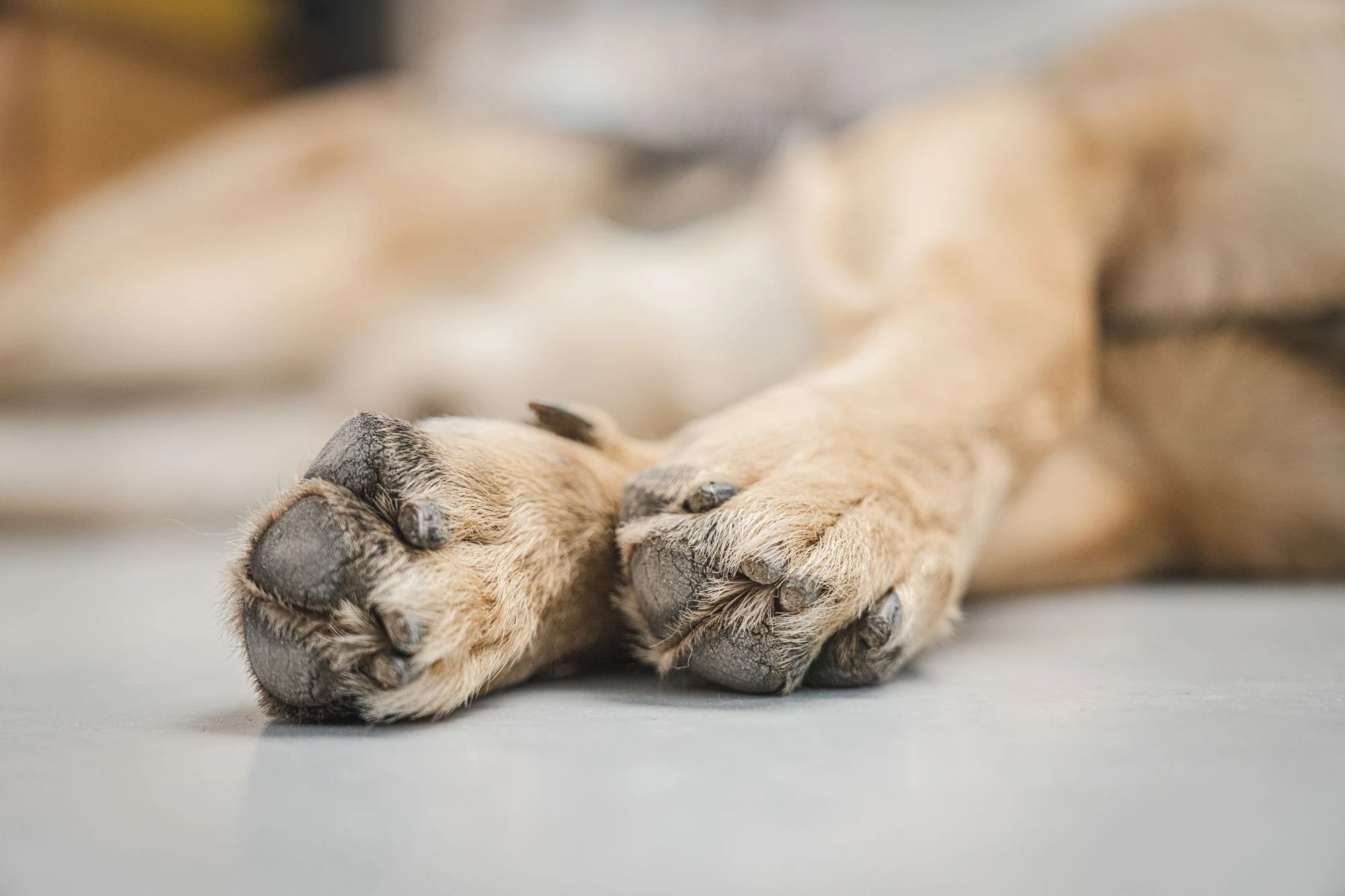
Help your dog learn the routine
A cleanup station works better when the dog feels safe there. Introduce it on a calm day, not during the year’s most dramatic storm.
First, let your dog step onto the mat voluntarily. Reward calm standing with praise, food, or another reward your dog enjoys.
Next, briefly touch one leg or paw, then stop. Build up gradually over several short sessions.
Keep movements slow and predictable. Don’t grab, chase, corner, or force a fearful dog to tolerate handling.
Some dogs dislike having their paws held. You may be able to dry by gently pressing the towel around each paw instead of lifting it high.
Others are comfortable with paws but worry about towels moving overhead. Keep the towel low and let them investigate it without pressure.
Practice the full routine in tiny pieces:
- Walk onto the mat.
- Pause calmly.
- Accept a brief towel touch.
- Allow gentle drying.
- Wait while gear comes off.
- Leave when invited.
Your dog doesn’t need military precision. A relaxed, workable pause is the goal.
If handling suddenly becomes difficult, pay attention. Resistance linked to pain deserves qualified veterinary help, not stronger restraint.
Plan for the full rainy arrival
The best setup won’t help if supplies disappear between walks. Reset the station after each use.
Replace the clean towel. Hang the wet one to dry. Clear loose mud from the mat when your dog has moved away.
Before the next walk, check that the route remains open. Move parcels, shoes, and laundry before bringing a wet dog through.
A simple “ready check” can include:
- Clean towel available
- Mat flat and stable
- Used-towel hook empty
- Wet-gear area clear
- Cleaning products secured
- Walking route free from clutter
This takes less time than searching for a towel while muddy paw prints head toward the sofa.
Adjust the station for your dog
Small dogs may only need a compact mat and hand-sized towel. Their lower bellies can still collect plenty of road spray.
Large dogs need enough space to stand and turn without slipping. Put supplies at your height so you don’t stretch awkwardly while holding the lead.
Long-coated dogs may bring in more water and debris. Keep a second towel ready rather than rubbing harder with one soaked towel.
Older dogs and dogs with mobility problems may need more room and especially steady footing. Avoid asking them to balance on three legs if that’s uncomfortable.
Puppies need secure storage because towels, hooks, and leads may become chew targets. Guidance on puppy-proofing household hazards can help you review the surrounding area.
Whatever your dog’s size, inspect paws while drying without turning the routine into a wrestling match. Stop if your dog shows clear discomfort.
Wounds, persistent redness, limping, or sudden sensitivity need veterinary attention. A doorway towel isn’t a treatment station.
Keep the setup pleasantly boring
A good muddy paw cleaning station doesn’t need clever gadgets. It needs to be ready, stable, and easy to reset.
Start with a mat and one reachable towel. Add a drying hook or wet-gear spot only if your space and routine need them.
Today, clear the entrance and place a clean towel beside it. Your next rainy return will already feel more manageable.
Photo credits: Photo by RDNE Stock project on Pexels; Photo by Dariusz Grosa on Pexels; Photo by Inge Van den Heuvel on Pexels. Generated scenes are labeled in their image captions.