Your Dog’s Toys Have Taken Over the Living Room. Now What?
If your sofa seems to be growing squeakers, it’s time to intervene.
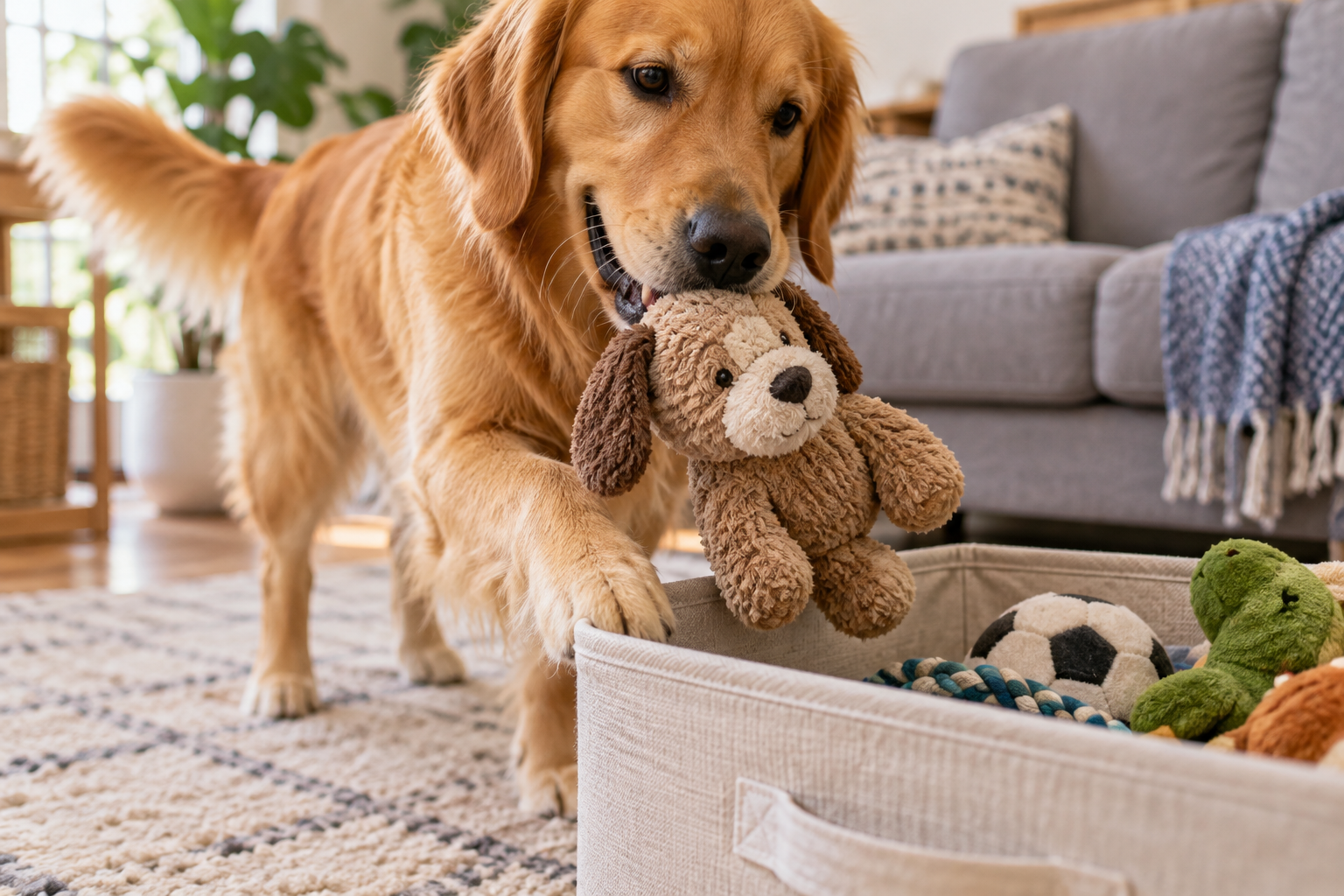
Start with one laundry basket. Gather every dog toy you can find, including the mysterious ones hiding under furniture. You don’t need to organize anything yet.
Seeing the full collection makes the next steps much easier.
Sort the Toys Before Choosing Storage
It’s tempting to buy a beautiful basket and call the problem solved. First, check what you’re actually storing.
Make four simple groups:
- Toys your dog uses regularly
- Toys worth rotating back into play
- Toys that need cleaning or drying
- Toys that should be thrown away
Inspect each item as you sort. Look for loose parts, torn seams, exposed stuffing, sharp edges, and missing chunks.
A damaged toy can become a choking or swallowing risk. If you’re unsure whether it’s still safe, remove it until you can check with your veterinarian or the toy maker.
Be especially careful with toys containing squeakers, batteries, hard fragments, or long strands. Rope toys can unravel, while plush toys may reveal stuffing your dog wants to eat.
This doesn’t mean every slightly scruffy toy must go. The important question is whether your dog can safely keep playing with it.
Notice How Your Dog Uses Toys
The best dog toy storage ideas depend on your dog’s habits.
Some dogs gently choose one toy and carry it around. Others enthusiastically empty the entire basket before breakfast. A few may decide the basket itself is the greatest toy ever invented.
Watch what your dog does with an open container.
An open basket may work well if your dog can safely choose toys. It may be a poor fit if they chew containers, swallow basket fibers, or guard the whole collection.
Puppies often investigate storage with their mouths. For them, a sturdy container placed out of reach may be safer between play sessions.
Your dog’s size matters too. A deep basket might be easy for a tall dog but frustrating for a small dog. Dogs shouldn’t need to climb inside or trap their heads while reaching for a toy.
Pick an Open or Closed System
Most toy storage falls into two broad styles: open access and closed storage.
Open storage
An open bin lets your dog choose from available toys. It also makes quick cleanup easier for humans.
Look for a container that:
- Stays steady when your dog reaches inside
- Has smooth edges
- Is shallow enough for easy access
- Doesn’t have handles that could trap a head or paw
- Won’t splinter or shed pieces when mouthed
Soft baskets can look cozy, but some dogs chew woven fabric or rope. Hard containers may be easier to wipe clean, though determined chewers shouldn’t have unsupervised access to them.
Closed storage
Closed storage keeps extra toys out of sight. It’s useful for rotation, small homes, and dogs that become overwhelmed by too many choices.
A cabinet, closet shelf, or secure lidded container can work. Choose a location your dog cannot open or knock over.
Avoid heavy hinged lids that could fall on a curious head or paw. Plastic bags are not suitable storage because they can cause suffocation or be swallowed.
Closed storage is also helpful for toys that require supervision. These might include food-filled toys, damaged-but-repairable items, or toys with parts your dog could remove.
Try Storage That Fits Your Room
You don’t need to turn your living room into a pet supply shop. Choose one main storage spot that fits naturally into the space.
Here are several practical options.
A low toy bin
A low bin works well for a dog allowed to choose toys independently. Keep only a few safe toys inside and store the rest elsewhere.
Place the bin away from busy walkways. Nobody enjoys stepping on a hard chew in the dark.
A cabinet shelf
Use a cabinet for backup toys, seasonal items, and supervised playthings. A shelf also keeps smaller pieces away from children or other pets.
Keep food-filled toys separate from household chemicals and human food. Clean, dry toys before putting them in a closed cabinet.
Separate cubbies
Cubbies can divide toys by type. One space might hold balls, while another holds soft toys.
Only use low cubbies for dog-safe items. Anything fragile, toxic, sharp, or easy to swallow belongs securely out of reach.
A hanging organizer
A hanging organizer can help in a small home. It’s useful for leashes, grooming tools, and lightweight backup toys.
Hang it where your dog can’t pull it down. Dangling straps and pockets may be irresistible to a curious puppy.
A portable cleanup basket
A handled basket lets you collect toys from different rooms. Store it out of reach if the handles could catch around your dog’s neck or jaw.
This option works especially well when toys migrate throughout the day. Apparently, squeaky ducks also enjoy travel.
Give Toys a Few Clear Zones
Toy clutter spreads when every room becomes a playroom. Instead, create a few simple toy zones.
You might keep:
- A small basket in the living room
- One quiet toy near your dog’s bed
- Outdoor toys beside the garden door
- Extra toys in a closed closet
Keep outdoor balls and muddy toys separate from clean indoor toys. Dry wet items fully before storing them, since trapped moisture can encourage unpleasant smells and damage.
Avoid leaving toys on stairs, beside doorways, or in narrow halls. These areas need to stay clear for both people and pets.
A toy zone doesn’t need to be strict. It simply gives you an obvious place to return things.
Use Toy Rotation to Reduce Clutter
Toy rotation means offering a few toys while storing the rest. After several days, you swap some of them.
This can make familiar toys feel interesting again. It also stops a large collection from covering the floor.
A simple rotation might include:
- One toy for carrying
- One toy for chasing or fetching
- One suitable chew
- One interactive toy used with supervision
- One comfort toy, if your dog enjoys it
These are examples, not a required formula. Choose toys that suit your dog’s size, play style, and safety needs.
Keep a favorite comfort toy available if removing it causes distress. Rotation should make life easier, not turn into a surprise toy shortage.
Put stored toys somewhere cool and dry. Before bringing one back, check it for damage, dirt, or loose pieces.
Separate Toys by How They’re Used
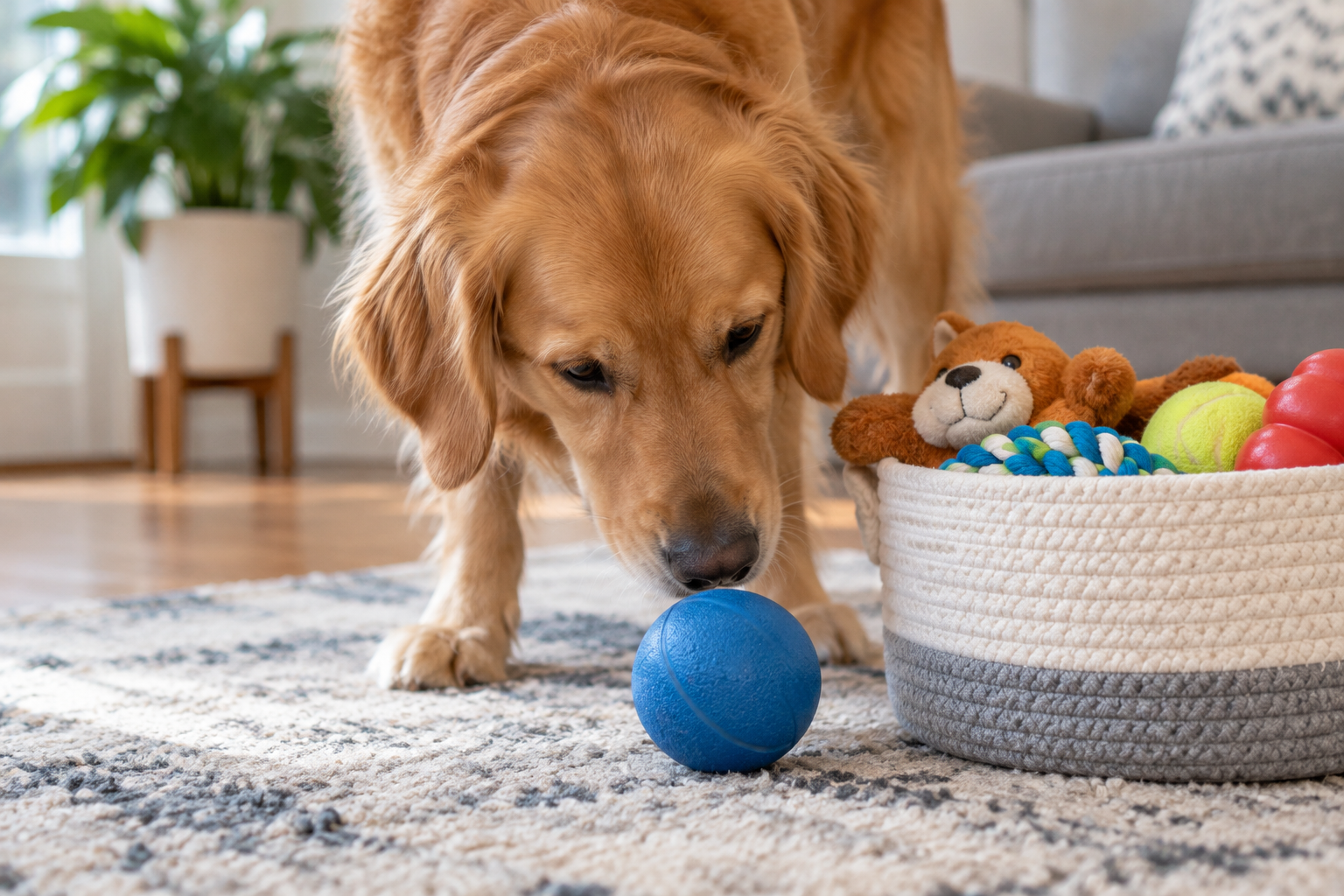
Not every toy should live in the same basket.
Food-filled toys need regular cleaning and thorough drying. Follow the maker’s care instructions, especially when a toy has narrow openings or joined parts.
Chews also deserve individual attention. Some become small enough to swallow or develop sharp edges as they wear down.
Fetch toys may collect mud, grass, and moisture. Give them their own washable container or drying spot.
Supervised toys should stay out of reach when you can’t watch. “Supervised” means you’re close enough to notice damage and calmly remove the toy if needed.
This simple separation prevents a dirty outdoor ball from settling into a pile of clean plush toys. Your dog may not object, but your nose might.
Build a Tiny Daily Cleanup Routine
A storage system only works when it’s easy to reset.
Choose one regular cleanup time, such as after evening play. Walk through the main rooms and return toys to their zones.
This should take only a few minutes. If cleanup feels like a major household project, too many toys are probably available at once.
A quick routine could be:
- Collect toys from walkways and furniture.
- Check for new damage.
- Set aside anything wet or dirty.
- Return safe toys to their storage spot.
- Leave one suitable toy available for quiet time.
Other household members can follow the same routine. Clear categories help everyone know where things belong.
Labels can be useful, even if your dog remains suspiciously unable to read them.
Teach Your Dog to Help
Some dogs can learn to place toys in a container. Treat this as a fun training game, not a household duty.
Start with a wide, shallow bin. Choose a toy your dog already likes to pick up.
Hold the bin beneath the toy and encourage your dog to release it. Mark the moment with cheerful praise, then offer a small reward your dog values.
After several successful tries, place the bin on the floor. Gradually increase the distance between the toy and the container.
Keep sessions short. Stop while your dog is still interested.
Don’t chase your dog or pull toys from their mouth. Trading for a reward is calmer and helps prevent conflict.
If your dog stiffens, freezes, growls, or guards toys, don’t force cleanup. Resource guarding means protecting an item from people or other animals. Ask a qualified reward-based trainer or veterinary professional for guidance.
Adjust the Plan for Puppies and Multiple Pets
Puppies need closer supervision because they explore with their mouths. Keep toy choices simple and check them often for damage.
A puppy-safe toy bin may still become a chewing project. If that happens, store toys out of reach and offer them during planned play.
In a home with several dogs, one shared basket may cause tension. Provide space between dogs and avoid leaving highly valued toys out when you can’t supervise.
Some dogs happily share everyday toys but compete over chews or food-filled items. Offer those separately when appropriate.
Other pets also affect storage choices. A dog toy could be dangerous for a smaller animal, while a small pet toy may be easy for a dog to swallow.
Children shouldn’t climb into toy containers or handle dirty chews. Closed storage can help separate dog items from family playthings.
Keep the System Flexible
Your first setup doesn’t need to be perfect. Try it for a week and notice what keeps going wrong.
If your dog dumps everything out, offer fewer toys. If people ignore the storage spot, move it closer to where play happens.
If toys stay damp, add a separate drying area. If the container gets chewed, replace open access with closed storage.
The goal isn’t a showroom-perfect living room. It’s a home where your dog can play safely and everyone can walk around without meeting a surprise tennis ball.
For today, grab one basket and collect every toy. Remove damaged items, choose five safe favorites, and give the rest one secure storage spot.