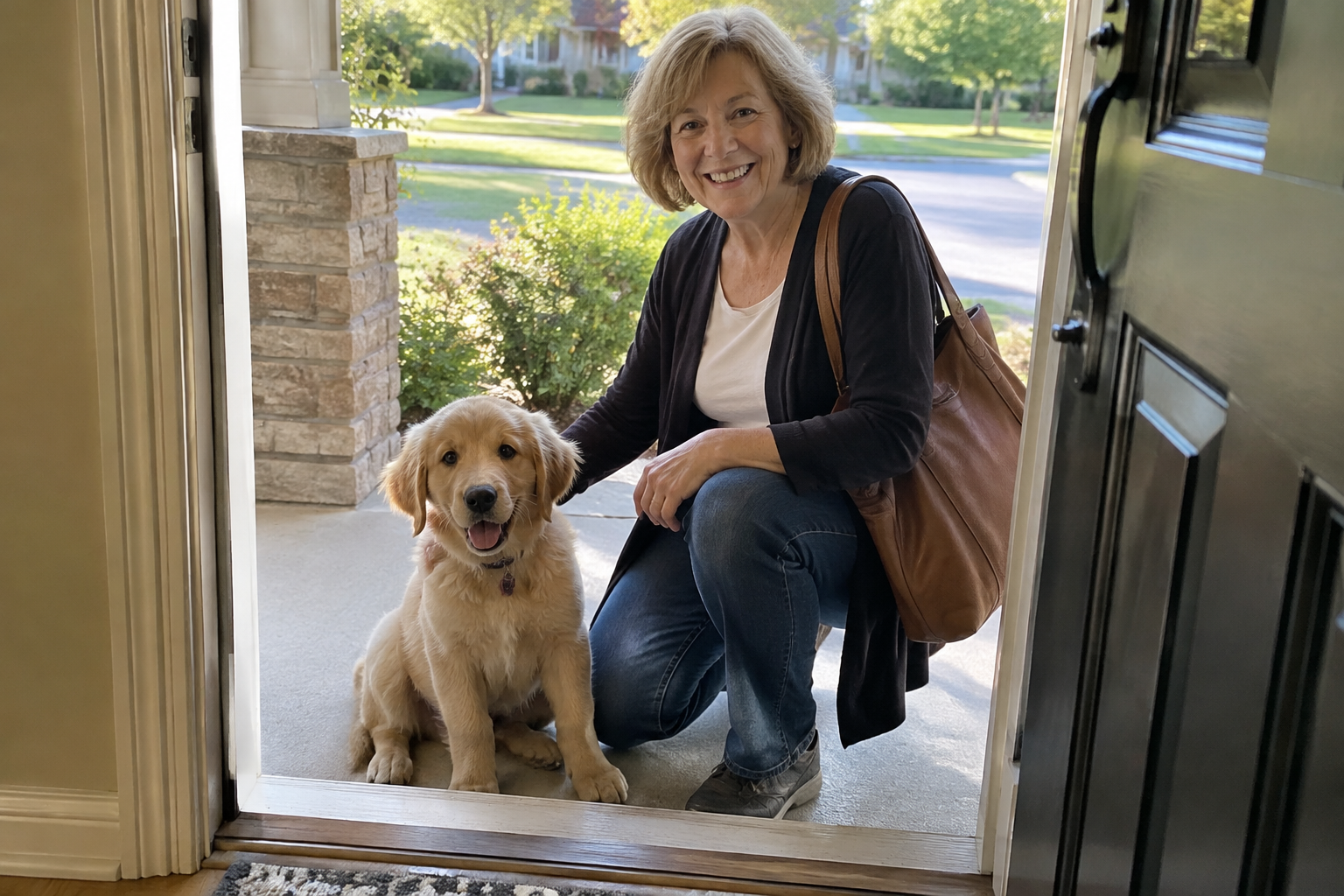
How to Stop Your Puppy Jumping Up When Visitors Arrive
Doorbells have a strange ability to turn puppies into popcorn.
Start by placing a few treats near the door today. You’ll be ready to reward four paws on the floor before excitement takes over.
Puppies usually jump because greetings are thrilling. Some also jump when they feel uncertain or want attention. Either way, your puppy needs a clear, kinder option—not a telling-off.
Here’s how to help your puppy greet visitors with four paws on the floor.
Decide what you want your puppy to do
“Don’t jump” doesn’t tell your puppy what will earn a reward.
Choose one simple greeting behavior instead. Good options include:
- Keeping all four paws on the floor
- Sitting a short distance from the visitor
- Waiting behind a baby gate
- Going to a bed or mat nearby
Four paws down is often the easiest starting point. Your puppy doesn’t have to hold a perfect position while coping with a visitor.
A sit can also provide a clear job. However, don’t push your puppy’s bottom down or force the position. You can first practice teaching your puppy to sit when nobody is at the door.
Pick one goal for now. Switching between “sit,” “go to bed,” and “stand quietly” can make early practice confusing.
Prepare before anyone arrives
Training becomes much harder once the bell rings and everyone starts talking.
Keep small treats somewhere adults can reach quickly. Store them safely away from your puppy and any children.
You may also prepare:
- A baby gate or secure barrier
- Your puppy’s regular lead
- A mat or bed
- A food toy for the waiting area
- A short message explaining the plan to visitors
A gate can create a safe waiting place while you open the door. It shouldn’t be used as punishment or angry isolation.
Make the area pleasant before visitors appear. Give your puppy room to move, rest, and step away from the action.
If you use a lead, hold it loosely and supervise throughout. Don’t jerk the lead or use it to drag your puppy into position.

Tell visitors the plan before they enter
Visitors often reward jumping without meaning to. They talk, laugh, touch the puppy, or push them away.
To a lively puppy, almost any reaction can feel like attention.
Send visitors a simple message before they arrive:
“We’re teaching four paws on the floor. Please come in calmly and pause if the puppy jumps. I’ll let you know when to say hello.”
Ask them to keep their voices and movements relaxed. A squealed “PUPPY!” may be heartfelt, but it’s not exactly calming music.
Your visitor can turn slightly away or pause interaction if an excited puppy jumps. As soon as all four paws return to the floor, you can mark and reward that moment.
This pause is suitable for excited attention-seeking. It isn’t the right response to fear or distress. A worried puppy may need more space rather than silent visitors standing nearby.
Use a marker to capture the right moment
A marker is a short signal that identifies the behavior earning a reward. You might use the word “yes” or a clicker.
Say the marker the instant all four paws touch the floor. Then give a treat promptly.
The order is:
- Your puppy puts four paws down.
- You say “yes.”
- You deliver a treat.
Good timing helps your puppy connect the reward with staying grounded. If you wait until jumping begins again, the lesson gets rather fuzzy.
Practice your marker away from the door first. Mark an easy behavior, then immediately give a treat.
According to Blue Cross reward-based training guidance, training works best when rewards follow the wanted behavior promptly. Sessions should also stay short, pleasant, and manageable.
Rehearse with one calm helper
Don’t begin with a birthday party or the friend who enters like a game-show host.
Choose one calm adult helper. Ask them to make a quiet practice arrival when you have time to focus.
Start with an easier version:
- Put your puppy behind the gate or on a loose lead.
- Ask your helper to approach quietly.
- Reward your puppy for four paws on the floor.
- Let the helper enter without leaning over the puppy.
- Keep rewarding calm behavior.
- End the practice while your puppy is still coping well.
Your helper doesn’t need to greet the puppy immediately. Simply seeing someone enter calmly is useful practice.
If your puppy jumps, the helper can pause and turn slightly away. The moment four paws return to the floor, mark and reward.
If jumping continues, increase the distance. Move your puppy farther from the doorway or use the gate. Making the task easier isn’t cheating—it’s good teaching.
Keep the rehearsal brief. Several easy successes are more useful than one long, chaotic session.
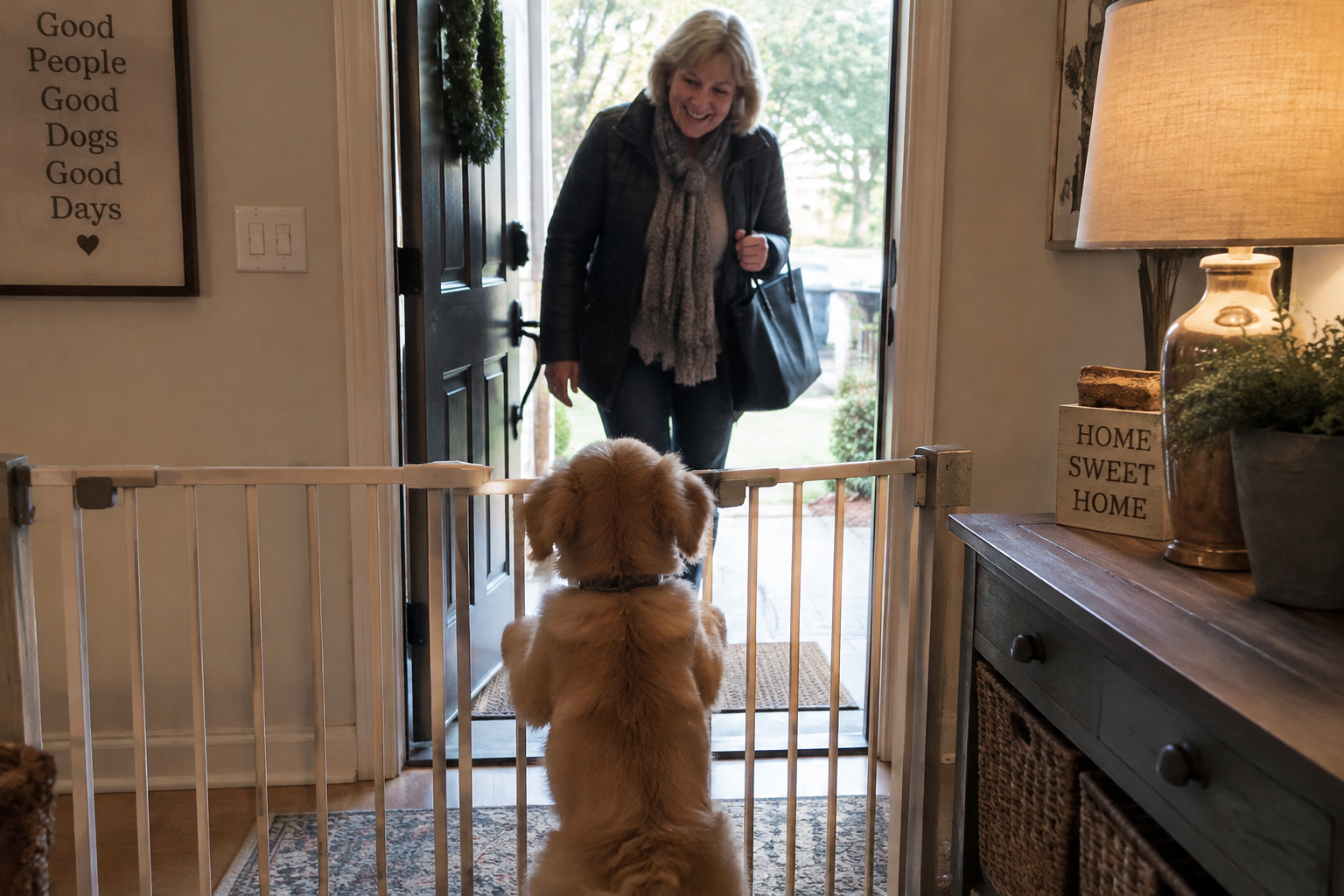
Follow a calm arrival sequence
Real visitors won’t always arrive at convenient training times. A simple routine helps everyone know what happens next.
Before opening the door
Place your puppy behind the gate or hold their lead loosely. Give them enough distance to observe without reaching the visitor.
Reward any calm behavior you see. That might be standing quietly, looking at you, sniffing the floor, or sitting voluntarily.
As the visitor enters
Ask the visitor to come in sideways or without bending over your puppy. Direct staring and reaching can feel intense, especially to a cautious youngster.
Continue marking and rewarding four paws down. Feed treats low, near your puppy’s nose or the floor, rather than lifting them upward.
Before the greeting
Wait until your puppy can stay grounded for a moment. Then let the visitor approach gently, if your puppy appears comfortable.
The visitor can briefly stroke the puppy’s chest or side. Reaching over the head may encourage jumping and can worry some puppies.
If jumping starts, pause the greeting. Resume when four paws are down again.
After the greeting
End the interaction before excitement becomes overwhelming. Your puppy can return behind the gate with a food toy or settle elsewhere.
They don’t need to entertain every visitor for the entire visit. Rest is part of a successful plan.
Reward calm behavior outside visitor practice
Doorway training gets easier when calm behavior already pays well.
Notice your puppy standing quietly during everyday life. Mark and reward it occasionally.
You can practice when:
- A family member enters the room
- You return after stepping outside
- Someone approaches during a walk
- Your puppy comes over for attention
- You pick up keys or touch the door handle
Keep these exercises easy at first. Add only one challenge at a time, such as more movement or a slightly more exciting person.
Avoid saving all rewards for formal sessions. Calm behavior becomes stronger when it works in ordinary moments too.
Know when sitting may not be the best choice
A sit can prevent jumping because your puppy’s back end is already down. It’s also easy for visitors to recognize.
However, some puppies find sitting difficult when they’re excited or worried. Slippery flooring can make the position uncomfortable too.
Don’t repeatedly demand “sit” while your puppy struggles. Move farther from the visitor and reward four paws down instead.
You can return to sitting later, when the situation feels easier. The alternative behavior should help your puppy succeed, not become another source of pressure.

Adjust the plan when jumping continues
Repeated jumping usually means the situation is too difficult, not that your puppy is being stubborn.
Check these common causes.
The visitor is too exciting
Ask the visitor to reduce eye contact, talking, and touching. Increase the distance and use the gate.
You can allow a greeting later, once your puppy settles. There’s no rule saying greetings must happen at the doorway.
Rewards arrive too slowly
Have treats ready before opening the door. Mark the moment paws land, then reward promptly.
Don’t wait for a long, flawless sit. Reward small successes and build from there.
The puppy keeps practicing jumping
Every successful leap can strengthen the habit. Use distance, a gate, or a loosely held lead to reduce opportunities.
Management isn’t a replacement for training. It creates safer conditions in which learning can happen.
Sessions are too long
Finish before your puppy becomes frantic or tired. Short, pleasant practices are easier to repeat.
If your puppy struggles, return to a simpler stage. Your helper might only knock softly, enter briefly, or remain farther away.
Different people follow different rules
One person rewards sitting while another encourages hugs. That’s confusing for a young dog.
Agree on one household response. Calmly pause jumping, then reward four paws down.
Dogs Trust guidance on jumping up also stresses consistent greetings, preparation, and rewarding the behavior you want.
Avoid physical corrections
Don’t knee, push, shout at, grab, or yank your puppy. These actions can cause pain, fear, or even more excitement.
Pushing may feel like play to an energetic puppy. Shouting can also add noise and intensity to an already hectic greeting.
Instead, manage access and reward a clear alternative. If needed, calmly guide your puppy farther away and make the next attempt easier.
Punishment may suppress behavior without teaching a safe greeting. It can also make visitors seem worrying or unpredictable.
Watch for worry, not just excitement
Not every jumping puppy is happily saying hello.
A worried puppy might jump while also turning away, crouching, freezing, hiding, licking their lips, or trying to escape. They may bark or move forward and backward repeatedly.
Don’t force this puppy to sit beside a visitor. Don’t insist on touching or hand-fed treats from the unfamiliar person.
Give your puppy more space and let them remain behind a secure barrier. The visitor should avoid reaching, staring, or following.
You can reward your puppy yourself for calm observation. They should always be able to move away.
Persistent fear, distress, or aggression deserves help from a qualified reward-based trainer or veterinary professional. Seek appropriate help for sudden behavior changes or suspected pain too.
Take extra care with children and vulnerable visitors
A jumping puppy can knock someone over, even without meaning any harm.
Use an adult-managed gate or separate room during arrivals involving children, older adults, or anyone with limited balance. Don’t rely on a child to turn away, hold a lead, or deliver perfectly timed treats.
Let the visitor get seated before bringing your puppy closer. Keep enough distance to prevent rushing or climbing.
If calm contact isn’t realistic, skip the greeting. Safety matters more than giving everyone puppy time.
Keep progress practical
Your puppy may manage four paws down with one familiar helper, then jump at someone wearing a large coat. That doesn’t erase earlier learning.
Dogs often need practice with different people, door sounds, clothing, and levels of excitement. Change one detail at a time.
Aim for steady improvement rather than a flawless front-door performance. Calm management on difficult days is still a success.
For today, choose one quiet helper and brief them on the plan. Practice one calm arrival, reward four paws down, and finish while things are going well.
Photo credits: Photo by Şemsi Belli on Pexels; Photo by Samson Katt on Pexels. Generated scenes are labeled in their image captions.