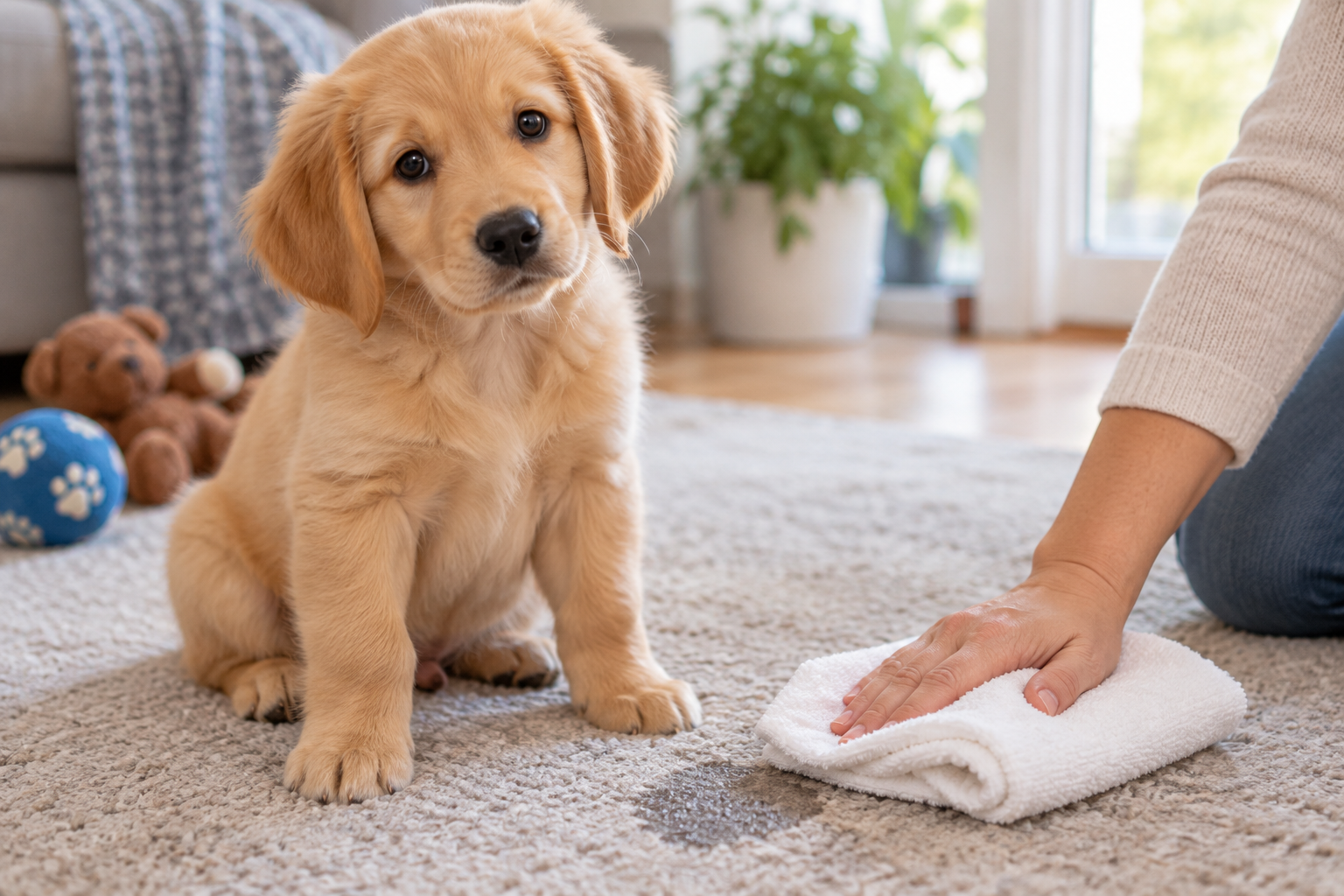
Puppy Accidents on the Carpet: Cleaning Up Without the Drama
Puppies have tiny bladders and remarkably ambitious timing.
Your first move is simple: grab clean towels and start blotting. The sooner you absorb the urine, the easier cleanup usually becomes.
Stay calm around your puppy
If you catch your puppy peeing, interrupt gently without shouting. Take them straight to their usual potty spot.
Praise them if they finish there. This helps them connect the correct place with a good outcome.
Don’t punish your puppy or rub their nose in the carpet. They won’t understand the lesson you intended. They may only learn that peeing near you feels unsafe.
If you find the accident later, just clean it. Puppies can’t connect delayed punishment with something they did earlier.
Blot the fresh accident
Place folded paper towels or a clean, absorbent cloth over the wet area. Press firmly to pull moisture from the carpet.
You can stand on the covered spot for extra pressure. Wear shoes, unless soggy socks are part of your cleaning plan.
Replace the towels as they become wet. Continue until they come away only slightly damp.
Avoid scrubbing or rubbing the carpet. That can spread urine sideways and push it deeper into the fibers.
Also avoid flooding the area with water. Too much liquid may carry urine into the carpet pad underneath.
Use a pet enzyme cleaner
If you’re learning how to clean puppy pee from carpet, an enzyme cleaner is usually the most useful tool.
Enzymes are substances that help break down the material causing the smell. A pet-specific enzyme cleaner is made for biological messes such as urine.
Choose a product labeled for your carpet type. Read its directions before using it, since application and drying instructions vary.
Test the cleaner on a hidden patch first. Check for fading, color transfer, or texture changes once the patch dries.
Apply the cleaner as directed. It needs to reach the same carpet fibers that the urine reached, but more isn’t always better.
Keep your puppy and other pets away during cleaning. Let the area dry fully before allowing access, following the product label.
Some enzyme cleaners need time to work while damp. Blotting them away immediately may reduce their effect, so follow the stated contact time.
Don’t create a cleaning experiment
Using several cleaners at once can cause discoloration or unsafe fumes. It can also stop an enzyme product from working properly.
Never mix household cleaning products. In particular, keep bleach away from urine and other cleaners.
Skip products containing ammonia when possible. Ammonia has an odor that may resemble part of the urine smell to a dog.
Strong perfumes aren’t a true fix either. They may cover the smell for you without removing what attracts your puppy.
Vinegar and baking soda appear in many homemade cleaning tips. However, carpet materials vary, and homemade mixtures may leave residue or damage some fibers. A labeled pet cleaner offers clearer instructions for safe use.
Let the carpet dry properly
After following the cleaner’s directions, improve airflow around the damp area. Open a window or use a fan if it’s safe to do so.
Avoid high heat from a hair dryer or heater. Heat may affect some carpet fibers and can make certain stains harder to remove.
Keep people from walking over the spot while it dries. An upside-down laundry basket can guard the area from curious paws.
Once the carpet is completely dry, smell it at floor level. If an odor remains, repeat the enzyme cleaner according to its label.
Don’t keep soaking the carpet repeatedly. Persistent moisture can reach the padding and floor beneath it.
Handle dried accidents carefully
Old accidents can be harder to locate. Check near doorways, furniture edges, rugs, and places your puppy visits often.
A pet urine detector light may reveal some dried spots. However, these lights can also highlight cleaning residue and other household marks. Treat the glow as a clue, not proof.
Start by following the enzyme cleaner’s directions for old stains. Some products give different instructions for fresh and dried urine.
Work on one area at a time. This helps you avoid over-wetting a large section of carpet.
If the smell returns after drying, urine may have reached the padding. A professional carpet cleaner may be needed for deep or repeated accidents.
Tell the cleaner that the stain is pet urine. Ask whether their process and products suit your carpet.
Protect special carpets and rugs
Wool, silk, plant-fiber carpets, and handmade rugs can need special care. Standard pet cleaners may not be suitable for them.
Check the maker’s care instructions before adding any cleaner. If you’re unsure, contact a cleaner familiar with that material.
Removable rugs may also have urine on the backing or floor below. Lift the rug carefully and inspect both surfaces.
For rented homes, review any carpet-care rules before using a machine. Some rental agreements or carpet warranties limit certain cleaning methods.
If you use a carpet extraction machine, follow its instructions closely. Only put a cleaner in the machine when both labels say it’s suitable.
Prevent a repeat performance
Good cleanup removes the smell that may draw your puppy back. A steady potty routine handles the other half of the problem.
Take your puppy out after waking, eating, drinking, playing, and energetic excitement. Young puppies often need more frequent chances than adult dogs.
Watch for sniffing, circling, wandering away, or suddenly stopping play. These can mean your puppy needs to go.
Supervise closely when your puppy has access to carpet. When you can’t watch, use a safe, comfortable puppy area with appropriate resting space.
Reward outdoor toileting right after it happens. Immediate praise makes the connection much clearer.
Keep a simple accident note on your phone. Record the time and what happened beforehand. Patterns can reveal when your puppy needs an extra potty trip.
Know when accidents may need help
Accidents are common during puppy training. However, a sudden change can sometimes point to discomfort or illness.
Contact a veterinarian if your puppy strains to urinate, seems painful, or passes blood. Frequent tiny pees, unusual thirst, weakness, or a sudden loss of bladder control also deserve qualified advice.
A puppy who keeps having accidents despite a consistent routine may need support. Your veterinarian can check for health concerns, while a reward-based trainer can help with the training plan.
For today, place towels and a pet enzyme cleaner somewhere easy to reach. Future you will appreciate the calm little cleanup station.


