How to Introduce a Puppy to Your Older Dog
Puppies rarely arrive with an “off” button. Older dogs definitely notice.
Your first step is simple: plan a calm meeting before the puppy enters your home. A little preparation can prevent excitement from turning into tension.
When introducing puppy to older dog, aim for peaceful coexistence first. Friendship may follow, but it doesn’t need to happen on day one.
Consider your older dog first
Think about how your older dog usually responds to puppies and change. Some dogs enjoy young company, while others prefer quiet personal space.
Age alone doesn’t tell you how a dog will react. Health, past experiences, confidence, and personality all matter.
An older dog with sore joints may dislike bouncing or wrestling. A dog with weaker hearing or vision may startle when approached from behind.
If your dog has shown aggression around other dogs, don’t attempt a close meeting alone. Ask a qualified, reward-based trainer or veterinary behavior professional for help beforehand.
A sudden change in your older dog’s patience also deserves attention. Pain and illness can make normal puppy behavior harder to tolerate, so contact your vet.
Prepare separate spaces before the puppy arrives
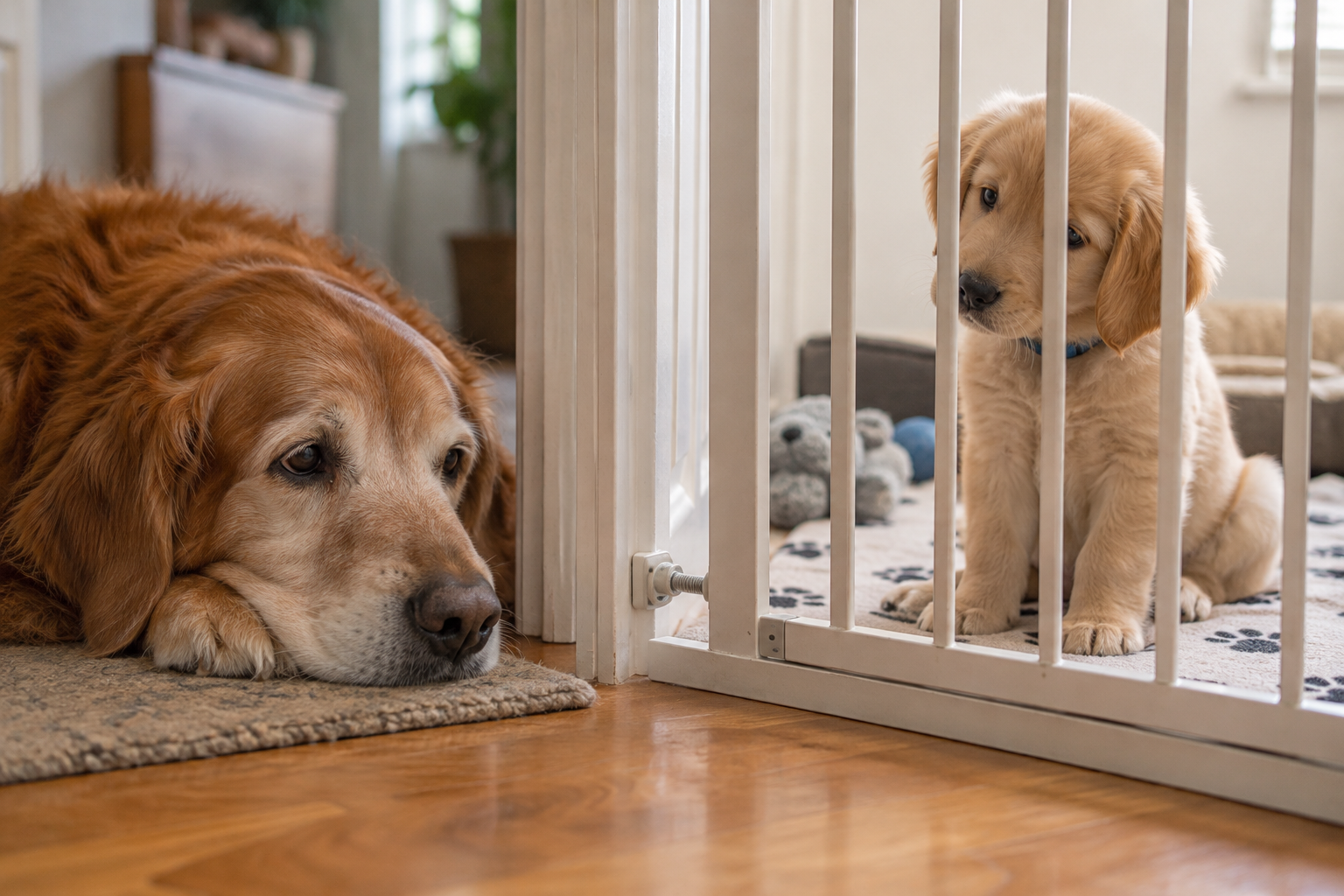
Both dogs need places where the other can’t bother them. Baby gates, closed doors, and exercise pens can help create safe zones.
Your older dog should keep a familiar bed or resting area. Don’t make the resident dog surrender every favorite spot to the new arrival.
Set up the puppy’s sleeping area separately. A crate can work if the puppy has been gently taught to feel safe there, but it shouldn’t be used as punishment.
Place food bowls in different areas. Feed the dogs apart so neither feels pressure to guard food or hurry through a meal.
Keep chews, stuffed food toys, and treasured toys out of the first meeting. These are “resources,” meaning things a dog may value and protect.
You can introduce shared access later if both dogs stay relaxed. Some dogs should always enjoy high-value items separately, and that’s perfectly manageable.
Choose a quiet first meeting place
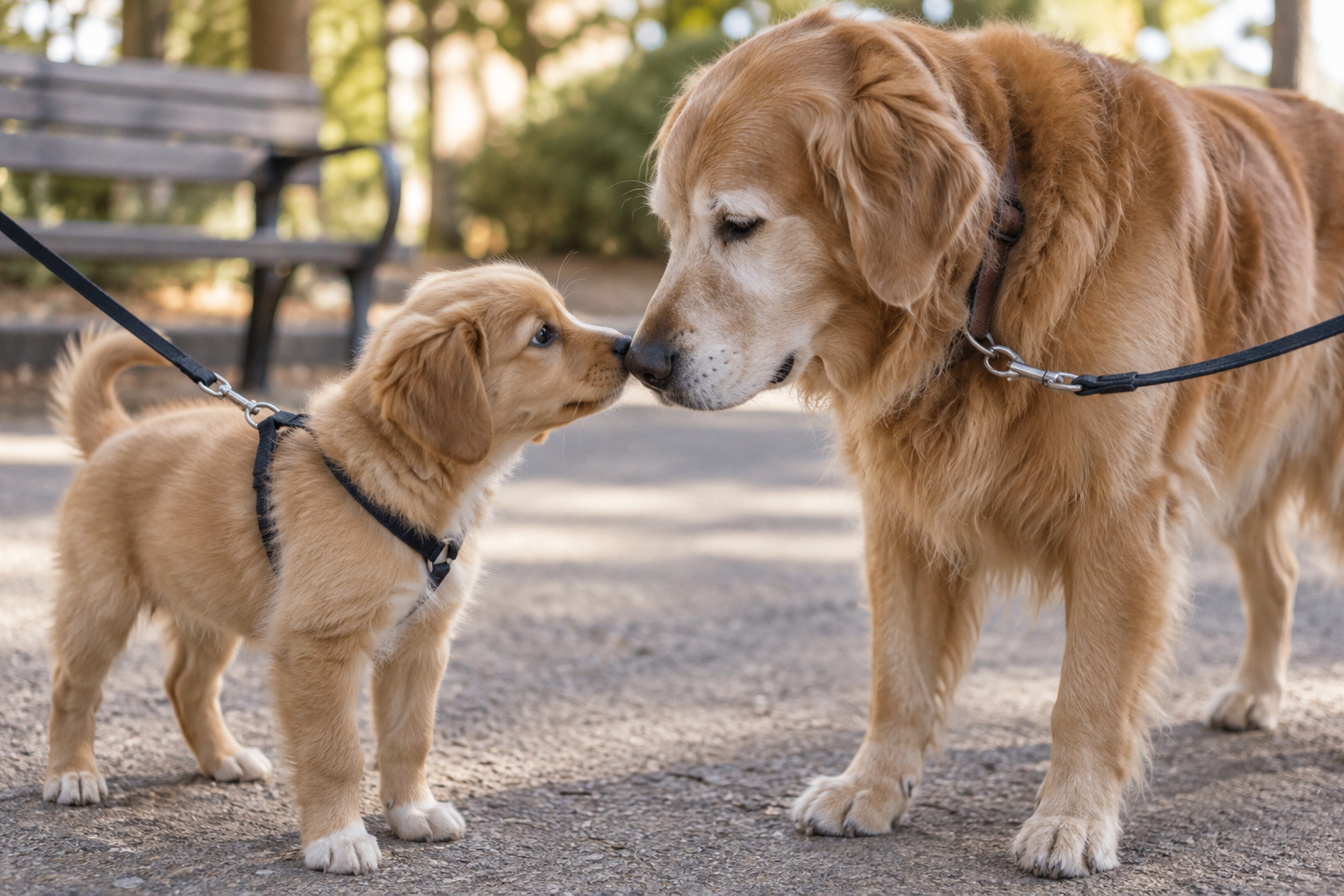
Meet outdoors in a quiet, low-pressure area when possible. Pick somewhere that doesn’t feel like your older dog’s most guarded territory.
A calm private yard or quiet open space may work. Avoid dog parks, busy paths, and places crowded with unfamiliar dogs.
Young puppies may not yet be ready for every public area. Ask your vet which locations are appropriate based on the puppy’s health protection and local risks.
Use two adults if possible, with one person handling each dog. Both dogs should wear comfortable, secure walking gear.
Start far enough apart that neither dog is straining toward the other. Distance helps dogs notice each other without immediately becoming overwhelmed.
Keep leashes loose whenever safety allows. A tight leash can add frustration and prevent normal movement.
Begin with a parallel walk
Walk both dogs in the same direction with space between them. This is called a parallel walk.
They don’t need to greet right away. Let them sniff the ground, look around, and become used to each other’s presence.
Reward calm attention with small treats and friendly praise. This is positive reinforcement, which means adding something pleasant after behavior you want repeated.
If both dogs look comfortable, gradually reduce the distance. Move apart again if either dog becomes tense or fixated.
Comfortable behavior may include:
- A loose, wiggly body
- Soft eyes and relaxed facial muscles
- Sniffing the ground
- Looking away naturally
- Moving in curved paths
- Taking treats gently
- Brief interest followed by easy disengagement
A dog who can turn away is showing useful self-control. Constant staring is usually less comfortable than casual glances.
Keep the first greeting brief
When both dogs remain relaxed, allow a short sniff. Approach in a curve rather than pulling them face-to-face.
After a few moments, cheerfully call the dogs apart. Reward them, walk again, and decide whether another greeting makes sense.
Several short greetings are often easier than one long encounter. Stop while things are calm instead of waiting for someone to become annoyed.
Don’t hold either dog still for inspection. Dogs feel safer when they can move away.
Avoid lifting the puppy toward your older dog’s face. Being trapped in someone’s arms can make the puppy squirm, while the older dog may feel crowded.
If the puppy is tiny and the size difference is large, be especially cautious. Friendly play can still cause accidental injury.
Watch what both dogs are saying
Dogs communicate through movement, posture, facial expressions, and sounds. Look at the whole body rather than one signal.
A wagging tail doesn’t always mean happiness. A high, stiff wag can appear when a dog is tense or highly aroused.
Warning signs include:
- A stiff or suddenly still body
- Hard staring
- Repeated lip licking when no food is present
- Turning the head away while looking worried
- Ears pinned back
- A tucked tail
- Hiding behind a person
- Repeated attempts to escape
- Raised fur along the back
- Growling, snarling, or snapping
- Relentless chasing or pinning
Pause and create distance when you see these signs. Don’t wait for the message to become louder.
A growl is useful communication. Punishing it may suppress the warning without fixing the dog’s discomfort.
Instead, calmly separate the dogs and work out what caused the tension. Common triggers include crowding, rough play, food, toys, doorways, and resting places.
If a bite occurs or either dog is injured, separate them safely. Seek veterinary care for injuries and qualified behavior help before trying again.
Bring them home without creating a rush
After a calm outdoor meeting, walk toward home together if practical. Keep the entrance quiet and avoid gathering excited people around the dogs.
You can let the resident dog enter first, then bring in the puppy. However, the dogs’ comfort matters more than a strict order.
Remove valued toys and chews before both dogs enter shared rooms. Give them time to sniff and explore without competing for anything.
Keep the puppy on a lightweight leash at first if needed for guidance. Hold or trail it only under direct supervision so it can’t snag on furniture.
Use gates to create breaks before either dog gets tired. Separation isn’t failure; it’s good management.
Protect your older dog from puppy enthusiasm
A puppy may ignore polite requests to stop playing. Your older dog shouldn’t have to provide full-time childcare.
Interrupt the puppy before the older dog becomes overwhelmed. Call the puppy away, offer a simple activity, or guide them into separate spaces.
Don’t wait for your older dog to growl repeatedly. Stepping in early teaches the puppy that access to the older dog has limits.
Useful puppy activities include:
- Sniffing for scattered pieces of food
- Practicing simple cues
- Exploring a puppy-safe area
- Chewing an appropriate item separately
- Settling for a nap
- Spending calm time with a person
Young puppies often become wild when they’re tired. If play suddenly gets harder and bitey, a quiet toilet break and nap may help.
Give your older dog regular puppy-free time each day. Let them rest, walk, and spend time with you without being followed.
Keep familiar routines where possible. Predictability can help the resident dog adjust to the household change.
Let fair corrections stay brief
Some older dogs give puppies a quick growl, bark, or air snap. This can be normal communication when it’s brief and the older dog stops once the puppy backs away.
Even so, don’t expect your older dog to teach every boundary. Step in when the puppy repeatedly returns or ignores requests for space.
Separate immediately if the older dog pursues the puppy, pins them relentlessly, or won’t disengage. The same applies if the puppy keeps attacking, chasing, or cornering the older dog.
Healthy play usually includes pauses and role changes. One dog may chase, then the other gets a turn.
Watch for a “play bow,” with front legs lowered and the rear end raised. It often invites play, but the rest of the interaction should still look loose.
Try a short consent check during play. Gently call away the more energetic dog, then see what the other chooses.
If the second dog approaches and restarts play, both may be enjoying it. If they leave, hide, or rest, give them a break.
Supervise every early interaction
Supervision means actively watching, not listening from another room. You need to notice tension before it escalates.
Keep the dogs separated whenever no responsible adult can watch them. This includes quick errands, showers, and overnight periods at first.
Use doors, gates, pens, or secure individual rooms. Choose barriers that neither dog can jump over, push through, or knock down.
Supervision may need to continue for weeks or longer. Progress depends on the dogs, not a fixed timetable.
Increase shared freedom gradually. Calm success in one room doesn’t mean they’re ready to share food, toys, beds, or the whole house.
Train the puppy around the older dog
Teach the puppy that moving away from the older dog earns good things. A cheerful recall, meaning “come to me,” is especially helpful.
Other useful skills include:
- Responding to their name
- Following a person away
- Settling on a mat
- Waiting briefly at gates
- Leaving an item when asked
- Relaxing behind a barrier
Practice these skills separately before using them around distractions. Keep sessions short and reward the puppy often.
Reward the older dog too. Calmly watching the puppy, choosing to walk away, and resting nearby are all useful behaviors.
Don’t force the dogs to share beds, pose together, or stay close. Comfortable distance is a valid relationship.
Manage food, toys, and attention
Feed each dog behind a closed door or secure barrier. Pick up bowls when they finish.
Give chews and filled toys separately. Even dogs who play well may feel differently about valuable food.
Be thoughtful with human attention too. If petting one dog causes the other to shove, stare, or stiffen, create more space.
You can reward both dogs for waiting calmly. Avoid making them compete for treats dropped between them.
Hand out treats with enough distance and clear turns. If either dog guards food from people or dogs, seek professional guidance.
Expect the relationship to change
The first peaceful day is encouraging, but it isn’t the final result. Puppies grow, gain confidence, and change their play style.
Your older dog’s comfort may also vary. A dog who enjoys morning play may want complete peace by evening.
Keep adjusting rest, supervision, and shared activities. Good management changes with the dogs in front of you.
They may become close friends. They may simply share the home without cuddling, and that can still be a successful outcome.
Know when to get extra help
Pause direct interactions and seek qualified help if you see:
- Bites or injuries
- Repeated snapping or lunging
- Guarding of people, rooms, food, or resting places
- One dog constantly hiding or trying to escape
- Play that repeatedly becomes one-sided
- An older dog who can’t rest
- A puppy who appears fearful of moving through the home
- Behavior that worsens despite slower introductions
A vet can check whether pain or illness is affecting behavior. A qualified, reward-based behavior professional can build a safer introduction plan.
Don’t use intimidation, forced contact, or tools designed to cause pain. Fear may silence behavior briefly while making the underlying problem worse.
Take one small step today
Today, set up one puppy-free resting place for your older dog. Then gather a gate, separate bowls, and two secure leashes.
That small setup gives both dogs something valuable: room to breathe. A calm introduction starts with space, patience, and permission to take things slowly.


