Puppy Leash Training: Helping Your Tiny Explorer Walk Without Pulling
A puppy can turn a three-step journey into a full expedition.
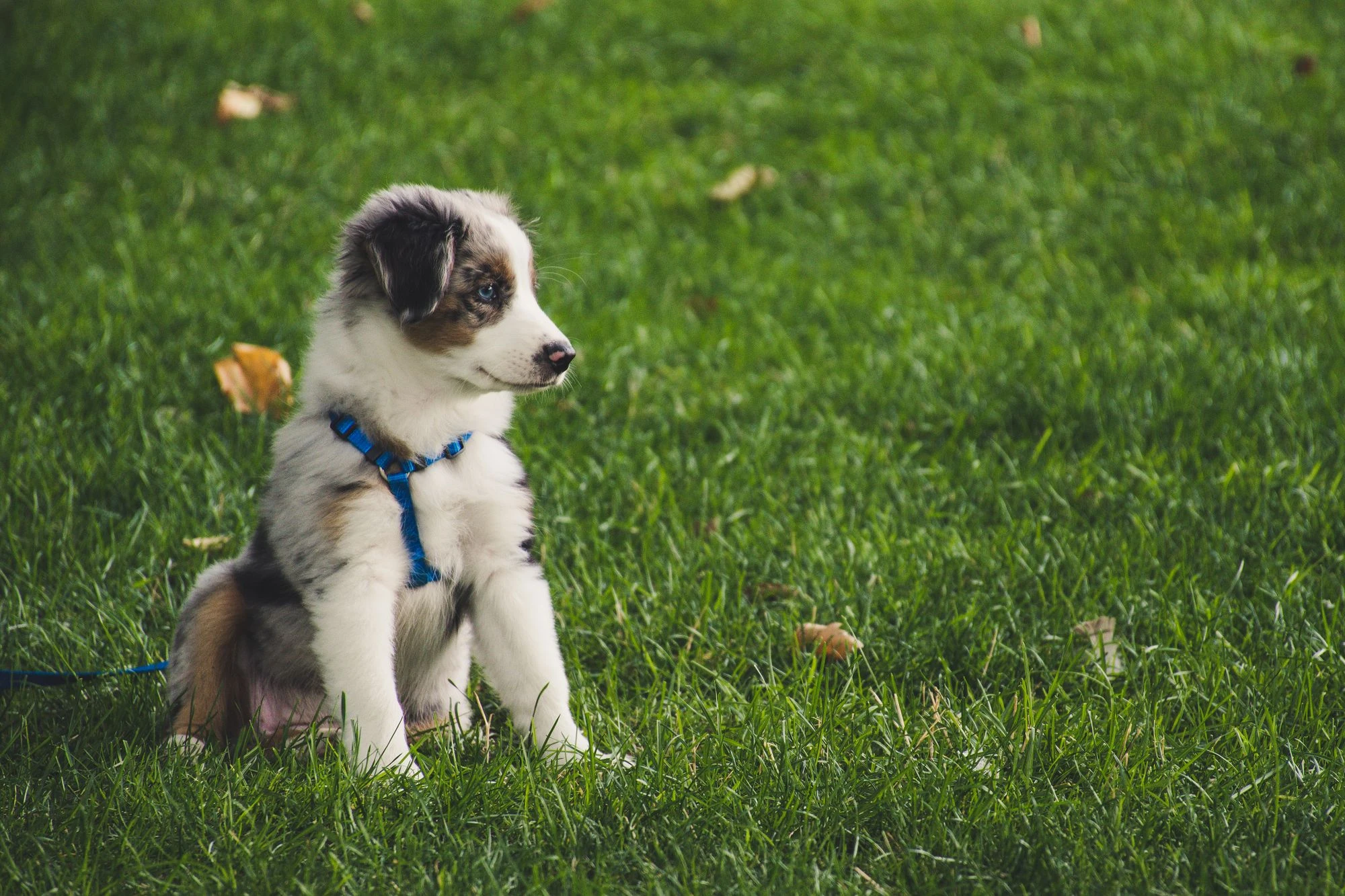
Start somewhere wonderfully boring, such as your living room. Clip on comfortable equipment, gather a few rewards, and practice taking just a few calm steps together.
That simple beginning teaches an important lesson: staying near you makes good things happen.
Know what you’re teaching
Getting used to a harness and leash is the first lesson. Loose-leash walking is the next one.
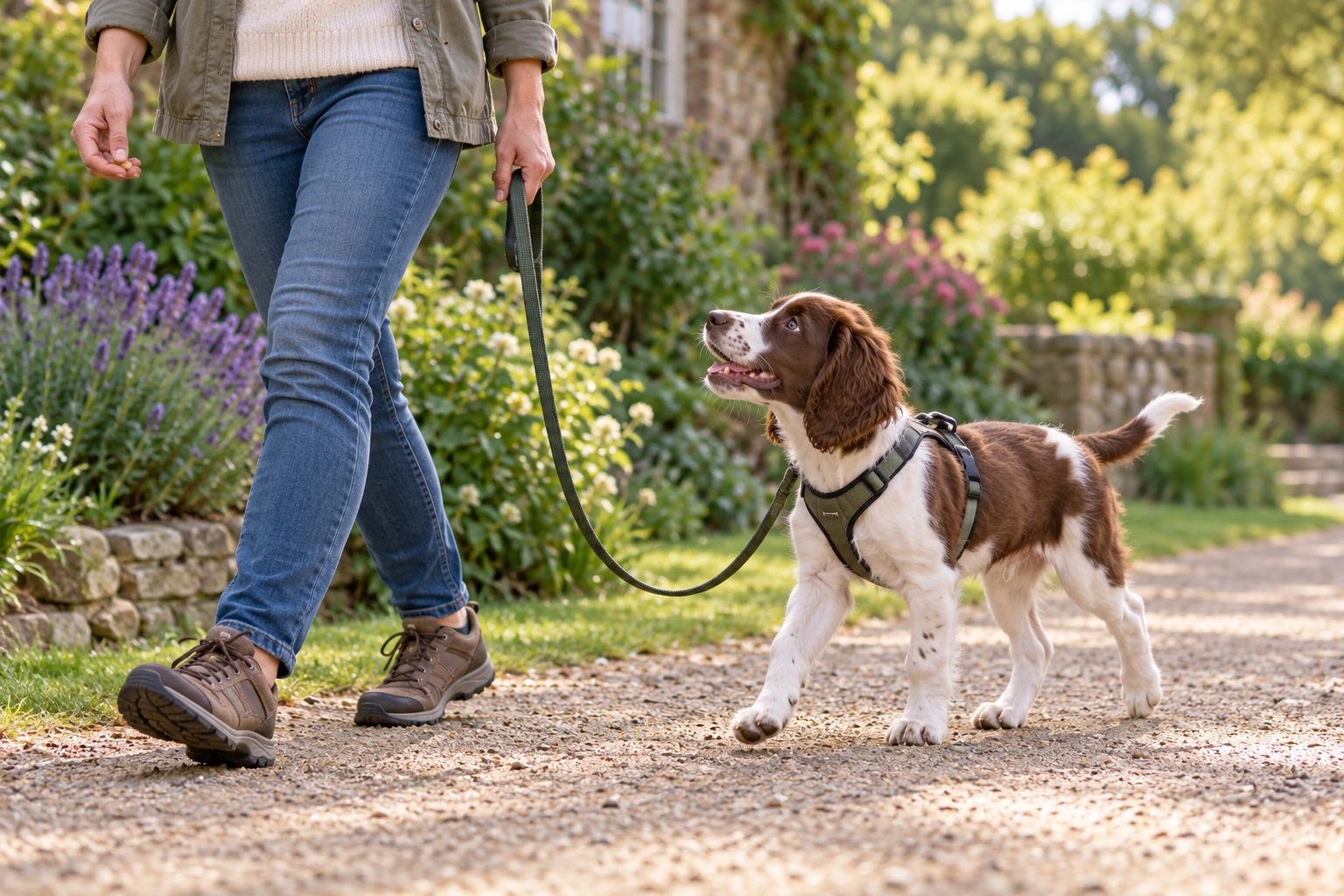
During loose-leash walking, the leash hangs with some slack. Your puppy can look around, sniff, and change position without dragging you.
This isn’t strict heelwork. Your puppy doesn’t need to stare at you or stay glued to one knee.
The goal is much more practical. You want to move together without constant pulling, leash jerks, or frustration.
If wearing equipment is still strange, work on getting your puppy used to a harness and leash before expecting a walk. A puppy who’s busy scratching, biting the leash, or freezing may not be ready for the next step.
Choose comfortable, safe equipment
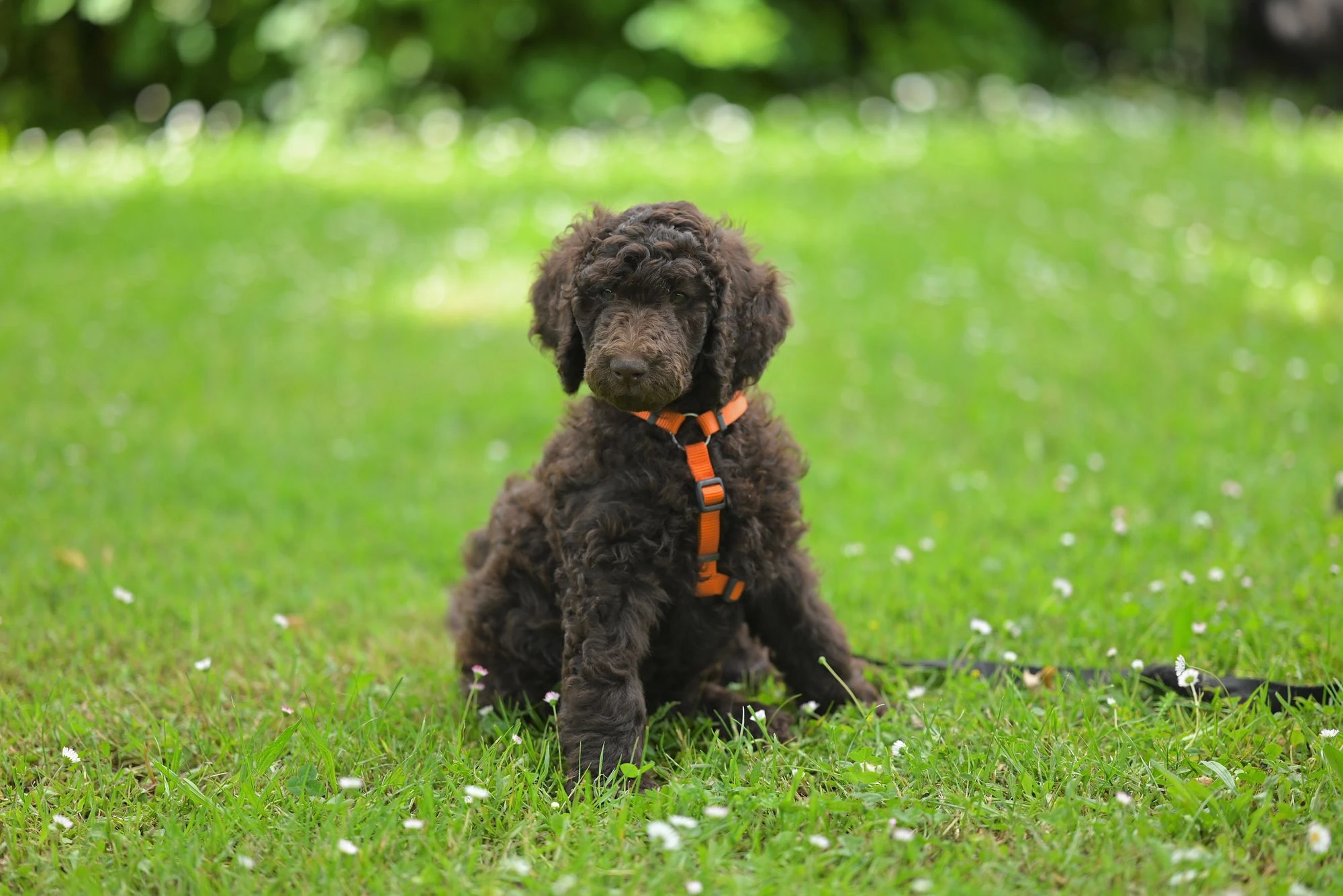
Your puppy’s equipment should fit comfortably and stay secure during movement. Check it regularly because puppies grow quickly.
You might walk your puppy on a harness or collar, depending on their needs. This guide to choosing a harness or collar for a puppy explains the main differences.
Whichever option you choose, attach a regular leash that you can hold securely. Check the leash and fastenings for wear before using them.
Avoid equipment designed to cause pain or discomfort. Don’t jerk or snap the leash when your puppy makes a mistake.
Pulling can become a habit when it helps your puppy reach something interesting. Excitement or worry can also make walking harder, so pay attention to the situation and your puppy’s body language.
Begin before the first public walk
Home practice lets your puppy learn without traffic, dogs, strangers, or fascinating leaves. Yes, leaves are apparently major celebrities.
Begin in a quiet room or private space. Public ground walks may need to wait until your veterinarian says they’re appropriate.
Vaccination timing and local risks vary. Ask your puppy’s vet when and where those first walks can safely happen rather than following a universal timetable.
Early outings should feel positive and manageable for your particular puppy. A busy route that suits one puppy may overwhelm another.
Pick a clear reward marker
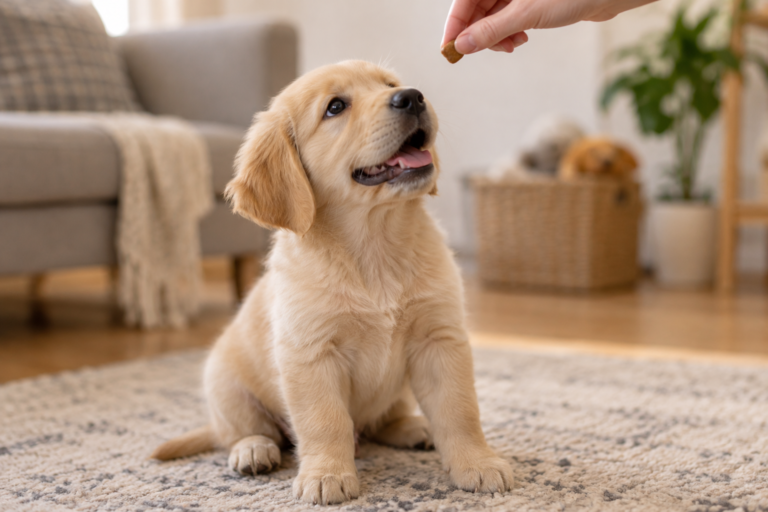
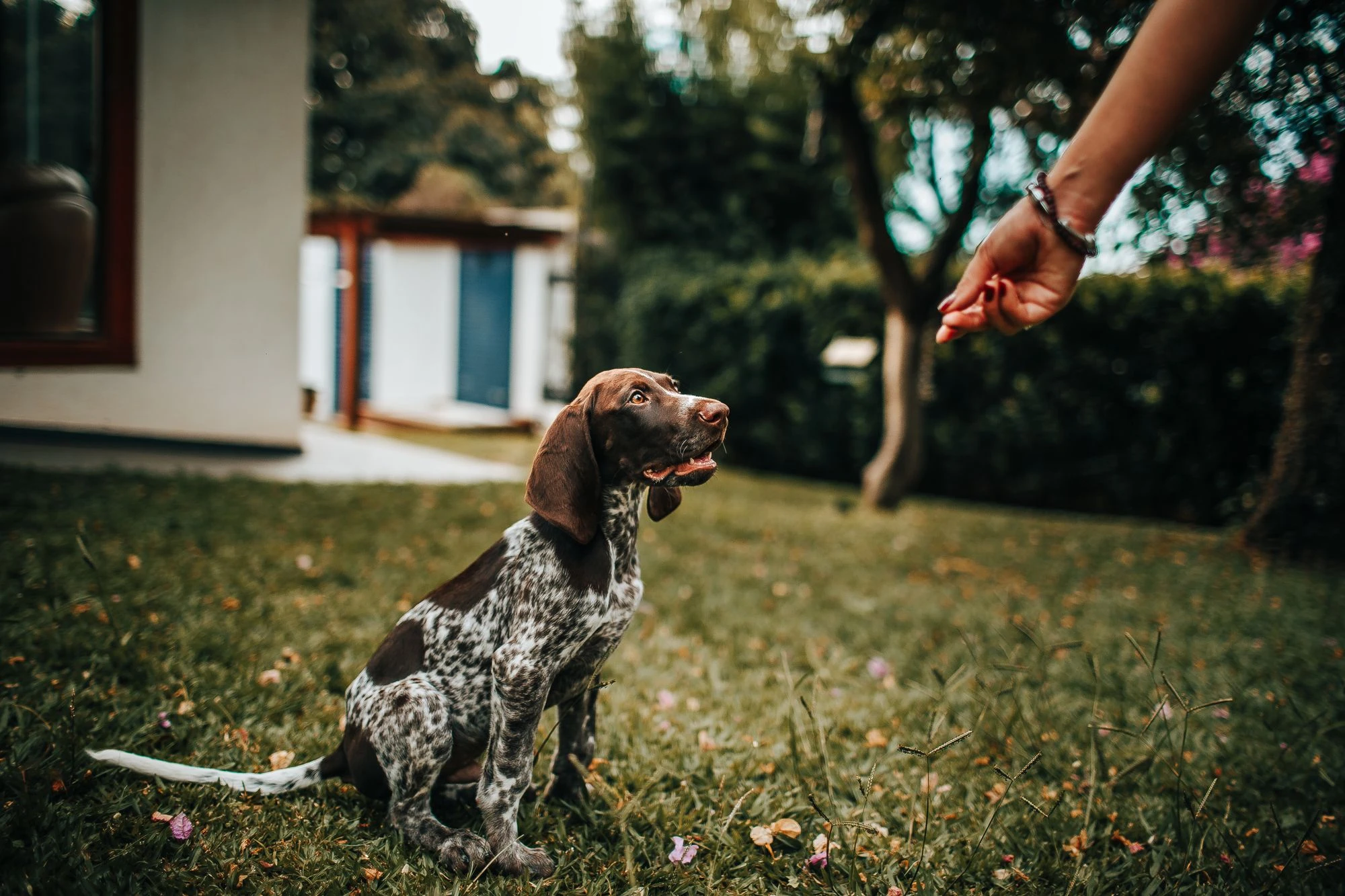
A marker tells your puppy the exact moment they did something right. It can be a short word such as “yes.”
The marker isn’t the reward itself. You say “yes,” then follow it with something your puppy values.
Food is often convenient, but rewards can also include praise, play, or permission to move toward a safe sniffing spot. Different rewards may matter in different situations.
First, help your puppy understand the marker:
- Stand somewhere quiet with your puppy.
- Say “yes” in a calm, cheerful voice.
- Immediately give a reward.
- Repeat during a short, easy practice period.
You aren’t asking for a behavior yet. You’re simply teaching that “yes” predicts a reward.
Once your puppy understands that pattern, use the marker when the leash is loose. Prompt timing matters because it shows which moment earned the reward.
Teach the first few steps
Stand beside your puppy with the leash relaxed. You don’t need to arrange them in a perfect position.
Get their attention gently, then take one or two steps. When they move with you and the leash stays loose, say “yes.”
Give the reward near you, then move again. This creates a clear sequence:
Loose leash → “yes” → reward → keep moving
At first, reward very easy successes. That might mean one step rather than crossing the entire room.
Imagine your puppy takes two steps beside you and glances up. The leash is still slack, so you say “yes,” reward, and continue.
After several repetitions, your puppy begins to notice a useful pattern. Walking without tightening the leash keeps the trip going and brings rewards.
Keep each lesson short and enjoyable. Stop while your puppy is still engaged rather than pushing until either of you becomes frazzled.
What to do when your puppy pulls
Pulling often works by accident. The puppy leans forward, the person follows, and the puppy reaches the exciting smell.
That teaches the puppy that a tight leash moves them toward their goal.
Instead, stop when the leash becomes tight. Keep your hands steady and avoid pulling your puppy back.
Encourage your puppy to return toward you. You can use a cheerful voice or take a small step away if the space is safe.
The moment the leash becomes loose, mark and reward. Then calmly continue walking.
The sequence now becomes:
Leash tightens → movement stops → puppy returns → leash loosens → reward → movement resumes
This is a reset, not a punishment. Your puppy gets another chance to choose the behavior that works.
Don’t turn it into a long standoff. If your puppy can’t disengage from the distraction, create more distance or move to an easier area.
According to the Dogs Trust loose-leash walking guidance, consistent rewards and stopping when pulling occurs help teach that a loose leash moves the walk forward.
Use sniffing as part of the walk
Loose-leash walking doesn’t mean marching past every interesting scent. Sniffing is a normal and valuable part of a puppy’s outing.
You can use safe sniffing opportunities as rewards. Ask for a few loose-leash steps, mark them, then walk toward the sniffing spot together.
For example:
- Your puppy notices a tree.
- You wait for slack in the leash.
- You mark the loose leash with “yes.”
- You move toward the tree together.
- Your puppy gets time to sniff.
If your puppy charges and tightens the leash, stop. Resume when the leash loosens rather than letting pulling unlock the sniff.
This helps you avoid constant food rewards while keeping the lesson relevant. The environment itself can provide many rewards.
Add distractions one layer at a time
A quiet kitchen and a busy pavement are completely different classrooms. Success indoors doesn’t mean your puppy is being stubborn outdoors.
Increase difficulty gradually. You might move through stages like these:
- A quiet room
- A hallway or private garden
- A calm outdoor area
- A familiar route with mild activity
- A slightly busier place with more distance from distractions
Change one challenge at a time when possible. New surroundings, nearby dogs, passing people, and unusual noises can quickly add up.
Start far enough from a distraction that your puppy can still notice you and take rewards. Reward loose-leash steps before moving closer.
If your puppy repeatedly pulls, stops responding, or becomes frantic, the setting is probably too difficult right now. Add distance or return to an easier location.
That isn’t going backward. It’s giving your puppy a version of the lesson they can understand.
Help a puppy who bites the leash
Leash biting can happen when a puppy is excited, confused, or overwhelmed. Tugging back may accidentally turn it into a thrilling game.
Pause and hold the leash calmly. Encourage your puppy to focus on you, then reward a moment of calm or a loose leash.
You can also make the task easier. Take fewer steps, reduce nearby distractions, or finish the session before excitement builds further.
Avoid chasing your puppy’s mouth with your hands. Don’t pull the leash sharply to make them release it.
If leash biting is persistent, intense, or paired with distress, get help from a qualified reward-based professional. Your vet can also help if you suspect pain or physical discomfort.
Don’t drag a puppy who freezes
A frozen puppy isn’t practicing loose-leash walking. They may be worried, overwhelmed, uncomfortable, or unsure what to do.
Don’t drag them forward. Pause and look at what’s happening around you.
Give your puppy more space from people, animals, noise, or unfamiliar objects. A cheerful invitation to move away may help, but avoid putting pressure on them.
Return to a quieter place if needed. Your puppy may be ready for a smaller step, such as watching the world from a comfortable distance.
Persistent fear deserves qualified help. Speak with your vet to rule out discomfort, then consider support from a suitable reward-based trainer or behavior professional.
Sudden changes also matter. If a puppy who usually walks comfortably starts freezing, resisting equipment, or moving differently, contact your vet.
Make real walks easier
Training often falls apart when the person is rushed. If possible, leave enough time for pauses, resets, and sniffing.
Choose a manageable route rather than aiming for distance. Puppy leash training is about learning, not completing a fixed exercise quota.
Keep rewards easy to reach. If you need to dig through several pockets, the useful moment may pass.
Watch the leash before it becomes fully tight. Mark and reward while your puppy is already doing well, instead of waiting only for mistakes.
You can also change direction before reaching a difficult distraction. Calmly moving away is often more useful than testing whether your puppy can cope.
Everyone walking the puppy should follow the same basic rule: pulling pauses progress, while a loose leash gets rewarded. Consistency makes the lesson clearer.
Adjust when progress feels messy
Learning rarely improves in a straight line. A puppy may walk beautifully at home and pull wildly near one exciting bush.
That doesn’t mean the training failed. It means the bush is currently more difficult than the hallway.
When things unravel, ask three simple questions:
- Is the environment too busy?
- Have we practiced for too long?
- Is the reward valuable enough here?
Then make one helpful change. Increase distance, shorten the lesson, or choose a reward that matters more in that setting.
If your puppy pulls every few seconds, practice in an easier place. Repeatedly rehearsing a struggle won’t make the lesson clearer.
If progress remains difficult despite calm, consistent practice, seek a qualified reward-based trainer. They can watch your puppy’s body language and adapt the setup.
Keep the goal puppy-sized
Your puppy doesn’t need a flawless performance. They need many manageable chances to discover that staying connected with you works.
Some walks will include more training. Others may focus on calm exploration and sniffing.
Patience and repetition matter. Punishment can make walks stressful without teaching your puppy what to do instead.
For today, choose one quiet space and practice three simple parts: move together, mark a loose leash, and reward. End after a small success, even if that success is only two lovely, non-dramatic steps.
Photo credits: Photo by Brett Sayles on Pexels; Photo by JacLou- DL on Pexels; Photo by Helena Lopes on Pexels. Generated scene labeled in its image caption.