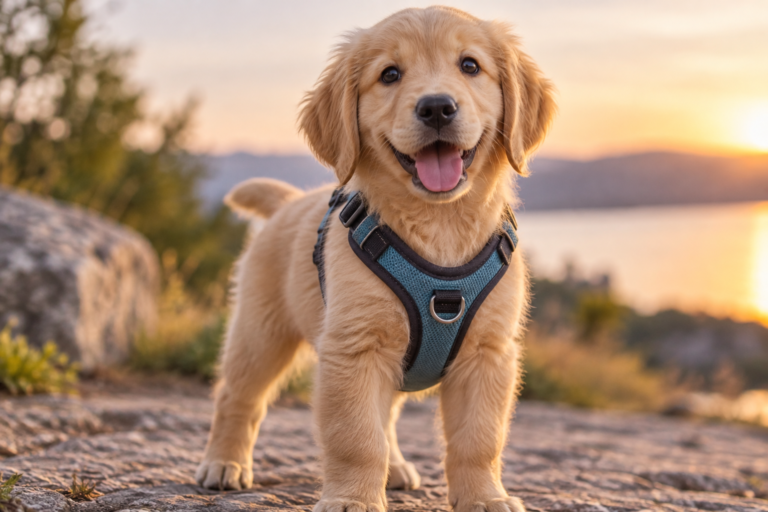
Puppy’s First Car Ride: What to Bring and How to Prepare
Puppies can turn a five-minute drive into a full-body group project.
Your easiest first step is simple: prepare the car before adding the puppy. Set up their secure seat, pack a small bag, and check your route.
A little planning makes the trip calmer for everyone. It also lets the driver focus on driving instead of chasing a rolling tennis ball.
Start with a parked-car introduction
If you have time before the real trip, introduce the car slowly. Park somewhere quiet and keep the engine off.
Let your puppy sniff around the open door from the ground. Reward calm interest with praise or a piece of their usual food.
Next, place your puppy in their secured travel spot. Keep this first visit short, then leave the car together.
On another attempt, turn on the engine for a minute. If your puppy stays comfortable, try a brief drive around the block.
You may not get these practice sessions before bringing a new puppy home. That’s okay. Prepare the travel setup first and keep the actual journey as steady as possible.
Choose a secure place for your puppy
A puppy shouldn’t ride loose, even with a passenger holding them. Sudden braking can throw a puppy forward or allow them to escape through an open door.
Use one of these options:
- A sturdy pet carrier secured according to its instructions
- A properly fitted vehicle harness made for car travel
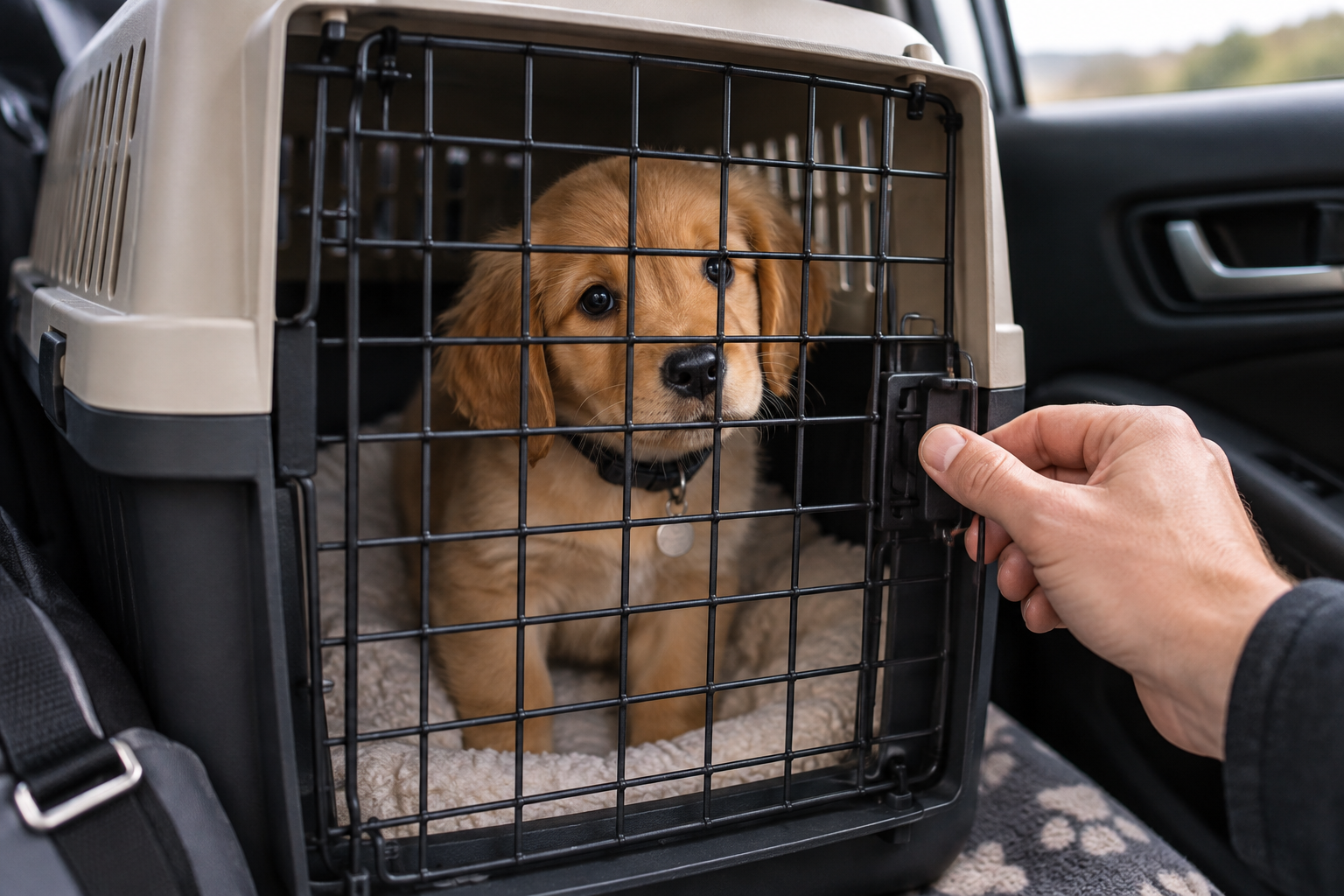
- A secured travel crate suitable for your vehicle and puppy
Vehicle restraint designs vary. Check the maker’s fitting and installation instructions rather than guessing from appearance.
A normal walking harness may not be designed for car use. Likewise, never attach a car tether to a puppy’s collar. Pressure from a sudden stop could injure their neck.
The back seat is usually a practical place for a secured puppy. Avoid the front passenger seat because an airbag can seriously harm a small animal.
Place the carrier or harness before bringing your puppy outside. Check that straps aren’t twisted and doors latch fully.
Your puppy should be able to sit or lie comfortably. However, the space shouldn’t be so large that they slide around with every turn.
Add a washable towel or thin familiar blanket. Avoid bulky bedding that affects the fit of a harness or blocks airflow around a carrier.
Pack a small puppy travel bag
You don’t need to pack the entire pet aisle. Focus on cleanup, comfort, identification, and basic care.
Bring:
- A collar or harness with current contact details
- A regular leash, plus a spare if available
- Waste bags
- Paper towels or washable cloths
- A puppy-safe cleaning bag for soiled items
- Fresh water and a small bowl
- A little of your puppy’s usual food
- A familiar towel or blanket
- One safe, quiet chew or toy
- Any documents needed at your destination
- Necessary medication already prescribed for your puppy
Keep cleanup supplies within reach of a passenger. Don’t place them under a mountain of luggage.
Choose toys without loose pieces or long strings. Skip anything that could become a choking risk when you can’t watch closely.
If you’re collecting a puppy from a breeder, rescue, or foster home, ask whether a familiar-smelling cloth can travel with them. It may provide comfort, but it should still be clean and safe.
Plan the timing and route
For a puppy first car ride, a direct route is usually easiest. Save scenic detours for another day.
Check the journey length before leaving. Look for safe stopping places, especially if the drive will take a while.
Avoid scheduling the trip during the hottest part of the day when possible. Make sure the car’s heating or cooling works before placing your puppy inside.
A large meal immediately before driving may make nausea more likely. However, very young puppies need regular food, so don’t make a major feeding change without guidance.
If you’re collecting your puppy, ask when they last ate, drank, and went to the toilet. That information helps you plan the first stop without changing their routine suddenly.
Some puppies need toilet breaks more often than others. Age, stress, recent drinking, and previous toilet training all make a difference.
Prepare the car before departure
Remove loose objects that could slide or fall during the drive. Shopping bags, tools, and water bottles can become hazards during sharp stops.
Set a comfortable temperature before bringing your puppy into the car. Direct vents away from their face and make sure their travel space has good airflow.
Close windows enough to prevent escape. A puppy should never ride with their head outside because flying debris and sudden movements can cause injury.
Activate child locks if your puppy could reach door or window controls. Check the floor for dropped food, chewing gum, medicines, or other unsafe items.
Place luggage where it can’t shift into the carrier. Keep leashes away from paws and mouths so they can’t tangle around the puppy.
If possible, bring another adult. One person can drive while the other quietly watches the puppy and handles planned stops.
A passenger still shouldn’t remove the puppy from their restraint while the vehicle is moving. Comfort them with a calm voice instead.
Have a calm pre-ride routine
Give your puppy a chance to go to the toilet before leaving. Use a familiar, low-distraction place if possible.
Keep the departure boring in the best way. Excited voices, crowds, and repeated cuddling can make an already unusual moment more intense.
Clip on the leash before approaching the open car door. Keep hold of it while placing the puppy into their secured travel spot.
Once the puppy is safely inside, arrange the leash so it won’t catch around their body. Don’t leave a long leash trailing loose in the carrier.
Offer calm praise, then begin driving smoothly. Gentle turns and gradual braking are kinder to an unsettled stomach.
Watch for stress and motion sickness
A first car journey brings unfamiliar movement, sounds, and smells. Some puppies settle quickly, while others find the experience difficult.
Possible signs of stress or motion sickness include:
- Frequent lip licking
- Heavy drooling
- Repeated yawning
- Restless movement
- Whining or barking
- Panting when the car isn’t warm
- Vomiting
- Sudden quietness or weakness
Several of these signs can have more than one cause. For example, panting may reflect heat, fear, excitement, or physical distress.
If your puppy seems uncomfortable, pull over somewhere safe. Keep them secured until the vehicle is parked and all doors are controlled.
Offer a quiet break and check the temperature. Don’t force food or water into a nauseated puppy.
Repeated vomiting, severe weakness, collapse, breathing trouble, or pale or bluish gums needs prompt veterinary help. Seek urgent guidance if your puppy may have swallowed something unsafe or suffered an injury.
If mild sickness happens on several trips, contact your vet before the next journey. Don’t give human travel medicine or unapproved calming products.
Take breaks without creating an escape risk
Before opening any car door, attach the leash securely. Puppies can bolt when startled, even if they seemed sleepy seconds earlier.
Choose a quiet stopping place away from traffic. Avoid busy dog areas when you don’t know your puppy’s vaccination protection.
Young puppies may not yet be protected against diseases found where many dogs toilet. Risk differs by location and individual health, so ask your vet where your puppy can safely walk.
You may need to carry your puppy to a clean, private toilet spot. For longer trips, get location-specific advice before travel instead of improvising at a crowded rest area.
During breaks, offer water and a chance to settle. Keep the stop calm and return your puppy to their restraint before moving again.
Never leave your puppy alone in the car
A parked car can become dangerously hot or cold very quickly. Shade, cracked windows, and “just one minute” aren’t reliable protection.
Take your puppy with you, or have a responsible adult remain with them. If that isn’t possible, change the plan.
Also keep the engine off in enclosed spaces. Vehicle fumes can be dangerous even when the trip hasn’t started.
Make arrival calm and controlled
Park before unfastening anything. Check your surroundings for traffic, loose dogs, crowds, and other surprises.
Attach the leash before opening the carrier or releasing the vehicle harness. Then lift or guide your puppy out without rushing.
Offer a toilet break in an appropriate place. Follow it with water, quiet praise, and time to explore gradually.
If you’re bringing your puppy home for the first time, introduce one small area first. A whole house can feel like a theme park built by giants.
Your puppy may sleep after the journey. Travel, handling, and a new setting can be tiring, even when the ride looked peaceful.
Watch for sudden or lasting changes after arrival. Ongoing vomiting, diarrhea, extreme tiredness, breathing problems, or unusual behavior should be discussed with a vet.
Build better car rides over time
One long first journey doesn’t teach a puppy that every car ride is scary. Future short, pleasant trips can build a more comfortable association.
Start with parked-car visits and very short drives. Finish before your puppy becomes overwhelmed.
Use their usual food or calm praise as a reward. Avoid introducing rich treats during travel because they may upset a young stomach.
Vary the destination when it’s safe to do so. If every drive ends at an unfamiliar clinic or grooming appointment, the car may start predicting stress.
A quiet trip to visit a familiar person can help. Even a short drive followed by a calm sniff in a suitable place may be enough.
Increase travel time gradually. If your puppy becomes distressed, shorten the next trip rather than pushing through panic.
The goal isn’t a puppy who loves road trips immediately. It’s a puppy who feels secure, stays safely restrained, and recovers comfortably.
Your quick first-ride check
Before starting the engine, confirm that:
- Your puppy’s carrier or vehicle harness is secured
- Their contact details are current
- The leash is ready but can’t tangle
- The car temperature feels comfortable
- Loose objects and unsafe food are removed
- Water and cleanup supplies are accessible
- You know the route and planned stopping points
- Someone can supervise if the driver needs help
- Your puppy has had a suitable toilet opportunity
For today, choose your puppy’s travel spot and set it up in the parked car. That small job makes the real departure much easier—and keeps the tennis ball out of the brake pedal.