A Simple Puppy Daily Routine You Can Actually Follow
Puppies run on food, naps, and surprisingly urgent bathroom announcements.
Start by choosing three dependable points in your day. These might be waking up, finishing work, and going to bed. You can build the rest of your puppy daily routine around them.
The goal isn’t a perfect timetable. It’s a steady pattern your puppy can understand—and you can repeat.
Think in patterns, not exact times
A puppy doesn’t need every minute scheduled. They do need regular chances to eat, sleep, move, learn, and toilet.
A useful daily pattern looks like this:
- Wake up and go outside.
- Eat, then get another toilet chance.
- Enjoy short play or training.
- Settle for a nap.
- Repeat in manageable blocks.
- Finish with a calm evening and final toilet trip.
Your actual timing will depend on your puppy’s age and needs. Your work, family, and home setup matter too.
Very young puppies usually need more frequent breaks and more sleep. Older puppies may stay awake longer but can become wildly distracted. Individual puppies also differ, even within the same breed.
Instead of watching the clock alone, watch what happens next. Waking, eating, drinking, excitement, and play often lead to a toilet need.
Begin the morning with a toilet trip
Take your puppy to their toilet spot as soon as they wake. Save greetings, coffee, and phone scrolling until afterward.
Move calmly and use the same route when practical. If your puppy is very young or easily distracted, carrying them to the spot may prevent an accident along the way.
Give them a quiet chance to toilet. Don’t turn the trip into instant playtime. Otherwise, your puppy may forget the mission and remember only the interesting leaf.
When they finish, reward them right away. Use a small piece of their regular food, warm praise, or both. The reward should happen outside, so the connection stays clear.
If nothing happens, return indoors under close supervision. Try again soon rather than giving full access to the home.
Repeated straining, pain, unusual urine, or a sudden change in toilet habits needs veterinary advice. That’s different from a normal training mistake.
Serve breakfast, then offer another break
Feed breakfast after the first toilet trip. Follow the feeding directions for your puppy’s food, while considering guidance from your veterinarian.
Puppies need food suited to their growth stage. Avoid guessing portions or building a homemade menu without qualified help.
Some puppies eat too quickly. A suitable slow feeder or food-dispensing toy may help, provided your puppy uses it safely. Supervise new items until you know they won’t chew off or swallow pieces.
Offer another toilet trip after breakfast. Eating and drinking can get the digestive system moving.
Keep fresh water available unless your veterinarian has given different instructions. Restricting water to prevent accidents can leave a puppy thirsty and doesn’t teach the right lesson.
Use short activity blocks
After breakfast and a toilet break, your puppy may be ready for activity. Keep this block short and simple.
You could include:
- Gentle play with a toy
- A few minutes of basic training
- Calm sniffing in a safe area
- Handling practice followed by rewards
- Quiet time near you
Training doesn’t need to feel like school. Ask for one easy behavior, reward it, and stop while your puppy is still interested.
Useful early skills include responding to their name, coming a short distance, and choosing to sit. You can also reward calm behaviors that happen naturally.
For example, place a treat between your puppy’s paws when they lie quietly. This teaches that settling pays, not only jumping and barking.
Avoid forced running, repetitive jumping, or exercise that leaves your puppy struggling. Growing bodies need appropriate activity, and needs vary by size and development. Ask your veterinarian about safe exercise if you’re unsure.
Plan for plenty of naps
A puppy who suddenly becomes bitey, frantic, or unable to listen may be overtired. Puppies often need help settling before they look sleepy.
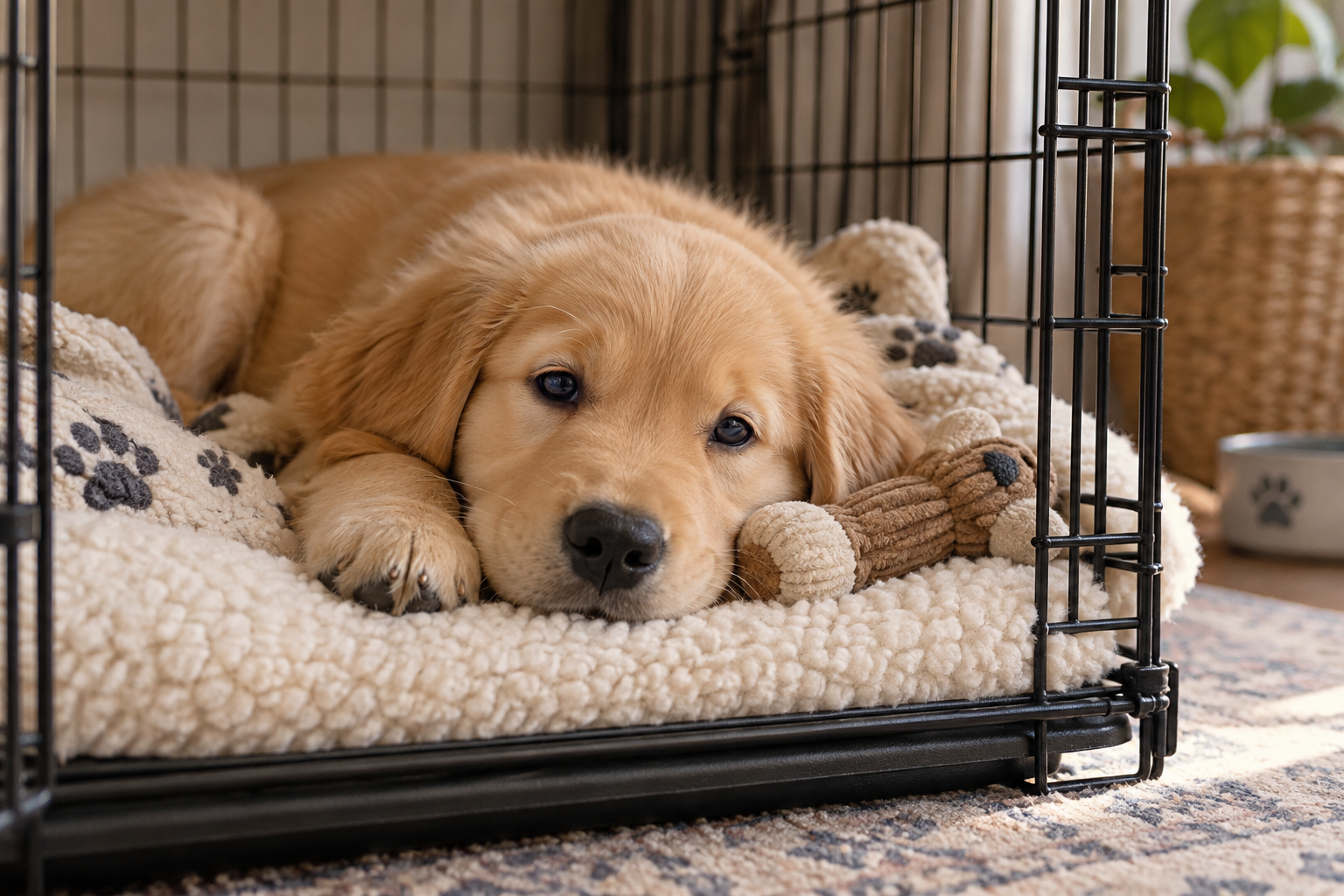
Create a quiet sleep area away from constant household traffic. It could be a puppy-proofed room, a pen, or a properly introduced crate.
A crate is a secure resting space, not a punishment. Your puppy should have enough room to stand, turn around, and lie comfortably. Build positive feelings with food, calm praise, and short practice periods.
Remove unsafe items before leaving a sleeping puppy unattended. Collars, dangling tags, torn bedding, and damaged toys can create snagging or swallowing risks.
Dim activity around your puppy at nap time. Offer a toilet trip first, then provide a calm transition. A safe chew may help some puppies settle, but choose one suited to their size and chewing style.
Don’t expect a puppy to spend most waking hours confined. Rest spaces should support sleep and safety, not replace attention, movement, and company.
Repeat the wake-to-sleep cycle
Most of the day can follow the same basic loop:
Wake, toilet, eat if due, play or train, toilet, then rest.
Not every loop needs a meal. Your puppy’s food schedule should match their age, food, and veterinary guidance.
This repeating sequence is easier than planning dozens of separate activities. It also helps you notice when an accident is likely.
Take your puppy to the toilet area after common triggers, including:
- Waking from a nap
- Eating or drinking
- Active play
- Excited greetings
- Time in a crate or pen
- Sniffing and circling indoors
- Heading toward a previously soiled area
- Pausing suddenly during an activity
Keep supplies near the door. A leash, treats, waste bags, and suitable outdoor clothing can save precious seconds.
If an accident happens, clean it without drama. Use a pet-safe cleaner made to remove lingering odor. Punishment can create fear without explaining where your puppy should go.
Fit the routine around your workday
A puppy daily routine has to work on ordinary weekdays, not only quiet weekends.
If you work from home, schedule puppy breaks around natural pauses. Take them out before a meeting rather than hoping they’ll wait through it.
Keep some work periods boring. Constant entertainment can teach a puppy that your presence always means action.
Set up a safe area with water, a resting place, and appropriate enrichment. Stay nearby at first, then practice brief periods when you aren’t directly involved.
If you work away from home, arrange help that matches your puppy’s needs. A family member, trusted sitter, or suitable care provider may handle toilet and activity breaks.
Young puppies shouldn’t be expected to manage a full workday alone. Their bladder control, feeding needs, and comfort with separation are still developing.
Introduce any caregiver and plan before the first long absence. Share your toilet cue, feeding instructions, safety rules, and emergency contact details.
Teach alone time in small steps
Alone time is a skill, not a surprise you spring on Monday morning.
Begin while your puppy is calm and their basic needs are met. Offer a safe activity, step away briefly, and return before they become distressed.
Build the time gradually. Some puppies progress quickly, while others need much smaller steps.
A little protest can happen during adjustment. Ongoing panic is different. Watch for frantic escape attempts, heavy drooling, continuous distressed vocalizing, or refusal to settle.
If your puppy shows significant distress, shorten the absence and seek qualified help. A veterinarian or reward-based behavior professional can help you plan safely.
Avoid letting a puppy “cry it out” through intense fear. Panic doesn’t teach comfortable independence.
Add enrichment without filling every hour
Enrichment means activities that let your puppy think, sniff, chew, search, and use natural behaviors.
You don’t need a cupboard full of gadgets. A few simple choices can add variety:
- Scatter part of a meal in a safe, clean area
- Hide food where your puppy can easily find it
- Offer a suitable food toy
- Let your puppy sniff during a calm outing
- Rotate safe toys instead of presenting everything
- Practice following you around furniture
- Reward relaxed observation of household activity
Supervise anything your puppy might shred or swallow. Toys should suit your puppy’s current size and chewing habits, not the size you expect them to reach.
Socialization is also part of enrichment. Socialization means helping your puppy form safe, positive feelings about people, animals, places, sounds, and handling.
Keep new experiences gentle. Your puppy doesn’t need to greet everyone or visit every busy place.
Allow distance from anything worrying. Pair calm observation with food or play, and leave before your puppy becomes overwhelmed.
Ask your veterinarian what public spaces and dog interactions are appropriate for your puppy’s health status. Disease risk and local conditions can affect safe choices.
Make afternoons predictable
Afternoons often bring a mix of naps, toilet trips, food, and brief activity. Use the same wake-to-sleep pattern from the morning.
If your puppy becomes restless at a regular time, plan ahead. Offer a toilet trip and a short sniffing activity before the usual chaos begins.
This is also a useful time for handling practice. Briefly touch a paw, look at an ear, or brush one small area. Reward calm cooperation and stop before your puppy struggles.
Handling practice should build trust. Don’t hold a frightened puppy down to finish a pretend grooming session.
Puppies may also lose baby teeth and become more interested in chewing. Provide safe, suitable options and manage access to cables, shoes, furniture, and children’s toys.
Management means preventing mistakes before they happen. Baby gates, closed doors, and tidy floors are often more effective than repeated “no.”
Keep evenings calmer
Many puppies get a burst of energy in the evening. People often call this the “zoomies,” meaning sudden frantic running and play.
A safe burst of movement isn’t automatically a problem. Clear slippery floors and remove obstacles that could cause injury.
Evening chaos can also signal tiredness, missed toilet needs, or too much excitement. Try a short sniffing break, gentle training, or quiet chewing instead of louder play.
Serve the evening meal according to your puppy’s feeding plan. Follow it with another toilet opportunity.
As bedtime approaches, lower the household energy. Dim lights, reduce rough play, and follow the same simple sequence each night.
For example:
- Calm activity
- Toilet trip
- Quiet settling
- Bed
Night waking is common for some young puppies. Keep necessary toilet trips calm and uneventful, then return to bed.
If nighttime restlessness appears suddenly or comes with vomiting, diarrhea, pain, coughing, or unusual weakness, contact a veterinarian.
Use this flexible sample day
This example gives you an order, not strict clock times:
Morning
- Wake and go straight to the toilet area
- Eat breakfast and drink water
- Take another toilet break
- Play or train briefly
- Settle for a nap
Late morning
- Wake and toilet
- Explore, sniff, or practice a simple skill
- Have food if a meal is due
- Toilet again
- Rest
Afternoon
- Wake and toilet
- Spend a short period playing or learning
- Practice calm time while you’re nearby
- Toilet after activity
- Nap
Evening
- Wake and toilet
- Eat the evening meal if scheduled
- Enjoy calm family time
- Have a gentle activity or suitable chew
- Toilet again
Bedtime
- Reduce excitement
- Take a final toilet trip
- Settle in the usual sleep area
- Provide quiet overnight breaks if needed
Shift the blocks to suit your household. Keep the order familiar even when the clock changes.
Adjust the plan as your puppy grows
A routine should change with your puppy. Longer waking periods and better bladder control usually develop gradually, not overnight.
Increase freedom in small stages. One accident-free day doesn’t mean your puppy is ready for the entire home.
Watch your puppy’s behavior and keep a basic note of meals, toilet trips, naps, and accidents. A phone note works fine.
Patterns often become clear within ordinary daily life. You may notice that your puppy needs an extra break after energetic play or struggles to settle before dinner.
Sudden changes matter more than imperfect days. Contact a veterinarian if your puppy stops eating, becomes unusually sleepy, has repeated vomiting or diarrhea, seems painful, or changes sharply from their normal behavior.
For training struggles, look for a qualified professional who uses reward-based methods. Fear, force, and pain aren’t necessary parts of puppy training.
Start with tomorrow morning
Tonight, place your leash, treats, and waste bags by the door. Choose your puppy’s toilet spot and write down your three daily anchor points.
Tomorrow morning, begin with one simple sequence: wake, toilet, breakfast, toilet, activity, nap.
That’s enough to start a puppy daily routine you can actually follow.