The Puppy Cleanup Kit You’ll Be Glad You Made
Puppies can turn one tiny puddle into a whole-house scavenger hunt.
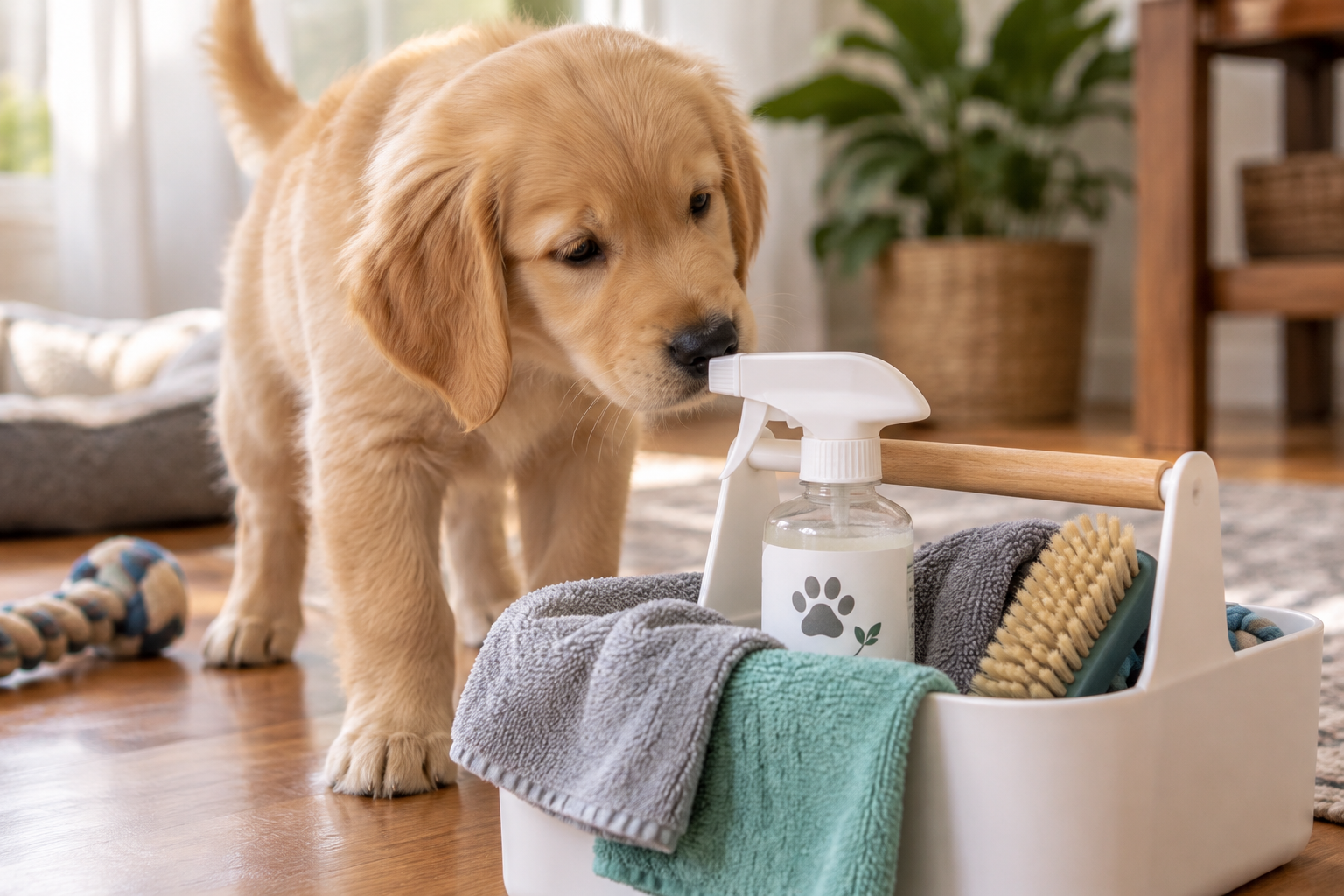
Your easiest first step is simple. Grab a handled bin and gather your basic puppy cleaning supplies in one place.
A ready-made kit saves you from hunting for paper towels while guarding a suspicious wet spot. It also helps you clean thoroughly, which can reduce lingering smells and repeat accidents.
Choose an easy-to-carry container
Use a plastic bin, cleaning caddy, or sturdy bucket with a handle. It should be easy to carry with one hand.
Store it near the puppy’s main living area. Keep it behind a closed door, on a high shelf, or inside a latched cupboard.
Cleaning products can harm a curious puppy. Wipes, cloths, gloves, and plastic bags can also become tempting chew toys.
If your home has several floors, consider a small kit on each level. A quick response matters more than owning a fancy container.
Pack the everyday essentials
Your kit doesn’t need to be huge. Start with supplies that handle urine, poop, vomit, mud, and spilled food.
Include:
- Absorbent paper towels or washable cloths
- A pet-mess enzyme cleaner
- Disposable or washable cleaning gloves
- Small rubbish or poop bags
- A soft scrubbing brush
- A small dustpan or piece of stiff cardboard
- An old bath towel for larger spills
- A puppy-safe surface cleaner
- A laundry bag for dirty bedding and cloths
An enzyme cleaner uses proteins called enzymes to break down parts of organic messes. These cleaners are often useful for urine because they address the source of the smell.
Choose a product made for the surface you’re cleaning. A carpet cleaner may not suit wood, leather, or delicate upholstery.
Always follow the product label. Test cleaners on a hidden patch when you’re unsure about color or finish.
Add a muddy-paw station
Toilet accidents aren’t the only puppy messes. Wet paws can redecorate a floor remarkably fast.
Keep an old towel near the door used after walks and toilet trips. A washable mat can catch some dirt before it travels farther.
A shallow bowl of plain water can help with very muddy paws. Dip or wipe one paw at a time, then dry it well.
Check between the toes while cleaning. Contact a vet if you notice swelling, bleeding, a deep cut, or ongoing limping.
Don’t use household disinfecting wipes on your puppy’s paws unless the label clearly says they’re suitable. Puppies lick their feet, so product choice matters.
Clean urine accidents without drama
First, calmly move your puppy away from the area. Take them to their toilet spot if they may still need to finish.
Blot the puddle with paper towels or a cloth. Press down firmly rather than rubbing, especially on carpet.
Apply the enzyme cleaner exactly as directed. Some products need time to reach the deeper layers where urine has soaked.
Keep your puppy away while the area is being cleaned and dried. A baby gate or closed door can make this easier.
Avoid using fragrance alone to cover the smell. Your nose may detect “spring meadow,” while your puppy still detects an old toilet spot underneath.
Never punish a puppy for an accident. Shouting or rubbing their nose in it can create fear without teaching the right location.
Handle poop or vomit in stages
Pick up solid material first using a bag, cardboard, or dustpan. Work gently so you don’t press it deeper into carpet fibers.
Next, blot any moisture. Then clean the remaining mark with a product suited to that surface.
Wear gloves and wash your hands afterward. Put reusable cloths straight into their laundry bag instead of leaving them in the caddy.
Repeated vomiting or diarrhea needs more than cleaning. Contact a vet promptly if your puppy seems weak, won’t drink, has blood in the mess, or keeps being sick.
Young puppies can become unwell quickly. A sudden major change in toilet habits also deserves professional advice.
Match your method to the surface
Different surfaces need slightly different care. When in doubt, check the flooring, furniture, or cleaner instructions.
Carpet and rugs
Blot instead of scrubbing. Scrubbing can spread the mess and push it farther into the fibers.
Use only as much liquid as the product directs. Keep your puppy away until the area is fully dry.
Wood and laminate
Clean spills quickly, especially near seams. Too much liquid may seep between boards or damage some finishes.
Use a cleaner approved for that flooring. Don’t leave a wet towel sitting over the spot.
Bedding and washable covers
Remove solid mess before putting fabric into the washing machine. Follow both the fabric label and the cleaner instructions.
Keep one spare bed cover or blanket ready. It’s much easier than waiting for midnight laundry to finish.
Sofas and car seats
Check the manufacturer’s cleaning guidance before adding moisture. Some upholstery needs specialist cleaning methods.
Blot the area and avoid soaking the padding. Block access until everything has dried.
Use cleaners safely
More cleaner isn’t automatically better. Extra product can leave residue and may take longer to dry.
Never mix cleaning products. In particular, bleach and ammonia must not be combined because the fumes can be dangerous.
Open a window or provide ventilation when the label recommends it. Keep puppies away from bottles, buckets, treated surfaces, and dirty cleaning water.
Strong scents and essential oils aren’t automatically pet-safe. Choose products specifically labeled for your intended use, and follow their directions.
If your puppy swallows or spills a cleaning product, contact a vet or animal poison service immediately. Keep the packaging nearby so you can describe the ingredients.
Let the kit support toilet training
Accidents provide useful information. Note the time, place, and what your puppy was doing beforehand.
A pattern may soon appear. Your puppy might need more toilet trips after waking, playing, eating, or drinking.
Clean the spot, adjust the routine, and praise outdoor success. Keep praise calm and immediate so your puppy can connect it with the right action.
If accidents suddenly increase after your puppy had been doing well, don’t assume stubbornness. Pain, stress, stomach trouble, or urinary problems can change toilet habits.
Restock before you run out
Check your kit once a week and after any major cleanup. Replace used bags, gloves, towels, and cleaner before the next surprise arrives.
Wash reusable cloths separately when appropriate for the mess. Let brushes, towels, and the caddy dry completely before storing them.
For today, put one cleaner, two cloths, gloves, and several bags into a handled bin. That five-minute job will feel wonderfully clever at the next suspicious little puddle.